Cars, tricycles, delivery vans, and family vehicles are part of everyday life in the Philippines. But with our hot weather, heavy traffic, and rough roads, vehicle parts wear down faster than expected. Add to that the growing number of cars and motorcycles from Grab drivers, couriers, and family users—and you’ll understand why auto repair shops continue to thrive in almost every town.
If you’re a returning OFW, a mechanical enthusiast, or someone who worked as a car technician abroad, opening your own small auto repair shop back home can be a rewarding investment. It doesn’t only provide good income; it also supports the local driving community that depends on reliable and affordable repair services.
Capital requirements
Starting a small auto repair shop can cost between ₱800,000 to ₱1.5 million, depending on equipment quality, shop size, and staffing. Here’s what you’ll need to budget:
Tools and basic equipment
Your initial toolset forms the backbone of your business. A small shop usually starts with:
- Hydraulic floor jacks and jack stands
- Air compressor and pressure hose
- Socket and wrench sets (metric and standard sizes)
- Screwdrivers, pliers, torque wrench, and hammers
- Oil drain pans, funnels, and service carts
- Diagnostic scanner (₱30,000–₱80,000 depending on brand)
- Tire changer and wheel balancer (₱150,000–₱250,000 for a pair)
Buying locally available brands reduces maintenance downtime since replacement parts are easier to source. You can find suppliers in Banawe (Quezon City), Talamban (Cebu), or Davao’s automotive zones.
Vehicle lifts and garage fixtures
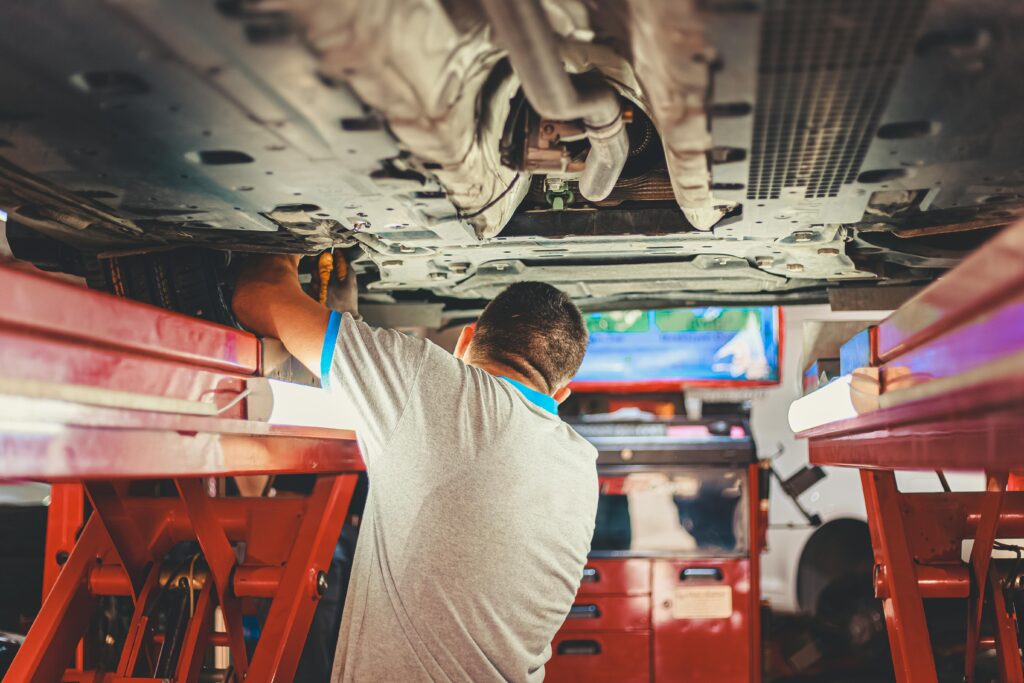
If you have enough ceiling height, invest in a hydraulic two‑post lift (₱180,000–₱300,000). It allows you to handle underchassis work safely. For small spaces, use portable lifts or floor jacks instead.
You’ll also need heavy‑duty lighting, fire extinguishers, tool shelves, signage, and a small waiting area with chairs. Allocate ₱100,000–₱200,000 for these fixtures and installations.
Mechanic salaries and training
A small shop often starts with two mechanics and one apprentice helper. Mechanics earn ₱13,000–₱20,000 monthly, depending on experience. Many auto shop owners also offer commissions per job for motivation. Training and TESDA certification fees range from ₱2,000–₱5,000 per mechanic.
Tip: Partner with local vocational schools or TESDA centers to find newly trained mechanics willing to grow with your business.
Location and space planning
Location determines not just how many cars you’ll service, but also what kind of clients you’ll attract.
Ideal sites include:
- Along barangay main roads or highways where motorists frequently pass
- Near gasoline stations or auto parts stores for convenience
- Within residential communities housing multiple vehicle owners
Garage size and layout
A small auto repair shop typically operates effectively with 100 to 150 square meters of space. This allows space for two vehicle service bays, a tool area, and a small customer zone.
- Ventilation: Ensure open air or exhaust fans to control fumes.
- Drainage: Build proper drainage channels for oil spills and wash bays.
- Safety zones: Clearly mark walkways, fire exits, and tool areas to prevent accidents.
- Parking: Leave space for 2–3 waiting vehicles outside your service bays.
Example: A shop in Las Piñas managed by a returning OFW started with a 120‑sqm rented warehouse space. With a clean, organized layout and good signage, it now averages 10 customers per day within one year.
Permits and compliance
Before operating, you must register your business properly to comply with local regulations and ensure customers trust your legitimacy.
Business registration
- DTI (for single proprietorship) or SEC registration (for partnerships or corporations)
- Barangay Clearance from your shop’s location
- Mayor’s or Business Permit from the city or municipal hall
- BIR registration for issuing official receipts
Environmental and safety requirements
Auto repair shops automatically fall under DOLE and DENR compliance because of the fluids and hazardous waste they handle. Observe the following:
- Obtain an Environmental Compliance Certificate (ECC) for waste oil disposal
- Secure a Sanitation Permit and Fire Safety Inspection Certificate
- Practice proper waste segregation for oil, filters, batteries, and rags
Complying early helps you avoid costly fines and possible business suspension for violations.
Services to offer
Launching with well‑defined services helps you capture regular customers and maintain manageable workloads.
Core services
- Change oil and filter replacement
- Brake repair and adjustment
- Clutch and underchassis inspection
- Engine tune‑up and spark plug replacement
Advanced services
- Electrical diagnostics and scan tool testing for fuel injection issues
- Air‑conditioning cleaning, freon recharge, and compressor repair
- Wheel alignment and balancing
- Periodic maintenance packages (every 5,000 or 10,000 km)
Example: A small garage in Batangas discovered they could earn extra ₱15,000 monthly by offering air‑con cleaning and freon charging services—something their competitors didn’t provide at the time.
Hiring mechanics
People are the heart of your auto shop. Skilled, honest, and customer‑oriented mechanics attract loyal clients.
Skill tests and hiring tips
Before hiring, give applicants a short practical test—ask them to check fluid levels, change a tire, or diagnose a simple noise. This reveals both technical skill and attitude.
You can source candidates from:
- TESDA auto mechanic graduates
- Former factory maintenance workers
- Experienced tricycle or jeepney mechanics upgrading their craft
Certifications and pay structure
- Prefer those with NC II or NC III certification in automotive servicing.
- Base pay: ₱13,000–₱20,000 monthly plus per‑job incentives (₱100–₱300 per major service).
- Apprentices can start with ₱500–₱600 per day.
Invest in continuous learning—attending supplier training seminars (Shell, Petron, or Motolite) builds credibility.
Pricing and packages
Transparent, competitive pricing builds trust. Most customers value honesty and clear cost estimates over flashy signage.
Standard labor rates
- Change oil: ₱300–₱500 labor (excluding oil and filter)
- Brake repair: ₱700–₱1,200 depending on vehicle type
- Tune‑up: ₱500–₱800
- Air‑con cleaning: ₱1,000–₱1,500
Maintenance bundles
- Basic preventive maintenance – oil, filter, brake check, and fluid top‑ups (₱1,000–₱1,300)
- Full service check – diagnostics, underchassis, and tire rotation (₱2,000–₱3,000)
- Fleet packages – discounted monthly maintenance for delivery or ride‑sharing vehicles
Displaying package rates in your signage builds transparency and customer confidence.
Profitability tips
Auto repair shops can profit steadily once you build repeat customers and manage your expenses well. Here’s how to stay efficient:
Build supplier partnerships
Negotiate bulk discounts with oil and parts suppliers like Seaoil, Caltex, or local distributors. Offering their products can qualify you for incentives and promotional freebies to attract customers.
Upsell fluids, filters, and accessories
Encourage customers to replace wiper blades, coolant, brake fluid, or spark plugs while servicing. Upselling adds 10–20% more to your average sales per visit.
Track every job order
Use a notebook or digital invoice tracker to record each transaction. It helps you identify which services are most profitable and what parts sell fastest.
Maintain clean and safe operations
A tidy garage with friendly service makes a huge difference. Keep uniforms, signage, and waiting areas clean. Word‑of‑mouth from satisfied drivers remains the best advertisement.
Join community promotions
Offer free oil checks during barangay motor events or sponsor tricycle associations. Small gestures like these grow visibility and goodwill.
Common challenges and solutions
- Slow months or seasonal demand: Offer promos before long weekends or school openings when families plan road trips.
- Rising tool costs or power bills: Use energy‑efficient lighting and share tools with partner garages in the early stages.
- Retaining good mechanics: Provide rest days and profit‑sharing bonuses to encourage loyalty.
Conclusion
Starting a small auto repair shop in the Philippines is one of the most practical ventures for mechanically skilled Filipinos and returning OFWs. Vehicles will always need care, and dependable workshops never run out of clients.
With smart planning—choosing a good location, hiring certified mechanics, offering honest pricing, and maintaining high‑quality service—you can build a respected neighborhood garage that provides both steady income and community trust.
Just like the engines you’ll work on, success here runs best when properly maintained—through diligence, integrity, and genuine customer care. Your journey to becoming a trusted “boss mekaniko” starts with that first screw turned right.