Starting a tire shop in the Philippines is one of the most reliable business opportunities today. With the rise of TNVS drivers, logistics riders, delivery couriers, and the booming second-hand car and motorcycle market, tires are a necessity. Every vehicle on the road will eventually need a replacement tire, a vulcanizing repair, or a quick pressure check.
But while demand is high, the tire business is capital-intensive. Margins on tire sales are often thin, which means your real profit comes from location, speed, and the extra services you offer. Choosing the right business model and understanding your market can make the difference between a slow shop and a thriving one.
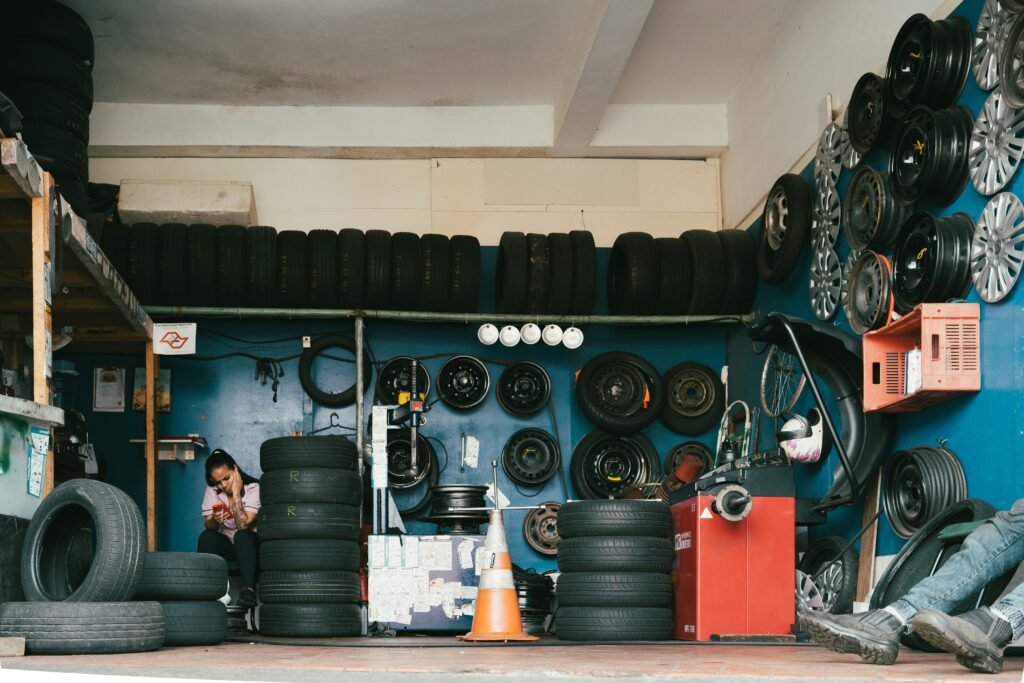
The business model: pick your lane
Before buying your first jack, decide which type of tire shop you want to build. Your business model determines your capital, equipment, and target customers.
The vulcanizing plus model
A small-scale setup focused on interior tube repairs, second-hand tires, and budget brands. Ideal for neighborhoods or roadside locations with limited capital.
The specialty shop
A niche-focused shop offering 4×4 off-road tires, high-performance wheels, or premium mags. This attracts enthusiasts willing to pay higher margins.
The full-service tire center
A complete tire center offering brand-new tires, wheel alignment, balancing, nitrogen air, and mechanical support. Requires higher capital but offers the highest earning potential.
Legal requirements (the paperwork)
- DTI registration – register your business name.
- Barangay clearance – required for your exact operating location.
- Mayor’s or business permit – includes sanitary permit and fire safety inspection.
- BIR registration – needed for official receipts, especially for corporate fleets or TNVS drivers.
- DENR permit – some LGUs require a waste management plan for old tires and oily runoff.
Strategic location: the slow traffic rule
Location is the number one success factor for tire shops. You don’t just want a busy road—you want a road where cars naturally slow down. Drivers must be able to see your signage, assess your shop, and safely pull over.
Best location types
- Near gas stations – customers already have a “car mindset.”
- Corner lots or U-turn slots – vehicles naturally decelerate here.
- Near hardware stores – DIYers and truck drivers frequent these areas.
- Near tricycle terminals – high demand for motorcycle and tricycle tires.
- Along provincial highways – ideal for emergency vulcanizing services.
Frontage and accessibility tips
- Ensure space for at least two to three cars to park without blocking the sidewalk.
- Avoid locations with strict no-parking zones or heavy MMDA enforcement.
- Choose a spot with wide visibility—drivers should see your shop from 20 to 30 meters away.
- Install large, clear signage with tire sizes, vulcanizing services, and emergency contact numbers.
Hidden location factors that matter
- Drainage – avoid flood-prone areas where equipment can be damaged.
- Power stability – compressors and balancers need steady electricity.
- Noise tolerance – tire shops are loud; avoid residential areas with strict noise rules.
Essential equipment and initial stock
| Item | Estimated cost (PHP) | Why you need it |
|---|---|---|
| Tire changer machine | ₱45,000 – ₱90,000 | Prevents scratching mags; safer and faster than manual bars. |
| Wheel balancer | ₱40,000 – ₱70,000 | Essential for brand-new tire sales to prevent steering shake. |
| Air compressor (2–3 HP) | ₱15,000 – ₱30,000 | Powers impact wrenches and tire inflation. |
| Heavy-duty jacks and stands | ₱10,000 – ₱20,000 | Safety first; never rely on a hydraulic jack alone. |
| Initial tire inventory | ₱200,000 – ₱500,000 | Focus on the top five sizes (e.g., 14-inch for Vios/Wigo, 17-inch for Hilux). |
Common challenges and how to overcome them
Thin margins on tire sales
Brand-new tires often have low profit margins. To overcome this, focus on service-based income such as balancing, alignment, and nitrogen air.
High capital requirements
Equipment and inventory are expensive. Start with consignment stock or focus on vulcanizing first, then expand as cash flow improves.
Competition from established shops
Differentiate through speed, friendliness, and transparency. Offer free pressure checks, loyalty cards, or emergency roadside assistance.
Slow days or off-peak hours
Use downtime for preventive maintenance, cleaning, and social media marketing. Post daily tire deals or “size of the day” promos.
Old tire disposal
Never let old tires pile up. Partner with recycling plants or cement factories that use tires as fuel.
Profit secrets: how to actually make money
Tires themselves have low margins—often only ₱200 to ₱500 profit per tire. The real money comes from services and add-ons.
The combo strategy
Offer free mounting but charge for wheel balancing, valve stems, and tire disposal. Customers feel they are getting a deal, while you earn from the add-ons.
Nitrogen air
Once you buy the nitrogen machine, the “air” is essentially free. This is one of the highest-margin services in the industry.
Fleet accounts
Partner with tricycle cooperatives, delivery hubs, or TNVS drivers. Offer exclusive flat-tire repair rates or bulk discounts. These accounts provide steady, predictable income.
Upsell opportunities
- Offer tire rotation packages every 5,000 km.
- Sell valve caps, tire shine, and basic car care products.
- Bundle services: “Mounting + Balancing + Nitrogen” at a discounted package rate.
- Offer mag cleaning or quick detailing while customers wait.
- Provide a loyalty card: “Buy 4 tires, get free balancing for 1 year.”
Niche advice for the Philippine market
For small neighborhood shops
Stock motorcycle tires. The volume of two-wheelers in the Philippines far outweighs cars, and motorcycle tires have faster turnover.
For highway-side shops
Focus on vulcanizing and hot patch repairs. Long-distance travelers often hit nails or debris. A 24/7 “Emergency Vulcanizing” sign is a magnet for stranded motorists.
For urban centers
Offer tire consignment. Partner with major distributors so you don’t have to buy all your stock upfront. This reduces risk and frees up capital.
The tire graveyard warning
Old tires are a health hazard in the Philippines. When left outdoors, they collect rainwater and become breeding grounds for dengue-carrying mosquitoes.
The solution: partner with recycling plants or cement factories. Many cement plants use old tires as fuel. Never let old tires pile up in the rain or clutter your shop.
FAQ: Starting and Managing a Tire Shop Business
1. Is a tire shop business profitable?
Yes, tire shops are profitable because tire replacement, vulcanizing, and wheel services are essential for all vehicle owners. Profitability depends on location, service quality, and offering complete services such as patching, balancing, and nitrogen filling.
2. How much capital do I need to start a tire shop?
Capital ranges from ₱150,000–₱500,000 for a basic vulcanizing shop, and ₱500,000–₱1.5 million for a full tire shop with wheel balancing, alignment, and new tire inventory. Costs depend on equipment, location, and stock levels.
3. What equipment do I need for a tire shop?
Essential equipment includes a vulcanizing machine, air compressor, tire changer, wheel balancer, patching tools, bead breaker, jack stands, and hand tools. Shops offering alignment need an alignment machine and lift.
4. What is the best location for a tire shop?
Ideal locations include areas where vehicles slow down or stop—near gas stations, intersections, U-turn slots, hardware stores, and busy roads. Wide frontage for parking and visibility is a major advantage.
5. Do I need permits to open a tire shop?
Yes. You need a Barangay Clearance, DTI Business Name Registration, Mayor’s Permit, BIR Certificate of Registration, and a Fire Safety Inspection Certificate. Some LGUs may require an environmental compliance document.
6. What services should a tire shop offer?
Common services include tire replacement, vulcanizing, patching, wheel balancing, tire rotation, nitrogen filling, and valve replacement. Offering emergency roadside assistance can also attract more customers.
7. How do I attract customers to my tire shop?
Maintain fast service, fair pricing, and clean facilities. Display tire brands clearly, offer warranties, and build relationships with nearby drivers, tricycle groups, and delivery riders. Facebook visibility also helps.
8. What are the most profitable items in a tire shop?
High-margin items include tire patches, valve stems, nitrogen refills, used tires, and emergency roadside services. New tires also generate strong profit when bought from reliable wholesalers.