- The tricycle business remains one of the most stable “pang‑kabuhayan” ventures in the Philippines, especially for barangay‑level transport.
- In 2026, stricter LGU rules mean you must secure both a TODA slot and an MTOP before operating legally.
- Fuel efficiency, digital booking groups, and proper maintenance now determine daily earnings more than ever.
For decades, the tricycle has been the backbone of local transportation in the Philippines. Whether you live in a subdivision, poblacion, or rural barangay, tricycles provide essential last‑mile mobility—bringing students to school, workers to terminals, and families to the market. In 2026, the tricycle business remains a reliable source of daily income, but it is now more regulated due to traffic congestion and safety concerns.
If you’re an OFW planning to invest in a small business for your family, a tricycle driver wanting to become an operator, or a beginner exploring a low‑risk venture, this guide walks you through the legal process, startup costs, and real‑world strategies to succeed.
The two legal pillars of a tricycle business
You cannot simply buy a motorcycle, attach a sidecar, and start accepting passengers. Two approvals are mandatory:
MTOP (Motorized Tricycle Operator’s Permit)
This is your franchise. It is issued by the Sangguniang Bayan or Sangguniang Panglungsod. The MTOP grants you the legal right to operate a “for‑hire” tricycle within a specific zone or route.
- Best suited for: Hands‑on operators, OFWs funding a family business, or drivers wanting stable income.
- Requirements: LTO OR/CR, TODA certification, barangay clearance, valid ID, inspection report.
- Cost: ₱1,500 – ₱3,000 depending on LGU.
- Challenge: Approval depends on route capacity; some LGUs freeze new franchises.
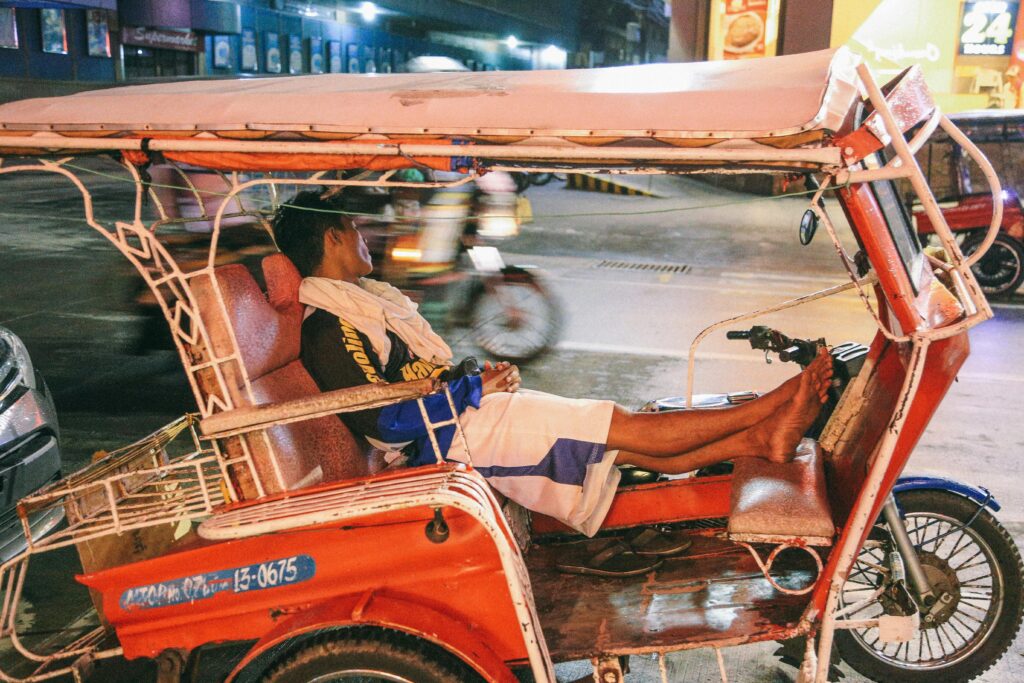
TODA membership
Most barangays have a Tricycle Operators and Drivers Association (TODA). You need a TODA slot or “line” to operate within their route.
- Best suited for: Drivers familiar with local routes and peak hours.
- Requirements: Membership form, ID, MTOP application, dues.
- Cost: ₱20,000 – ₱150,000+ depending on route demand.
- Challenge: Slots are limited; high‑volume routes are expensive.
Example: In many Cavite and Laguna barangays, TODA slots along school routes can reach ₱100,000+ because of high passenger volume during weekdays.
Estimated investment costs
| Item | Estimated Cost (PHP) | Notes |
|---|---|---|
| New Tricycle Unit | ₱180,000 – ₱240,000 | Popular 2026 models: Bajaj RE, TVS King |
| TODA Slot / Line | ₱20,000 – ₱150,000+ | Depends on route profitability |
| MTOP & Filing Fees | ₱1,500 – ₱3,000 | Includes inspection & stickers |
| Insurance (TPL/PL) | ₱2,000 – ₱4,000 | Comprehensive recommended |
Total Startup: ₱203,500 – ₱397,000 (lower if buying second‑hand)
Step-by-step application process
Secure TODA certification
Visit the TODA President of your target route. You need a Certification of Membership before the LGU processes your MTOP.
- Bring your ID and OR/CR.
- Ask about available slots and membership dues.
Get barangay clearance
Request a clearance specifically for “Tricycle Business Operation.” Some barangays require proof of residency or voter registration.
Vehicle inspection
Bring your unit to the PNP or City/Municipal Traffic Office for roadworthiness inspection.
- Brakes, lights, horn, and tires must be functional.
- Sidecar must be securely welded and aligned.
- LTO documents must reflect “with sidecar.”
File for MTOP
Submit your documents to the Sangguniang Bayan/Panglungsod:
- LTO OR/CR
- TODA Certification
- Barangay Clearance
- ID photos
Some LGUs require the operator to be a registered voter of the city or municipality.
Apply for Mayor’s Permit
Once your MTOP is approved (usually via a local ordinance), proceed to the Business Permit and Licensing Office (BPLO) for your Mayor’s Permit.
Operational diskarte for 2026
Use fuel‑efficient or hybrid units
With 2026 fuel prices, FI (fuel‑injected) or LPG‑converted tricycles are now the standard. They reduce daily gastos and increase take‑home pay.
Understand the boundary system
If you are not driving the tricycle yourself, the typical boundary ranges from ₱300 to ₱500 per day depending on route demand.
Join digital booking groups
Many barangays now have Viber or Facebook booking groups for tricycles. Being active in these groups can double your off‑peak bookings.
Example: A driver in Antipolo earns an extra ₱200–₱400 daily by accepting “pahatid” bookings from a condo group chat.
Prioritize maintenance
A breakdown means zero income for the day. Set aside ₱50–₱100 daily for repairs.
- Change oil every 1,500 km.
- Check tire pressure daily.
- Clean air filter weekly.
Common challenges and how to overcome them
Colorum operations
Challenge: Operating without an MTOP can lead to a ₱6,000+ fine and impoundment.
Solution: Never operate until your franchise sticker is physically on your windshield.
High maintenance costs
Challenge: Frequent repairs due to heat and rough roads.
Solution: Follow strict maintenance schedules and use quality oil and parts.
Route competition
Challenge: Too many tricycles on the same route.
Solution: Offer “special trips” for sari‑sari stores, water stations, or school pickups during low‑passenger hours.
Tips for success
- Build good relationships with barangay officials and TODA leaders.
- Keep your tricycle clean—passengers prefer tidy units.
- Offer “pakyaw” rates for deliveries to increase income.
- Be consistent with your schedule; suki passengers value reliability.
Conclusion
Starting a tricycle business in your barangay is one of the most practical and dependable ventures for Filipino families. With the right permits, a reliable unit, and smart diskarte, you can build a steady daily income that supports your household for years. Whether you’re an OFW investing in a hometown business or a local driver aiming to become an operator, the tricycle business remains a solid, community‑based livelihood in 2026 and beyond.