Summary
- Tingi matches the daily cash flow of Filipino households, making sari‑sari stores the most accessible retail channel in the country.
- Small portions generate higher profit margins for store owners compared to bulk selling.
- During crises, tingi‑based stores become the community’s most reliable source of essentials.
- The traditional sachet culture is evolving into refill‑based systems driven by cost savings and environmental laws.
Tingi is more than a selling strategy — it is the backbone of the sari‑sari store economy. For generations, Filipinos have relied on small, affordable portions of everyday goods to stretch their limited budgets.
In a Filipino sari-sari store, tingi refers to the practice of selling products in very small, per-piece or single-use quantities (like a stick of cigarette, one sachet of shampoo, or a few spoonfuls of coffee) so they are affordable to customers with limited cash on hand.
Tingi remains one of the strongest reasons sari‑sari stores continue to thrive despite supermarkets, convenience stores, and online retail platforms.
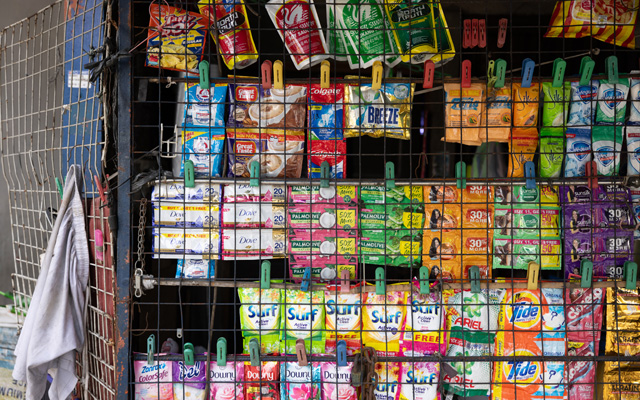
Let’s explore why tingi works, how it boosts profitability, and how it is evolving into a more sustainable model for the future.
The daily wage alignment
Most Filipino households operate on a daily or weekly budget. Even if a product is cheaper per gram in bulk, many families simply cannot afford to spend ₱200 to ₱300 upfront for a full‑sized item. Tingi solves this problem by breaking down products into small, affordable units.
Instead of buying a ₱300 bottle of shampoo, a customer can buy an ₱8 sachet. Instead of buying a kilo of sugar, they can buy 50 grams for ₱10. This aligns perfectly with the cash flow of minimum‑wage earners, tricycle drivers, stay‑at‑home parents and anyone managing tight budgets.
The beauty of tingi is that it eliminates “cash waste.” Customers buy only what they need for the day — one clove of garlic, one cube of Knorr seasoning, one cigarette stick, or one sachet of coffee. This prevents their limited money from being tied up in bulk goods.
For sari‑sari stores, this creates a steady stream of daily income, keeping cash circulating within the community.
Higher profit margins for sari-sari store owners
Tingi is not just convenient for customers — it is also more profitable for store owners. When products are broken down into smaller units, the total revenue often exceeds the cost of the original bulk item.
This is known as the “micro‑premium.” For example:
- A 1kg bag of sugar repacked into 50g bags can generate 15–20% more revenue.
- A bar of laundry soap cut into smaller pieces can earn more than selling the bar whole.
- Cooking oil sold in small plastic sachets or cups earns a higher margin per milliliter.
Customers willingly pay extra for convenience, smaller portions, and the ability to buy only what they need. For sari‑sari store owners, this premium acts as a service fee for repacking and portioning. It also provides a distinctive advantage over bigger supermarkets that don’t offer such granular level of portions.
In a business where margins are thin, tingi is one of the most reliable ways to increase profitability without raising prices.
Sample computation: How much can you earn from tingi items?
To understand why tingi is profitable, here are real‑world examples using common sari‑sari store items such as black pepper, salt, and garlic. These computations show how repacking or selling per piece can generate higher margins compared to selling items in bulk.
1. Black Pepper (Paminta)
- Bulk price: ₱120 for 100g (₱1.20 per gram)
- Tingi portion: 1 small pack = 2g
- Cost per tingi pack: 2g × ₱1.20 = ₱2.40
- Typical tingi selling price: ₱5 per pack
| Item | Bulk Cost | Tingi Selling Price | Profit |
|---|---|---|---|
| 2g paminta pack | ₱2.40 | ₱5.00 | ₱2.60 |
Conclusion: Selling black pepper in tingi form more than doubles your profit compared to selling the 100g pack as a whole.
2. Iodized Salt
- Bulk price: ₱20 per kilo (₱0.02 per gram)
- Tingi portion: 20g per pack
- Cost per tingi pack: 20g × ₱0.02 = ₱0.40
- Typical tingi selling price: ₱2 per pack
| Item | Bulk Cost | Tingi Selling Price | Profit |
|---|---|---|---|
| 20g salt pack | ₱0.40 | ₱2.00 | ₱1.60 |
Conclusion: Salt is one of the highest‑margin tingi items because customers only need small amounts for cooking.
3. Garlic (Bawang) — per clove selling
- Bulk price: ₱180 per kilo (approx. 40 cloves per kilo)
- Cost per clove: ₱180 ÷ 40 = ₱4.50
- Typical tingi selling price: ₱6–₱7 per clove
| Item | Bulk Cost | Tingi Selling Price | Profit |
|---|---|---|---|
| 1 clove of garlic | ₱4.50 | ₱6.50 (avg.) | ₱2.00 |
Conclusion: Even basic cooking ingredients like garlic earn higher margins when sold per clove instead of per kilo.
Why these margins matter
- Tingi pricing allows stores to earn more without raising prices aggressively.
- Customers appreciate the flexibility of buying only what they need.
- Small portions create faster inventory turnover and daily cash flow.
These examples show how sari‑sari stores can turn everyday household items into reliable profit generators through strategic portioning.
Resilience during crises
Data shows that sari‑sari store sales surge by up to 27% during typhoons, inflation spikes, and supply chain disruptions. When supermarkets run out of stock or become inaccessible, sari‑sari stores become the community’s lifeline.
Their strength lies in being hyper‑local. They are within walking distance, open long hours, and stocked with tingi portions of essentials like:
- Coffee
- Canned fish
- Detergent
- Rice
- Cooking oil
Because sari‑sari stores buy in small batches and restock frequently, they can adapt quickly to changing demand. Tingi allows them to stretch limited inventory during emergencies, ensuring more households get access to basic goods.
From sachet to refill
While tingi has long been associated with sachets, environmental pressure and the Extended Producer Responsibility (EPR) Law are pushing communities toward refill‑based systems.
The rise of the “bring‑it” culture
LGUs in Quezon City, San Juan, and other urban areas are promoting “Kuha sa Tingi” programs that encourage customers to bring their own containers. Sari‑sari stores are installing refill stations for:
- Vinegar
- Soy sauce
- Detergent
- Cooking oil
The economic benefits are significant:
- Customers save up to 20% compared to buying sachets.
- Store owners earn up to 15% more because they avoid packaging costs.
- Plastic waste is reduced, helping communities meet EPR targets.
This evolution keeps the spirit of tingi alive while addressing sustainability concerns.
The social component: suki and micro‑credit
Tingi is not just a business model — it is a social system built on trust. The suki relationship between store owners and loyal customers is one of the strongest drivers of sari‑sari store success.
Through the listahan (credit list), customers can buy tingi amounts today and pay tomorrow or on payday. This micro‑lending function is something supermarkets cannot replicate.
Examples include:
- A mother buying two eggs and paying later.
- A tricycle driver getting a sachet of coffee on credit before starting his day.
- A neighbor borrowing rice and settling the balance after receiving remittances.
This system strengthens community bonds and ensures daily sales for the store owner.
Summary of the tingi impact
| Feature | Impact on Success |
|---|---|
| Accessibility | Makes branded goods affordable at ₱5–₱10 entry points |
| Liquidity | Keeps cash flowing for both buyers and sellers |
| Adaptability | Allows stores to adjust inventory daily based on demand |
| Sustainability | Refill models reduce plastic waste and increase margins |
Conclusion
Tingi is the heart of the sari‑sari store economy. It aligns with the financial realities of Filipino households, boosts profitability for store owners, and strengthens community relationships. Even as the country shifts toward more sustainable refill systems, the core principle remains the same: small, affordable portions that meet immediate needs.
For aspiring sari‑sari store owners, embracing tingi is not optional — it is the key to long‑term success. By understanding customer behavior, offering flexible portions, and adapting to new refill trends, your store can remain competitive, resilient, and deeply rooted in the community.
FAQ: Tingi Selling for Sari-Sari Stores
1. Why is tingi selling still profitable for sari-sari stores?
Tingi remains profitable because it matches daily consumer behavior in many barangays. Customers often buy only what they need for the day, making small packs and per-piece items easier to sell. While margins per item are small, the high turnover creates steady daily income.
2. What are the best tingi items to sell in a sari-sari store?
Top-selling tingi items include shampoo sachets, coffee sachets, powdered drinks, cooking oil in small bottles, soy sauce, vinegar, sugar, salt, laundry detergent, and small snack packs. These items move fast because they are affordable and used daily.
3. How do I price tingi items to ensure profit?
Price tingi items based on your cost per unit, transportation expenses, and local competition. Many stores add ₱1–₱3 per sachet or per small pack. For repacked items like cooking oil or sugar, calculate cost per gram or milliliter to maintain consistent margins.
4. Is it safe and legal to repack products for tingi selling?
Repacking is allowed for non-branded goods like sugar, salt, and cooking oil, as long as you follow clean handling practices. However, branded items such as detergent or coffee should not be repacked because it violates manufacturer guidelines and may affect product quality.
5. How much capital do I need to start selling tingi items?
You can start a basic tingi inventory with ₱1,000–₱3,000 by focusing on fast-moving sachets and small packs. A more complete tingi assortment typically requires ₱5,000–₱10,000 depending on your barangay’s demand.
6. How can I prevent losses when selling tingi items?
To avoid losses, store sachets away from heat, rotate stocks regularly, avoid overstocking slow-moving items, and track expiry dates. For repacked goods, use clean containers and measure portions consistently to avoid giving away excess product.
7. Do tingi items have higher margins than regular-sized products?
Yes, tingi items often have higher percentage margins because customers pay for convenience and smaller portions. While the absolute profit per item is small, the fast turnover and daily demand make tingi a reliable income source for sari-sari stores.