Summary
- Ideal business for wet markets with consistent foot traffic and daily demand.
- Requires reliable cold storage, sanitation, and early‑morning meat sourcing.
- Capital range: roughly ₱300,000–₱700,000 to start.
- Profit potential: steady daily earnings from market volume and bulk retail buyers.
Introduction
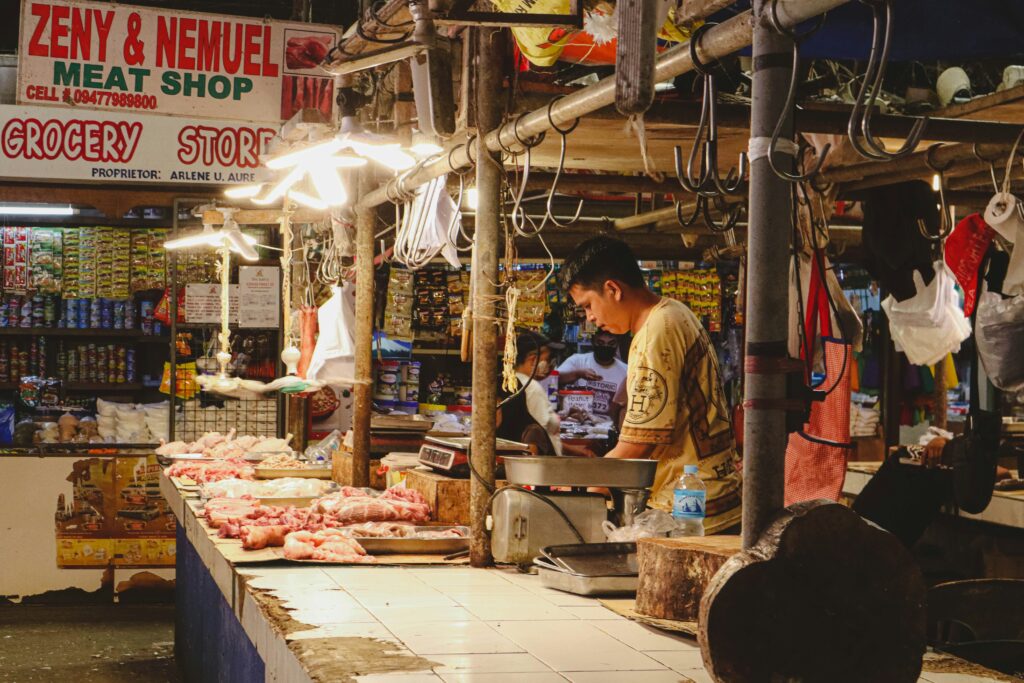
Walk through any Philippine public market at 5 a.m., and you’ll immediately notice the busiest stalls are the meat sections. Sellers quickly chop, weigh, and bag kilos of pork, chicken, goat and beef as customers line up to buy their day’s supply. This constant demand makes owning a small meat shop one of the most dependable businesses in Philippine wet markets.
Filipinos cook at home daily, and most still prefer freshly butchered meats over frozen grocery‑store packs. That’s why even small public markets sustain more than one stall per section. For OFWs or aspiring entrepreneurs looking for a stable, high‑turnover venture, a meat shop offers daily cash flow and consistent customer traffic—ideal for someone who wants both financial and business stability back home.
Capital requirements
Starting capital for a small meat shop typically ranges between ₱300,000 and ₱700,000, depending on the size of your stall, equipment quality, and product volume.
Equipment and tools
Every meat stall needs a combination of cold storage and cutting tools to maintain freshness and speed. Key items include:
- Chest freezers (₱25,000–₱40,000 each) for frozen stock
- Display chillers (₱40,000–₱80,000) to keep meats looking fresh
- Digital weighing scales (₱3,000–₱5,000) for accurate pricing
- Heavy‑duty meat chopping boards, butcher knives, cleavers, and meat saws
- Stainless tables, hooks, and sink areas for hygiene and convenience
Ensure your setup prioritizes cleanliness and cold‑chain efficiency, essential for meat safety certification later on.
Initial inventory
Your first stock is your make‑or‑break capital. Typical starting wholesale orders include:
- Pork: 1 whole carcass (about 60–80 kg)
- Chicken: 40–50 dressed birds
- Beef: 30–40 kg mixed cuts
At current wholesale rates, starting inventory will cost about ₱120,000–₱150,000. Buy from trusted local slaughterhouses or NMIS‑accredited suppliers to ensure safe and traceable meats.
Labor and setup
- Stall renovation and signage: ₱30,000–₱60,000
- Business permits and market rental bond: ₱10,000–₱20,000
- Staff salary (2 helpers): ₱15,000–₱20,000/month combined
Tip: For first‑time sellers, start lean—focus on pork and chicken first, then expand to beef or frozen products once you master sourcing and daily handling.
Permits and food safety
Selling meat in a public market requires strict compliance with both local government and national meat safety standards.
Required business permits
- DTI Business Registration – for naming your stall and operating legally.
- Barangay Clearance and Mayor’s Permit – for your stall location.
- BIR Registration – to issue receipts if applicable.
- Market stall lease contract – obtained from the City or Municipal Economic Enterprise Office.
Food safety and NMIS accreditation
The National Meat Inspection Service (NMIS) monitors slaughterhouses and vendors to ensure safe meat handling practices. To comply:
- Source only from NMIS‑accredited slaughterhouses or processors.
- Transport meat using insulated containers or refrigerated vans.
- Maintain proper temperature during storage: chilled meat at 0–4°C, frozen at –18°C.
- Obtain a Meat Handler’s Certificate for yourself and staff, issued after training on sanitation and handling.
A clean inspection record means your supply won’t be seized, and it builds customer trust—a vital edge in a crowded market.
Location strategy
Wet market advantage
Traditional public markets bring high foot traffic and trusted sourcing from vendors people already know. Most Filipinos prefer buying meat in these accessible, community‑based stalls. Daily commuters and homemakers combine errands like vegetables, fish, and meat in one trip, keeping traffic steady.
However, wet market spaces are often limited, so you’ll need to apply for an official stall from the local government or lease from an existing concessionaire. Check the term length, lease rate, and utilities provision (usually shared electricity and water).
Standalone and community stores
Outside the city centers, you can establish a small neighborhood meat shop beside a sari‑sari store or along subdivision gates. These setups cost less in rent and give you more control over operating hours. You’ll just need a reliable freezer or chiller setup for off‑peak hours.
Example: A former OFW in Tuguegarao opened a 10‑sqm meat booth near a tricycle terminal. By focusing on pork belly and chicken cuts—the top demand items—he earns steady daily sales even without a full market stall.
Operations
Cutting and weighing process
- Receive delivery from supplier before 4 a.m.
- Inspect meat quality (color, smell, temperature).
- Sort by type and display prime cuts on the chiller.
- Chop accurately before peak hours, usually 5 a.m.–9 a.m.
- Weigh using digital scales and wrap in clean, transparent bags.
Avoid washing raw meat in water to “make it look fresh”; instead, maintain temperature properly and control exposure to air and sunlight.
Cold chain management
Keeping your meat fresh is your daily lifeline. Use ice or cold storage to sustain safe temperatures throughout the day, especially after power interruptions. Keep backup ice boxes ready and monitor temperature using inexpensive thermometers inside your freezers.
Tip: Record inventory in a notebook—what time new stock arrives, what sells fastest, and what spoils. Knowing your turnover rate avoids waste and helps plan next‑day orders better.
Pricing strategy
Per kilo pricing
Meat prices fluctuate weekly based on supply and demand. Follow the prevailing wholesale and retail prices from the Department of Agriculture’s Bantay Presyo reports or from your local market groups.
Example per kilo average pricing (subject to change):
- Pork liempo: ₱330–₱360/kg retail
- Chicken leg quarter: ₱180–₱210/kg
- Beef short plate: ₱400–₱450/kg
Add roughly 20–30% markup from your wholesale buying cost to maintain healthy margins.
Market‑based adjustments
When supply tightens (e.g., due to transport strikes or swine flu restrictions), reduce your profit margin slightly to retain customers. Regulars prefer vendors with stable, honest pricing rather than those who spike prices overnight.
Display clear price tags to build transparency—customers appreciate stalls that are upfront and fair.
Staffing
Running a meat stall efficiently requires a small, coordinated team. Typically, you’ll need:
- Butcher or Cutter: Handles meat chopping and sectioning. Must know prime cuts, safety handling, and fast workflow.
- Cashier or Sales Assistant: Weighs and packs meat, manages payments.
- Helper/Runner: Assists with cleaning, ice runs, and inventory restocking.
Train everyone on sanitary handling—uniforms, aprons, and hairnets. Provide rubber gloves and waterproof boots since floors can get slippery. All staff must hold a valid Health Certificate from the city health office.
Example: A family‑run stall in Iloilo employs three members—husband cuts, wife handles customers, and teenage son assists with cleaning. Their teamwork allows them to serve long lines fast, keeping loyal suki daily.
Profitability tips
Early‑morning sourcing
The earlier you buy from slaughterhouses, the fresher your product and the better your prices. Being part of a regular delivery route ensures first‑pick carcasses and reliable supply, crucial during holidays or demand surges.
Bulk buying from slaughterhouses
Most small meat shop owners join cooperatives or partner with dealers who sell per head rather than per kilo—this saves ₱10–₱20 per kilo in markup. Coordinate daily or every‑other‑day deliveries to avoid over‑freezing unsold meats.
Offer value‑added options
- Pre‑packed cuts (adobo, sinigang mix, menudo) for busy customers.
- Frozen processed meats like tocino, longganisa, or hotdogs to diversify sales.
- Whole roasted pork or frozen lechon belly portions during holidays.
Maintain spotless cleanliness
Clean your counters and knives with hot water and detergent before and after each day. Sanitation builds trust and helps pass mandatory meat inspections.
Common challenges and practical solutions
- Unstable meat prices: Build multiple supplier contacts so you can switch easily when one increases prices.
- Power interruptions: Keep insulated ice boxes and a small backup generator to protect cold storage.
- Spoilage losses: Limit stocks to 1–2 days’ worth only. Freeze slow‑moving products for resale later in the week.
- Competition: Win loyal customers through cleanliness, friendly service, and reliable operating hours.
Conclusion
A small meat shop in a public market offers stable daily income, loyal customers, and strong community presence. Filipinos value freshness and personal connection with their suki vendors, which are your biggest advantages in this trade.
With proper cold storage, compliance with food safety rules, and disciplined early‑morning routines, your stall can quickly grow from a small counter to a trusted local brand. Whether you’re a returning OFW or a first‑time micro‑entrepreneur, turning cold cuts into a warm livelihood is absolutely possible—one clean chop at a time.
FAQ: Starting a Meat Shop Business in the Philippines
1. How much capital is needed to start a small meat shop?
Most small meat shops require ₱300,000–₱700,000 depending on stall size, equipment quality, and initial inventory. Cold storage and daily meat sourcing make up the bulk of the cost.
2. What equipment do I need for a meat shop?
You need chest freezers, display chillers, digital weighing scales, chopping boards, butcher knives, cleavers, stainless tables, hooks, and a sink area. Cold-chain efficiency is essential for safety and freshness.
3. How much initial inventory should I buy?
Typical starting stock includes 1 whole pork carcass (60–80 kg), 40–50 dressed chickens, and 30–40 kg of beef cuts. Expect to spend ₱120,000–₱150,000 for initial wholesale orders.
4. Where should I source my meat?
Buy only from NMIS-accredited slaughterhouses or processors to ensure safety and traceability. Early-morning sourcing gives you fresher cuts and better wholesale prices.
5. What permits are required to operate a meat shop?
You need DTI Business Registration, Barangay Clearance, Mayor’s Permit, BIR Registration, a market stall lease contract, and Meat Handler’s Certificates for staff.
6. How do I maintain meat freshness throughout the day?
Keep chilled meat at 0–4°C and frozen meat at –18°C. Use ice boxes during power interruptions and monitor temperatures with thermometers inside freezers.
7. What is the best pricing strategy for meat shops?
Follow prevailing wholesale and retail prices from DA Bantay Presyo reports. Apply a 20–30% markup and adjust based on supply conditions to retain loyal customers.
8. What are common challenges in running a meat shop?
Unstable meat prices, power interruptions, spoilage, and competition. Solutions include multiple suppliers, backup ice boxes, limiting stock to 1–2 days, and maintaining spotless cleanliness.