Many Filipinos dream of starting a small business—whether it’s a sari‑sari store, a food stall, or a simple kiosk outside the house. But here’s the truth most beginners overlook: your location decides your customers long before your products do.
This is where the “captive audience” concept comes in. A captive audience is a group of people who regularly pass by your area because they have to: students walking to school, commuters waiting for a jeep ride, caregivers staying near hospitals, or BPO workers on break. These people already have routines, habits, and daily needs. If your store matches those needs, you win. If not, even the best products you offer won’t sell.
Physical location still beats digital reach for certain products because people buy what is convenient, especially when they’re hungry, tired, rushing, or stressed. And in the Philippines, foot traffic patterns are incredibly predictable.
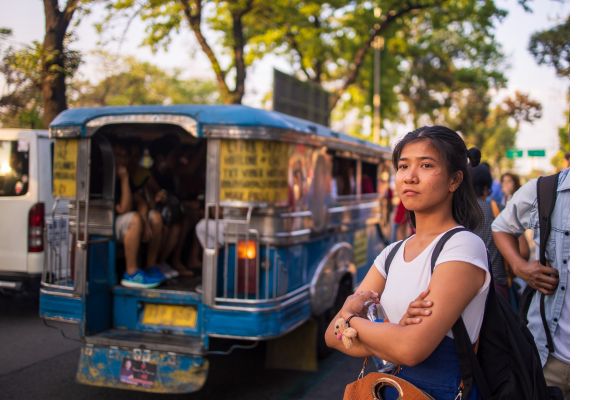
The golden rule is simple: observe the pain points of the people walking by your storefront.
Are they hungry? In a hurry? Tired? Bored? Stressed?
Your product should solve one of these problems instantly.
| Location | Captive Audience Need | Match (The “Win”) | Miss (The “Fail”) |
| School Gate | Low-cost energy & fun | P5 Graham Balls / Stickers | Organic Salads / Life Insurance |
| Jeepney Terminal | Portability & Boredom | Bottled Water / P10 Biscuits | Fragile Glassware / Large Appliances |
| Hospital Lobby | Hygiene & Fast Comfort | Adult Wipes / Hot Lugaw | Hard Candies / Party Supplies |
| BPO Entrance | Alertness & Stress Relief | Strong Coffee / Vapes | Sleeping Masks / Heavy Pajamas |
Across the Philippines, three major high‑traffic zones dominate small business success:
- School zones
- Transport hubs
- Medical centers
- Plus one more: business districts and BPO hubs
Each zone has its own personality—and its own best‑selling products.
Near schools and universities
The vibe: high volume, low price point, social, and visual
Students are one of the most reliable markets in the Philippines. They buy frequently, they buy in groups, and they love anything affordable and “Instagrammable.” If your location is near a school, you’re dealing with a crowd that values budget, convenience, and fun.
Must‑sell items
Budget fuels
Students are always hungry, especially during recess and after class. The classics never fail:
- Siomai
- Fishballs
- Kwek‑kwek
- The growing “pares” trend—cheap, filling, and perfect for barkada meals
A small pares cart near a school can earn steady income because students love meals that feel “sulit.”
Study essentials
Every day, at least one student forgets something. That’s your opportunity.
- Pens
- Yellow pad paper
- Highlighters
- Earphones and charging cables (students lose these weekly)
These items have high turnover and require low capital.
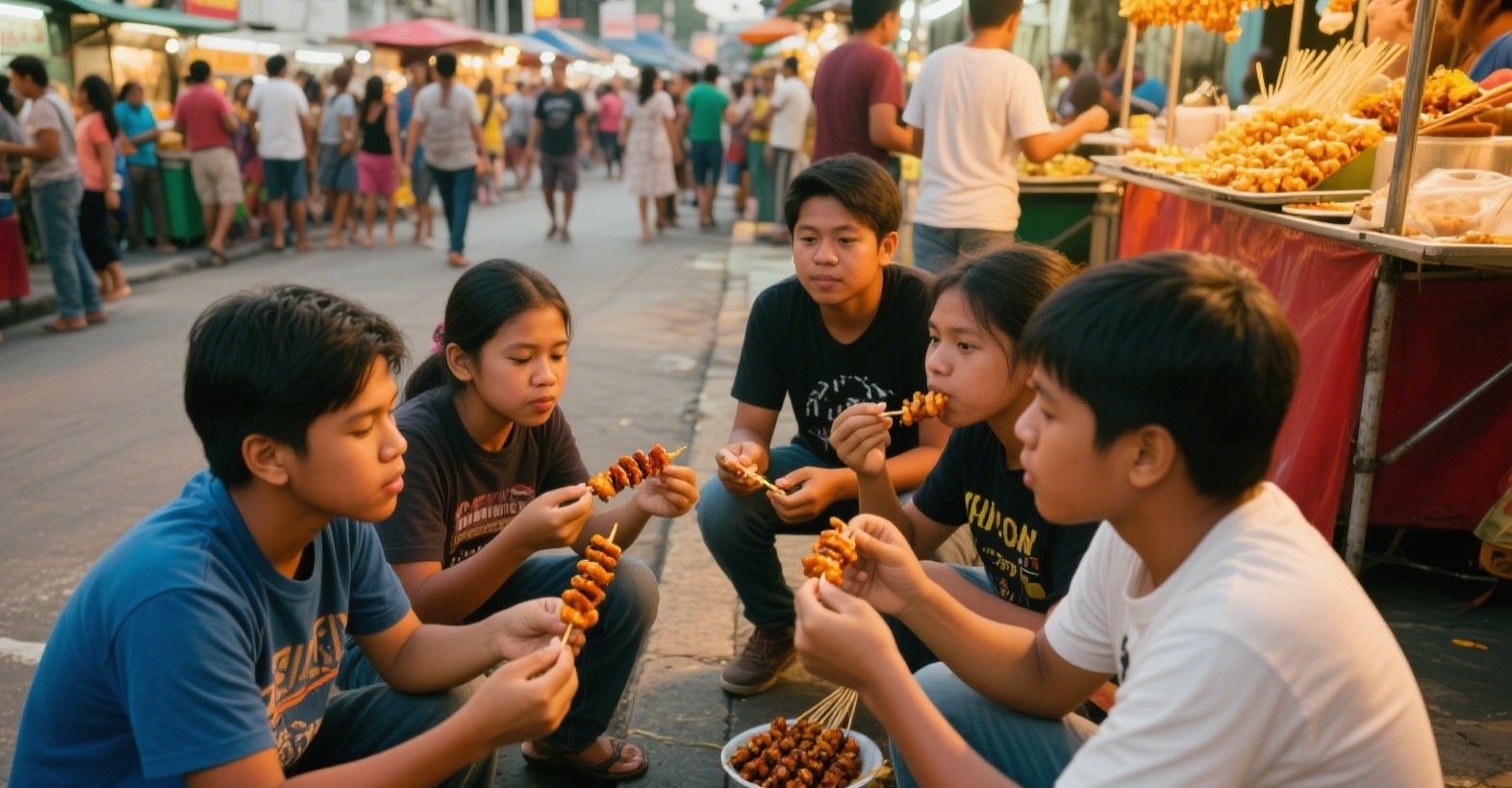
The “Instagrammable” snack
Students love food they can post online. Popular choices include:
- Fruit shakes
- Milk tea
- Korean street food (corndogs, tteokbokki, odeng)
Even a simple ₱39 fruit shake can go viral if it looks good.
Services
Students need quick, affordable services:
- Printing
- Photocopying
- GCash cash‑in/cash‑out
A small print shop beside a school can earn more than a food stall during exam season.
Pro tip: offer combo meals or student discounts
A “₱49 merienda combo” or “₱5 off with school ID” builds loyalty fast. Students love feeling valued, and they return daily.
Near Bus Terminals and Jeepney Stops
The vibe: fast‑paced, travel‑heavy, and focused on convenience
Commuters don’t browse: they grab what they need and go. If your store is near a terminal or jeepney stop, your products must be quick to buy, easy to carry, and immediately useful.
Must‑sell items
Portable snacks
Travelers want something they can eat while walking or riding:
- Bottled water
- Biscuits
- Nuts
- Pasalubong items (especially in provincial terminals)
A small kiosk selling cold water alone can earn thousands daily during summer.
Tech lifelines
Commuters panic when their phone battery dies. You can save the day with:
- Cheap power banks
- Charging cables
- Universal adapters
These items have high margins and sell fast.
Travel hygiene
Filipinos love “tingi,” especially when traveling:
- Small alcohol bottles
- Wet wipes
- Tissue
- Face masks
These are low-cost but high-demand items.
Entertainment
Long rides often mean boredom. Many commuters still prefer inexpensive wired earphones because they’re cheap, easy to stock, and always needed.
Pro tip: speed is everything
If a customer waits more than 60 seconds, they’ll walk away. Prepare “grab‑and‑go” packs and keep your counter clutter‑free.
Near hospitals and medical centers
The vibe: necessity-based, urgent, and comfort-oriented
Hospitals attract a unique crowd: caregivers, relatives, and patients who are tired, stressed, and often staying for long hours. They don’t want luxury—they want comfort and relief.
Must‑sell items
Comfort food
Caregivers often skip meals or eat late. Warm, simple food sells best:
- Lugaw
- Sopas
- Arroz caldo
- Fresh fruit baskets
These are comforting, affordable, and easy to prepare.
Personal care
Hospitals run out of supplies, and caregivers need extras:
- Adult diapers
- Underpads
- Extra-long charging cables (so phones reach hospital beds)
These items are lifesavers—literally.
Caregiver comfort
People staying overnight need:
- Foldable chairs
- Blankets
- Multi-purpose fans
These may sound unusual, but they sell extremely well near hospitals.
Pro tip: focus on empathy and cleanliness
Caregivers are exhausted. A clean, organized store with polite service earns trust quickly.
Near Business Districts/BPOs
The vibe: high disposable income but time-poor
BPO workers and office employees have money to spend but very little time. They value speed, comfort, and convenience, especially during night shifts.
Must‑sell items
Caffeine fixes
Coffee is the lifeblood of night shift workers:
- 3‑in‑1 coffee stations
- Affordable iced coffee
- Brewed coffee in reusable cups
Even a simple ₱25 iced coffee can become a bestseller.
Microwavable meals
Workers want hot meals without waiting:
- Silog meals
- Packed lunches
- Ready‑to‑heat dishes
If you offer 24/7 availability, even better.
Stress relievers
Night shift workers often look for small comforts:
- Menthol balms
- Vaping pods
- Small desk toys or fidget tools
These items help them survive long hours.
How to test your location before investing
Before you spend a single peso on inventory, test your location. Many Filipino entrepreneurs skip this step and end up with products nobody buys.
The “clocking” method
Spend three hours at your potential spot during:
- Morning rush
- Afternoon lull
- Evening peak
Observe who passes by, what they carry, and what they complain about.
A tricycle driver might say, “Wala bang malamig na tubig dito?”
That’s your business idea right there.
Competitor check
Look at nearby stores:
- What are people already buying?
- Is there a long line you can shorten?
- Are there products missing from the area?
If three stores sell milk tea, don’t open a fourth. But if all three have slow service, you can win by being faster.
Permit reminders
Before opening, prepare:
- Barangay Business Clearance
- DTI Business Name Registration
- Mayor’s Permit (if required for your type of business)
These are standard requirements for small businesses in the Philippines.
Common challenges and how to solve them
- Challenge: low sales during certain hours
- Solution: match your peak hours to your market.
Students buy at recess. Commuters buy in the morning. BPO workers buy at night.
| Target Market | Peak Rush Hours | Their “State of Mind” | Strategic Move |
| Students |
9:30 AM – 10:15 AM (Recess)
3:00 PM – 5:00 PM (Dismissal) |
Hungry, social, and looking for a “reward” after class. | The “Barkada” Bundle: Offer group discounts or aesthetic snacks that look good on TikTok. |
| Commuters |
6:00 AM – 8:30 AM
5:00 PM – 7:30 PM |
Stressed, in a rush, and prioritizing utility. | The “Express” Lane: Pre-packed items (water, biscuits, “tingi” hygiene) that can be bought in under 30 seconds. |
| BPO Workers |
8:00 PM – 10:00 PM (Shift Start)
12:00 AM – 2:00 AM (Lunch) |
Tired, seeking comfort, and high-caffeine needs. | The “Night Owl” Menu: Strong coffee, microwaveable “Silog” meals, and menthol balms for alertness. |
- Challenge: too many competitors
- Solution: differentiate through speed, cleanliness, or better packaging.
| Feature | Generic Vendor (The “Same-Same”) | Differentiated Vendor (The “Winner”) |
| Transaction | “Wait lang po, kukuha pa ng sukli.” | “Eto na po, ready-to-go!” |
| Presentation | Exposed food, dusty counter. | Covered trays, visible hand sanitizer. |
| Packaging | Plain plastic bag (soggy food). | Breathable paper bag (crispy food). |
| Result | One-time buyer. | Loyal, “suki” customer. |
- Challenge: unpredictable weather
- Solution: adjust your inventory.
Sell umbrellas in June, fans in April, and hot drinks in December.
| Month / Season | Predominant Weather | The “Must-Have” Inventory | Strategic Reason |
| April – May (Summer Peak) | Extreme Heat (Heat Index up to 45°C) | Portable Fans, Water, Sunscreen. | Health and hydration are the priority. High demand for “cool-down” items for students and commuters. |
| June – August (Monsoon Start) | Heavy Rains & Sudden Showers | Umbrellas, Ponchos, Waterproof Bags. | Commuters (especially those on motorcycles) need “protection on the go” to reach work dry. |
| September – Nov (Typhoon Season) | Storms & Power Interruptions | Power Banks, Flashlights, Silica Gel. | “Emergency protection” becomes the focus. Tech-heavy markets like BPO workers need to keep devices alive. |
| December – Feb (Amihan / Cool) | Cooler, Breezy Mornings | Hot Coffee, Soup Mixes, Light Jackets. | The “comfort economy” peaks. Filipinos seek warmth and “Pasalubong” items for the holiday season. |
- Challenge: limited capital
- Solution: start with fast-moving, low-cost items.
You can expand once you understand your customers’ habits.
| Budget Level | Idea | Why It’s “Fast-Moving” |
| ₱3,000 – ₱5,000 | E-Loading & Digital Cash-In | Requires zero physical space. Everyone needs data/load daily. |
| ₱5,000 – ₱10,000 | Home-Baked “Box” Orders | Cookies or brownies sold via local Viber/FB groups. Low waste because you bake only when ordered. |
| ₱10,000 – ₱20,000 | Specialty Rice Reselling | Rice is a non-negotiable staple. If you offer a better price than the supermarket, neighbors will flock to you. |
Tips for success
- Start small, observe, then expand.
- Keep your store clean and well-lit.
- Build relationships with regular customers.
- Track your daily sales to see which items move fastest.
- Adjust your inventory based on seasons and trends.
A sari‑sari store owner in Cavite once shared that her best-selling item changed every three months—ice candy in summer, instant noodles during rainy season, and coffee during “ber” months. Flexibility is key.