Summary
- Rice is a Filipino staple—always in demand regardless of economic conditions.
- Low startup capital: ₱200,000–₱500,000 gets you running.
- Focus on reliable suppliers, proper storage, and neighborhood convenience.
- Steady daily profits from consistent household purchases.
Rice is more than just food in the Philippines—it’s the foundation of every meal, every day. From breakfast sinangag to dinner rice pairings, every Filipino household buys rice multiple times a month. That’s why rice retailing remains one of the most recession‑proof businesses in our country.
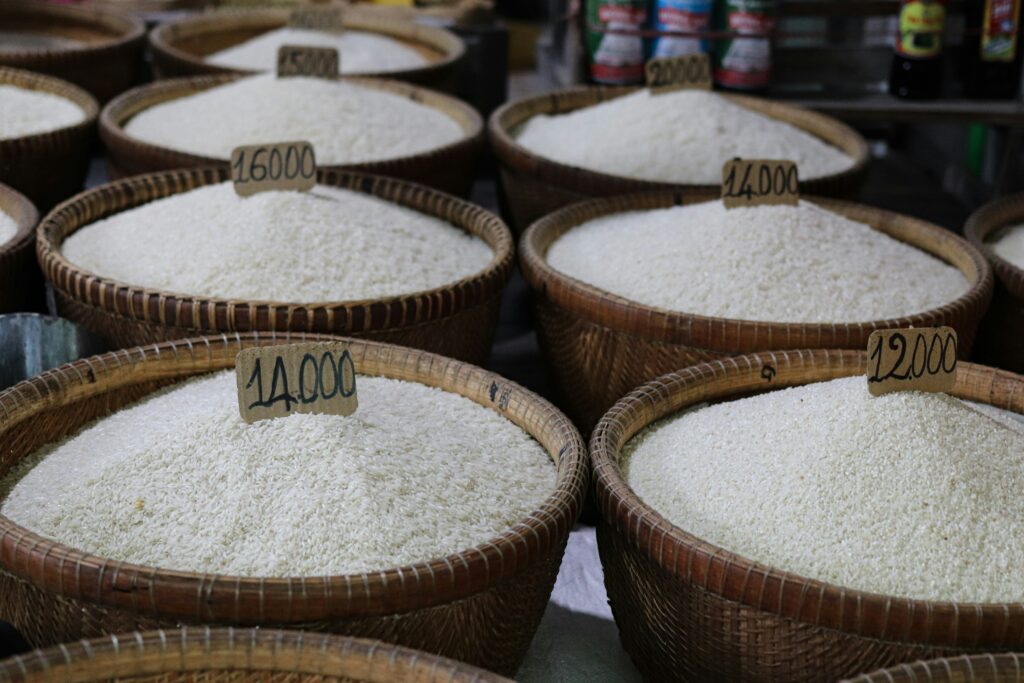
Even during tough times, people prioritize rice over other expenses. For OFWs returning home or small entrepreneurs looking for stable income, a rice retailing business offers daily cash flow, minimal spoilage risk, and loyal neighborhood customers. Whether standalone or beside a sari‑sari store, rice stalls thrive because they meet a basic, unchanging need.
Capital requirements
Starting a small rice retailing business requires ₱200,000 to ₱500,000 initial capital, depending on your location and stock volume.
Equipment and tools
Your setup focuses on accurate measuring, clean display, and pest protection:
- Rice dispensers (3–5 units): ₱5,000–₱10,000 each
- Digital weighing scales: ₱2,500–₱4,000
- Storage sacks and plastic containers: ₱5,000–₱10,000
- Shop signage, measuring scoops, and packaging bags: ₱3,000–₱5,000
- Small shop renovation (if needed): ₱20,000–₱50,000
Prioritize durable, food‑grade equipment that withstands humidity and frequent use.
Initial rice inventory
Most beginners start with 10–20 sacks of assorted rice varieties:
- 5 sacks premium (Sinandomeng, Jasmine): ₱2,800–₱3,500/sack
- 10 sacks well‑milled (Regular, Dinorado): ₱2,200–₱2,800/sack
- 5 sacks budget (NFA, commercial): ₱1,800–₱2,300/sack
| Variety | Sacks (50kg) | Wholesale Price / Sack | Sub-total |
| Premium (Sinandomeng/Jasmine) | 5 | ₱2,600 – ₱3,200 | ₱13,000 – ₱16,000 |
| Well-Milled (Dinorado/Regular) | 10 | ₱1,850 – ₱2,400 | ₱18,500 – ₱24,000 |
| Budget (Local RMR/Special) | 5 | ₱1,650 – ₱1,800 | ₱8,250 – ₱9,000 |
| TOTAL INITIAL STOCK | 20 Sacks | — | ₱39,750 – ₱49,000 |
This mix appeals to different customers and reduces risk if one variety sells slower.
Operating expenses
- First month rent and utilities: ₱10,000–₱20,000
- Staff salary (1 helper): ₱12,000–₱17,000
- Delivery transport or motorcycle fuel: ₱3,000–₱5,000
Tip: Start small with 8–10 sacks total if capital is tight. Replenish based on what sells fastest in your area.
Permits
Business registration
- DTI Registration – secures your business name and sole proprietorship status.
- Barangay Clearance – confirms you can operate in your location.
- Mayor’s Business Permit – issued by your city or municipal hall.
- BIR Registration – for taxes and official receipts.
NFA guidelines
The National Food Authority (NFA) regulates rice imports and buffer stocking, but small retailers follow general food safety rules:
- Source rice from licensed mills or wholesalers.
- Display variety names, origin, and sack weight clearly.
- Maintain clean storage to prevent contamination.
NFA occasionally conducts random inspections, so proper labeling and hygiene keep you compliant and penalty‑free.
Supplier sourcing
Millers and wholesalers
- Local rice mills near your area offer fresher stock and faster delivery.
- Wholesale markets like Divisoria, Baclaran, or regional trading centers provide volume discounts.
- Cooperatives like Grain Producers or Farmers Coop offer stable pricing for regular buyers.
Visit suppliers personally to check sack condition, milling quality, and moisture content. Test small batches first before committing to bulk orders.
| Source Type | Recommended Locations | Why This Choice? |
| Regional Trading Hubs | Intercity (Bocaue, Bulacan), San Ildefonso, or San Jose, Nueva Ecija. | The “Rice Capital” hubs offer the freshest local milled rice directly from the farm-gate. |
| Wholesale Markets | Divisoria (Dagupan/Asuncion St.), Baclaran, or Mandaue City (Cebu). | Best for imported varieties (Vietnam/Thailand) and volume discounts on commercial grades. |
| Farmers’ Cooperatives | Abulug (Cagayan), Isabela Multipurpose Coop, or Davao Grains Coop. | Stable pricing. Cooperatives often have fixed rates for regular partners, protecting you from sudden price hikes. |
Delivery and payment terms
Arrange for daily or every‑other‑day deliveries to maintain fresh stock. Most suppliers offer 7–15 day credit terms for trusted buyers, improving your cash flow.
Example: A sari‑sari store owner in Cavite partnered with a nearby miller who delivers 3 sacks daily. This arrangement keeps her stock fresh while building a long‑term discount relationship.
Location strategy
Ideal spots
- Near public markets – housewives buy rice alongside vegetables and meat.
- Beside terminals or jeepney stops – commuters grab quick kilos during travel.
- Neighborhood clusters – subdivisions, apartments, or boarding houses with multiple households.
- Along main roads – visible to passing vehicles and delivery riders.
A 10–15 sqm space works perfectly. Ensure good foot traffic, parking for motorcycles, and protection from direct sunlight or flooding.
Sari‑sari store synergy
Many successful rice retailers operate beside or within sari‑sari stores. Customers combine purchases, increasing both sales volume and convenience.
Example: A tricycle driver in Laguna converted half his small lot into a rice stall. Located near the elementary school, it serves teachers, parents, and canteen operators who buy 5–10 kg daily.
Pricing and margins
Per kilo markup
Rice retailing typically enjoys ₱10–₱25 per kilo markup, depending on variety and competition:
| Rice Type | Wholesale (₱/kg) | Retail (₱/kg) | Markup |
|---|---|---|---|
| Premium (Jasmine) | ₱65–₱75 | ₱80–₱95 | ₱20/kg |
| Well‑milled | ₱50–₱60 | ₱65–₱75 | ₱15/kg |
| Budget/NFA | ₱40–₱50 | ₱55–₱65 | ₱12/kg |
Always check neighboring prices and adjust to stay competitive while protecting your margins.
Handling shrinkage and spoilage
Rice lasts months if stored properly, but monitor for:
- Moisture absorption – use silica packs or dehumidifiers.
- Pest infestation – regular fumigation and airtight containers.
- Weight loss – check sack integrity during delivery.
Sell older stock first (FIFO: first in, first out) to minimize losses.
Operations
Storage and pest control
Proper storage prevents your biggest losses. Follow these daily practices:
- Elevate sacks 6 inches off the ground using pallets.
- Cover with tarps to block moisture and direct sunlight.
- Use rat traps, fumigation powder, and sealed containers.
- Rotate stock regularly—sell older bags first.
Maintain shop temperature below 30°C and humidity under 70% for best shelf life.
Daily workflow
- Morning (6–8 a.m.): Receive delivery, inspect quality, restock dispensers.
- Peak sales (8 a.m.–12 p.m., 4–7 p.m.): Serve walk‑in customers.
- Evening: Clean shop, check inventory, plan next day’s order.
Tip: Offer “ready bags” (1kg, 2kg, 5kg) for busy customers who want speed.
Profitability tips
Mix of premium and budget rice
Stock 40% premium, 40% well‑milled, 20% budget varieties. Premium rice attracts higher margins, while budget options draw volume buyers like boarding houses and canteens.
Free delivery for bulk buyers
Offer free delivery within 2 km for 10kg+ purchases. Target:
- Canteens and small eateries
- Boarding houses and dormitories
- Sari‑sari stores buying wholesale
Loyalty discounts
Give “buy 10, get 1kg free” cards or 5% off for monthly bulk buyers. Small gestures convert one‑time buyers into regulars.
Expand with related products
Once established, add cooking oil, soy sauce, vinegar, or noodles. Rice customers naturally buy meal accompaniments.
Common challenges and solutions
- Price fluctuations: Lock in monthly contracts with suppliers or diversify varieties to spread risk.
- Intense competition: Differentiate with cleanliness, accurate weighing, friendly service, and delivery options.
- Storage pests: Monthly professional fumigation (₱2,000–₱3,000) and strict daily cleaning.
- Slow capital turnover: Focus on high‑turnover varieties and bulk delivery customers.
| Challenge | Strategy | Cost/Investment |
| Rising Rents | Sublease a corner of an existing sari-sari store. | ₱3,000–₱5,000/mo |
| Pest Infestation | Shift to airtight 25kg plastic bins instead of open sacks. | ₱800/bin |
| Price Wars | Offer a “Loyalty Card” (10th kilo is half-price). | ₱200 (Printing) |
| Inventory Loss | Digital Inventory App (e.g., Peddlr or Loyverse). | Free (Basic) |
Conclusion
A small rice retailing business offers the perfect blend of stability, low risk, and daily income for Filipino entrepreneurs and returning OFWs. Rice consumption never stops, and neighborhoods always need convenient, reliable suppliers.
With smart supplier relationships, proper storage practices, and customer‑focused service, your rice stall can become the go‑to neighborhood source. Every sack you sell nourishes families while building your financial security—one measured kilo at a time.