Starting a business is a dream for many Filipinos. Whether it’s an OFW looking to come home for good, a retiree investing their separation pay, or a young professional trying to escape the 9-to-5 grind, the goal is always the same: financial freedom and a better life for the family. Understanding why businesses fail Philippines is crucial for aspiring entrepreneurs.
In the Philippines, Micro, Small, and Medium Enterprises (MSMEs) make up over 99% of all businesses. However, the Department of Trade and Industry (DTI) has noted a sobering reality—many of these small ventures struggle to survive past their first three years.
Failure isn’t just about losing money; it’s about lost dreams and hard-earned savings. But here’s the good news: business failure is often preventable. By understanding the common “pitfalls” in the Philippine context and applying practical solutions, you can build a business that doesn’t just survive, but thrives.
Common reasons Filipino businesses fail
Lack of proper planning and market research
I used to fall into the trap of starting a business just because it was “uso.” I remember seeing three milk tea shops booming on one street and thinking, “If they can do it, I can too.” So I opened a fourth one right beside them — and reality hit fast.
The market was already saturated, and instead of sharing customers, we were all fighting over the same small group of buyers. That’s when I realized how dangerous the copycat mentality can be. A trend doesn’t automatically mean it’s right for your location or your customers.
What changed my approach was learning to validate before investing. I started observing my neighborhood more intentionally — counting foot traffic, watching what people actually bought, and noting which shops they entered. Those simple observations taught me more than any trend ever could. I also discovered how helpful DTI Negosyo Centers are. Their free consultations and basic industry data helped me see whether an idea had real potential.
| The Trend (Uso) | The Failure Path | The Success Path (Finding the Gap) |
| Self-Service Laundry | Opening right next to 2 others. | Offering a “Drop-off & Fold” or “Ironing” add-on service. |
| Pares Retiro | Using the exact same recipe as the guy next door. | Offering “Unlimited Rice” or a “Premium Wagyu” version. |
| Coffee Shop | Selling ₱150 lattes in a low-income area. | Selling ₱35 high-quality “Kape Barako” in a portable pouch. |
The most eye-opening step was asking people directly — not “Do you like my idea?” but “Would you actually pay for this?” That shift gave me honest answers and helped me separate fun ideas from viable businesses.
If there’s one thing I’d tell anyone tempted by a trend, it’s this: don’t let “uso” decide your future. Validate first. A few days of research is far cheaper than months of recovering from a bad investment.
Insufficient capital and poor cash flow management
I learned the hard way that a beautiful grand opening doesn’t guarantee long-term success. I spent most of my capital on interiors, decorations, and a picture-perfect launch, only to realize later that I had almost nothing left for daily operations. It got worse when I started “mixing wallets” — using business sales for household needs, thinking I’d replace the money later. I never did, and soon I couldn’t even track where the money was going.
What saved me was sticking to the Two-Wallet Rule. I opened a separate account for the business and treated it like a different person entirely. That simple boundary brought clarity and discipline. I also learned that businesses rarely profit in the first few months, so building a 3–6 month buffer fund became essential. It kept me afloat during slow weeks and prevented panic decisions.
And one more lesson: avoid “5-6” lenders at all costs. The interest is so high that even a small loan can trap you. When I needed extra funding, I turned to cooperatives and microfinance groups instead — the terms were clearer and far less risky.
If there’s one takeaway, it’s this: discipline with money matters more than a beautiful store. Separate your finances, build a buffer, and stay away from predatory loans. These habits can keep your business alive long after the grand opening hype fades.
Poor inventory and supply chain management
When I was running my sari-sari store, I didn’t realize how much “dead stock” was silently draining my capital. I used to buy items just because they were on sale or looked interesting, only to watch them expire on the shelf. Meanwhile, I’d run out of fast-moving basics like rice, eggs, or soft drinks — and customers would simply walk to the neighbor’s store. That’s when it hit me: inventory can make or break a small business.
What helped me was keeping things simple. I used a notebook to track what sold out and what barely moved. That small habit showed me exactly which items deserved restocking. I also started using FIFO — putting new stock at the back and older items in front — which reduced waste and prevented expired goods from piling up.
The last big lesson was diversifying suppliers. When onion prices suddenly spiked at the wet market, I had no choice but to buy at high prices. After that, I built relationships with a wholesaler and even a small farmer. Having multiple sources protected my margins and kept my shelves full.
Inventory management isn’t about buying more — it’s about buying smart and staying consistent.
Weak marketing and branding
I used to believe that as long as my shop was open, customers would naturally find me. But the truth is, if your store is tucked away in a small eskinita and you’re not online, you’re practically invisible.
I learned this the hard way. Days would pass with barely any foot traffic, and I kept wondering why sales were slow. Meanwhile, other small businesses in the area were thriving simply because they showed up where people actually spend their time — online.
The turning point came when I realized I needed to be visible where people look. I created a Facebook Page and a TikTok account, even though I wasn’t confident at first. I joined community buyer groups in my barangay and started posting daily updates — new stocks, promos, even simple behind-the-scenes moments. Suddenly, people who didn’t even know my store existed were messaging me for orders. It felt like I had opened a second branch, but online.
I also learned the power of offering something “kakaiba.” If you’re selling fried chicken, why should people choose yours over the dozens of others? Is it the size? The flavor? The gravy? The 10-minute delivery promise? Once I figured out what made my product different, I highlighted it everywhere — online posts, signage, even word-of-mouth. That small shift helped me stand out in a crowded market.
If there’s one thing I want fellow entrepreneurs to remember, it’s this: you don’t need a huge budget to market your business. You just need visibility and a clear reason for customers to choose you.
Poor location or wrong business model
I’ve seen businesses fail not because the product was bad, but because the location didn’t match the market. I made this mistake myself when I opened a premium milk tea shop in a neighborhood where people preferred affordable palamig and ₱10 add-ons.
The drinks were good, but the community wasn’t looking for “premium.” They wanted value. That experience taught me that even a great idea will struggle if it’s placed in the wrong environment.
To avoid repeating that mistake, I started observing foot traffic before choosing a location. A simple Saturday morning spent watching who walks by — students, workers, parents — told me more than any online research. I also learned to do real due diligence with franchises. Instead of relying on glossy brochures, I visited existing branches and talked to owners about their actual ROI and challenges. Those honest conversations saved me from costly decisions.
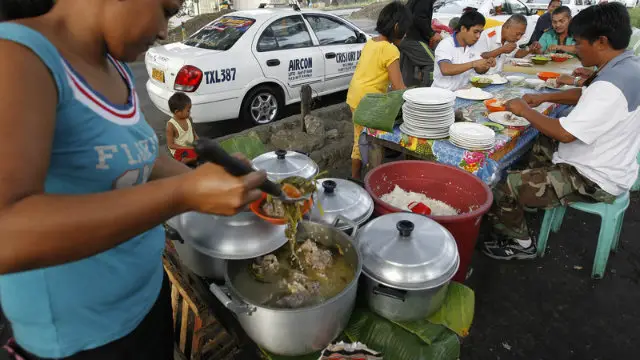
The biggest lesson: don’t force a business into a place where it doesn’t fit. Match the vibe of your product to the needs of the community, and your chances of success grow dramatically.
Lack of business skills and training
Being a good cook doesn’t automatically make you a good restaurant owner — I learned that the moment I had to deal with bookkeeping, costing, and even basic labor rules.
Many Filipino food businesses fail not because the food is bad, but because the owner never learned the “boring” side of running a business. I’ve seen carinderias with delicious ulam close down simply because they didn’t know how to compute food cost or track expenses.
What helped me was becoming a student again. TESDA and DTI offer free or low-cost seminars on everything from baking to basic accounting, and those classes opened my eyes to how much I didn’t know. I also learned the importance of food costing. If you’re selling a ₱50 meal, you need to know exactly how much went into the oil, gas, seasoning, and even the plastic bag. Once I understood my true costs, pricing became clearer and my margins finally made sense.
Poor customer service
I used to think good food alone was enough — until I saw how one bad interaction could hurt my business. In the Philippines, we often say “uubra na ’yan,” and I believed it too. I thought customers would overlook a suplada tindera or slow service. But I learned quickly that Filipinos value warmth. A cold stare or delayed response can push people to the next store faster than any price increase.
What changed everything was adopting the “Suki Mindset.” I started treating every customer like a potential regular. Simple things — a smile, a quick “Salamat po,” remembering their usual order — made people come back. These small gestures cost nothing but build loyalty.
I also learned to handle complaints calmly. Once, a customer said their food tasted off. Instead of arguing, I replaced the meal immediately. Losing ₱100 was nothing compared to the damage a negative post on Facebook could cause. In today’s world, one bad review can spread faster than any promo.
Good service isn’t extra — it’s part of survival of the business.
Lack of adaptability
When the pandemic hit, the world changed almost overnight — and so did the way customers behaved. I saw many businesses around me struggle simply because they refused to adapt. Some didn’t want to accept GCash, insisting on cash only.
Others ignored delivery platforms like FoodPanda and Grab, thinking they were just “extra hassle.” Meanwhile, customers were shifting fast. People wanted contactless payments, doorstep delivery, and convenience above all. Those who adapted early survived. Those who didn’t… well, many of them closed their doors for good. Watching that unfold made me realize that refusing to evolve is one of the quickest ways to fall behind.
What helped me was learning to embrace digital, even if it felt intimidating at first. Going cashless was a game-changer. The moment I displayed a QR PH code, I noticed customers spending more freely. It removed the awkward “Wala po akong barya” moments and made transactions smoother. It also made my business look more professional and modern, even if I was just running a small shop.

I also learned to stay curious. Trends change quickly, and customers are vocal about what they want. When people started asking for sugar-free drinks, keto-friendly meals, or smaller portions, I paid attention. Instead of brushing off those requests, I experimented. Sometimes the new items worked, sometimes they didn’t — but the willingness to try kept my business relevant. I realized that customers appreciate it when you listen and adjust.
If there’s one thing I want fellow entrepreneurs to take from this, it’s this: digital tools aren’t just for big businesses. They’re for anyone who wants to stay competitive in a world that’s constantly changing. Embrace them, stay curious, and let your business evolve with your customers.
Internal conflicts (The family business trap)
Running a family business can be rewarding, but it gets messy fast when there are no clear boundaries. I’ve seen it happen — no one knows who’s really in charge, or a sibling casually takes money from the drawer “pambili lang ng ulam,” thinking it’s harmless. These small things pile up, and suddenly the business is struggling not because of customers, but because of internal confusion.
What helped us was learning to professionalize the family. We assigned clear roles — one handled cooking, another managed the books, another took care of marketing. It felt formal at first, but it brought structure and accountability. We also wrote down agreements on profit-sharing and decision-making. Putting things on paper prevented arguments and kept everyone aligned.
Love and trust matter, but they’re not enough to run a business. Clear roles and written rules protect both the business and the family.
External factors (Inflation and disasters)
I’ve learned that no matter how prepared you think you are, external shocks are part of doing business in the Philippines. Typhoons, sudden price hikes, and supply shortages hit without warning.
I still remember the month sugar prices doubled overnight — my margins vanished instantly, and I had to adjust fast just to stay afloat. Moments like that taught me that even well-run businesses can struggle if they’re not ready for surprises.
What helped me was disaster-proofing my operations. Getting micro-insurance was one of the smartest moves I made. It wasn’t expensive, and providers like Cebuana Lhuillier and CARD Pioneer offered coverage for fire, floods, and other emergencies. I used to think insurance was only for big companies, but seeing small shops never reopen after a typhoon changed my mind.
I also learned to diversify. When a key ingredient becomes too expensive, you can’t just absorb the cost. I started creating “Plan B” products using cheaper, seasonal ingredients so I could keep selling without hurting my margins. That flexibility kept my business running even during price spikes.
External shocks are unavoidable, but being unprepared doesn’t have to be. Protect what you’ve built and always have a backup plan.
How to build a business that survives
If you are just starting, follow these four pillars of sustainability:
Step 1: Start small, test fast
Don’t quit your job and invest ₱500,000 immediately. Start with a “Minimum Viable Product” (MVP). If you want to open a bakery, start by selling brownies to your neighbors and office-mates first. If they buy and ask for more, then you have a business.
Step 2: Build systems, not just a job
If the business cannot run without you being there 24/7, you don’t have a business—you have a job.
Create SOPs (Standard Operating Procedures). Write down exactly how to close the store, how to clean the equipment, and how to record sales. This makes it easy to hire and train staff later.
Step 3: Track your numbers religiously
You cannot manage what you do not measure. Every single day, you should know:
- Total Sales
- Total Expenses (including your own salary!)
- Ending Inventory
Step 4: Focus on the “Suki” (Customer Loyalty)
It is 5x cheaper to keep an old customer than to find a new one. Treat your regular customers like royalty. A simple “How is your family, Ma’am?” goes a long way in the Philippine market.
Real-Life Filipino Examples: Lessons Learned
The “utang” trap (sari-sari store)
Aling Nena opened a sari-sari store with ₱20,000 capital. Because she was “mahiyaing tumanggi” (ashamed to say no), she let neighbors buy on credit (utang). By month three, her shelves were empty because all her capital was tied up in her neighbors’ unpaid bills. Lesson: Have a strict “No Credit” policy or a very small limit for trusted people only.
The successful shift (carinderia)
Mang Jose’s carinderia saw fewer people during the rainy season. He started a “Luto-on-Demand” Facebook Messenger service where neighbors could pre-order lunch for delivery. His sales tripled because he solved the customer’s problem of not wanting to go out in the rain. Lesson: Adapt your delivery method to the environment.
The unprepared OFW
Bernie came home from Dubai with ₱1M and immediately bought a franchise of a popular laundry shop without checking the local water supply and electricity costs. Within 6 months, his overhead was higher than his income. Lesson: Never invest “blindly.” Research the operational costs in your specific Philippine province first.
| Category | Action Item |
| Planning | Did I talk to at least 10 potential customers? |
| Finance | Do I have a separate bank account for the business? |
| Marketing | Is my business searchable on Google Maps or Facebook? |
| Operations | Do I have a written list of daily tasks for my staff? |
| Legal | Am I registered with the DTI/SEC and the Barangay? |
Conclusion
Building a business in the Philippines is an uphill battle, but it is one of the most rewarding things you can do for your family. Failure usually doesn’t happen because of “bad luck”—it happens because of a lack of systems, planning, or discipline.
By treating your business as a professional entity from day one—tracking your centavos, listening to your customers, and staying humble enough to keep learning—you can turn that small “sideline” into a legacy.