The growing demand for clean, safe drinking water in the Philippines has kept the water refilling station one of the country’s most resilient neighborhood businesses. As of Q2 2026, more than 10,000 water refilling stations operate nationwide, up from roughly 3,000 in 2017 — a reflection of both persistent tap water safety concerns and the steady migration of Filipino households away from bottled mineral water toward cheaper, locally refilled 5-gallon jars.
Neighborhood refilling stations still deliver purified water at a fraction of supermarket bottled water prices. In 2026, a 5-gallon refill costs roughly ₱20–₱30 for pickup and ₱25–₱35 for delivery, according to price boards posted by working stations across Metro Manila, Cebu, and Davao — while a comparable branded bottled water pack costs 5-10× more per liter. That price gap, combined with the rising cost of home water filters (RO systems for the home now start around ₱15,000), keeps residential and small-business demand strong.
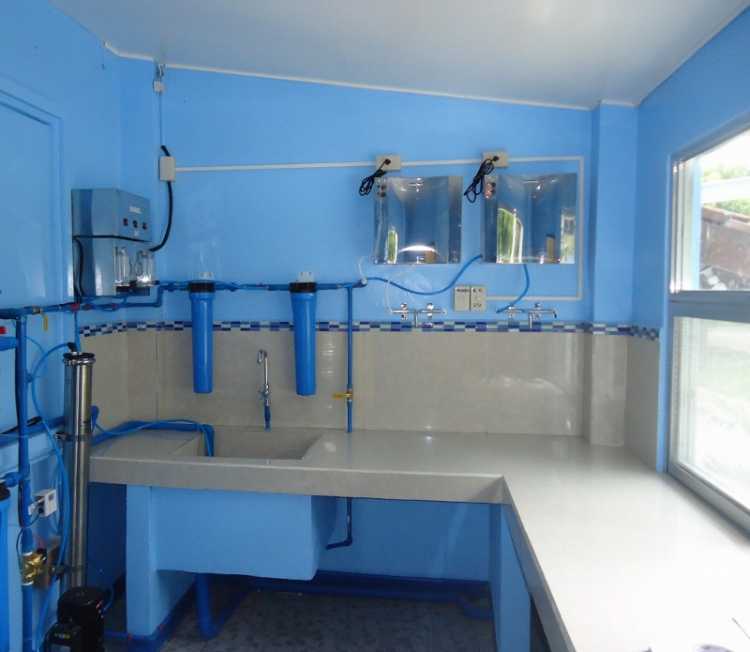
This 2026 guide walks through everything you need to launch a compliant, profitable water refilling station — updated capital costs, franchise vs. indie comparison, DOH permit requirements and fees, equipment specs with 2026 replacement costs, a full monthly opex breakdown, and three revenue scenarios (slow-start, steady, mature) with realistic breakeven timelines. A downloadable PDF startup checklist and Excel financial workbook are also linked below.
- Why the water refilling business is still growing in 2026
- Free downloads: startup PDF + Excel financial workbook
- 2026 capital breakdown — three startup tiers
- Franchise vs. build-your-own brand
- 7-step launch roadmap
- Purification equipment specs and 2026 replacement costs
- DOH permits, LGU requirements, and 2026 permit fees
- Monthly operating costs (2026 pesos)
- 2026 refill pricing and revenue model
- Quality control: 54 DOH parameters and testing frequency
- Frequently asked questions (15)
Why the water refilling business is still growing in 2026
Three structural trends make water refilling one of the most durable neighborhood businesses in the Philippines going into 2026.
1. Tap water quality is uneven — even in Metro Manila
Even in areas served by Maynilad or Manila Water, aging pipes, occasional service interruptions, and turbidity spikes after typhoons keep most households boiling water or buying refills for drinking. Outside Metro Manila, dependence on deep wells and small local water districts makes refill stations even more essential.
2. Cost gap versus bottled water remains huge
A 5-gallon jar (roughly 18.9 liters) refilled at your station for ₱25 costs the customer about ₱1.30 per liter. The nearest bottled equivalent at any supermarket runs ₱15-25 per liter. Even mid-priced sari-sari store bottled water at ₱15 per 500ml equals ₱30 per liter. Household economics keep customers refilling.
3. Home RO filter costs are climbing
The upfront cost of a home reverse-osmosis filter has crept above ₱15,000 in 2026, with annual filter replacement running another ₱3,000-5,000. That keeps refilling economically attractive for the average Filipino household consuming 1-2 jars per week (₱100-250/month vs. ₱1,500-2,000/year amortized for a home system that still requires maintenance).
4. Delivery is now the default
The single biggest change since our earlier version of this guide is delivery. In 2026, well-run stations get 60-80% of orders via Viber, Facebook Messenger, or GCash-order-and-deliver. Customers rarely walk in. This changes the business model in two ways: (a) location matters slightly less than before — an “interior” location with cheaper rent works if delivery logistics are solid; and (b) a delivery motorcycle (or e-trike) is no longer optional, it’s core infrastructure.
Free downloads: 2026 startup PDF + Excel financial workbook
- 📄 PinoyNegosyo.net 2026 Water Refilling Station Startup Guide (PDF) — Capital breakdown for 3 tiers, equipment specs, permit checklist, monthly opex, revenue scenarios, and franchise comparison. Print-ready.
- 📊 PinoyNegosyo.net 2026 Water Refilling Financial Workbook (Excel) — Startup cost calculator, monthly P&L with live formulas, breakeven projection, permit tracker, and daily sales log.
Last updated: June 2026. Prices benchmarked against Aquabest and Crystal Clear franchise offerings (2025-2026), Alibaba equipment pricing (Q2 2026), DOH-CHD permit fees, and PH water station Facebook price boards.
2026 capital breakdown — three startup tiers
How much do you actually need to open a water refilling station in 2026? It depends on scale and whether you go independent or franchise. Here are the three most common tiers, benchmarked against active supplier quotes and 2025-2026 franchise offerings.
Basic (Indie, ~1,500 L/day)
Total: ₱200,000 – ₱350,000
| Line item | Low ₱ | Typical ₱ | Notes |
|---|---|---|---|
| Purification system (RO 500-1000 LPH, tanks, UV, ozone) | ₱90,000 | ₱150,000 | Local vendor package or Alibaba import ($1,000-2,000) |
| Space fit-out (tiles, plumbing, electrical, signage) | ₱30,000 | ₱60,000 | For 20-25 sqm rented space |
| Empty containers (60 units, mixed round + slim) | ₱8,000 | ₱10,000 | ₱126-155 per empty container |
| Cap seals, heat gun, sanitizer, cleaning supplies | ₱4,000 | ₱8,000 | First 3 months of consumables |
| Motorcycle w/ sidecar for delivery (2nd hand) | ₱25,000 | ₱55,000 | Optional but doubles serviceable area |
| Permits, water lab test, sanitary engineer, signage | ₱15,000 | ₱25,000 | DOH lab test alone: ₱3,000-5,000 |
| Rent deposit (2 months) + advance | ₱15,000 | ₱30,000 | Depends on location |
| Working capital / operating buffer (1 month) | ₱13,000 | ₱12,000 | Payroll, utilities, restocks |
Standard (Indie, 3,000-6,000 L/day)
Total: ₱400,000 – ₱700,000
| Line item | Low ₱ | Typical ₱ | Notes |
|---|---|---|---|
| Purification system (RO 1,500-3,000 LPH, full ozone+UV) | ₱180,000 | ₱280,000 | 6000 GPD package ~₱295,000 |
| Space fit-out (better tiles, epoxy floor, ceiling) | ₱50,000 | ₱90,000 | For 25-40 sqm with room for jars |
| Empty containers (120 units + slim jars) | ₱18,000 | ₱25,000 | Round + slim mix |
| Delivery vehicle (motorcycle+sidecar or used e-trike) | ₱45,000 | ₱90,000 | Higher volume → dedicated route |
| Water source (deep well drilling if no city supply) | ₱40,000 | ₱100,000 | Skip if using Maynilad/Manila Water |
| Cap seals, sanitizer, cleaning, and lab tests | ₱8,000 | ₱15,000 | First quarter consumables |
| Permits (DTI, mayor, sanitary, DOH-CHD, BIR) | ₱20,000 | ₱35,000 | Includes engineer’s fee |
| Signage + launch marketing (tarps, flyers, FB ads) | ₱15,000 | ₱25,000 | 3-month push |
| Rent deposit + 3-month operating buffer | ₱24,000 | ₱40,000 | Payroll for 3 staff |
Premium / Franchise (Aquabest, Crystal Clear tier)
Total: ₱545,000 – ₱973,000
| Line item | Low ₱ | Typical ₱ | Notes |
|---|---|---|---|
| Franchise fee (Aquabest ₱100k, Crystal Clear ₱100k) | ₱50,000 | ₱100,000 | One-time; some brands 5-yr renewable |
| Franchisor-supplied purification equipment | ₱300,000 | ₱500,000 | Includes signage, tanks, dispensers |
| Space fit-out to franchise brand standards | ₱70,000 | ₱140,000 | Layout usually pre-approved |
| Container starter pack (100-150 units, branded) | ₱15,000 | ₱25,000 | Branded 5-gal jars |
| Delivery vehicle (branded) | ₱60,000 | ₱120,000 | Some franchisors specify vehicle type |
| Permits, deposits, launch inventory, buffer | ₱45,000 | ₱80,000 | Same requirements as indie |
| Monthly royalty/marketing fee (recurring) | ₱5,000 | ₱8,000 | Not capital, but factor into ROI |
Which tier should you pick? The Basic tier works for high-foot-traffic barangay corners with strong walk-in demand and a family member handling deliveries. The Standard tier is the sweet spot for most first-time operators — enough capacity to serve 100-150 5-gallon customers/day and room to run a proper delivery route. The Franchise tier makes sense if you value brand recognition, want operational templates handed to you, and can absorb the ₱5,000/month royalty and ₱100,000 franchise fee in exchange for training and support.
Franchise vs. build-your-own brand
Both routes work. The choice comes down to how much operational support you need, how much control you want over pricing and branding, and how quickly you want to be running.
Popular 2026 water refilling franchise brands
| Brand | Franchise fee | Total package | Royalty | Typical inclusions |
|---|---|---|---|---|
| Aquabest | ₱100,000 | ₱600,000 – 800,000 | ₱5,000/mo | Full equipment, brand signage, container starter pack, training, layout/design |
| Crystal Clear | ₱100,000 | ₱800,000 – 1,000,000 | ₱5,000/mo | Equipment, signage, containers, dispenser starter, training |
| Aquaquest | ₱50,000 | ₱400,000+ | ₱3,500/mo | Basic equipment package, signage, layout |
| Aquasoft | ₱50,000 | ₱400,000+ | ₱3,500/mo | Standard package + hot/cold dispensers included; 5-gal containers |
| Safe Water Stations | ₱80,000 | ₱500,000 – 700,000 | ₱4,000/mo | Alkaline / mineral / RO variants; modular |
| Livingwater Station | ₱50,000 | ₱300,000+ | ₱3,000/mo | Basic RO+UV package |
Data compiled from franchise brand pages, iFranchise.ph, and business news reports (2025-2026). Always request the current franchise disclosure document before committing.
When to pick franchise
- You are new to the business and want tested equipment, layout, and SOPs handed to you.
- Your target location is dense residential (subdivision, condo cluster) where a recognized brand converts faster than an unknown one.
- You can absorb the ₱3,000-8,000/month recurring royalty for the next 5+ years.
When to build your own brand
- You have or can access reliable equipment suppliers and a sanitary engineer.
- Your location’s competition is thin — brand recognition is less important than being the only station within a 500 m radius.
- You want full control over pricing, container branding, and delivery pricing (franchises usually dictate all three).
- You want to save ₱100,000-₱150,000 upfront and roughly ₱60,000/year in royalties.
7-step launch roadmap
Step 1 — Write a real business plan
Before signing any equipment quote, do the math on your specific location. A working plan answers:
- How much capital do you actually need? Use the tier tables above as your baseline.
- Do you have the full amount, or will you need a bank loan / co-investor to bridge the first 6 months?
- Will you sell purified, mineral, or alkaline? (Alkaline commands +₱10-15 per 5-gallon but requires additional equipment.)
- How many refills per day can your location realistically support in months 1, 6, and 12? Do a foot-count before signing a lease — count 5-gallon jars visible on your target street across three separate visits.
- When do you break even? For most stations, breakeven falls between month 6 and month 12 if your delivery route is running by month 3.
- What are your top three failure risks — RO membrane failure, delivery vehicle breakdown, or a new competitor opening across the street — and what’s your buffer for each?
See our detailed guide on managing a water refilling station for operational KPIs to track.
Step 2 — Choose your location carefully
Best 2026 location types, in rough order of profitability:
- Interior subdivision or condo cluster where you can dominate deliveries within a 1 km radius. Lower rent, higher margin.
- Beside a public market or transport terminal. Steady walk-in refills from vendors and drivers.
- Near a school or BPO office cluster. Predictable weekday demand from office pantries and school canteens.
- Along a main barangay road with mixed residential-commercial — visible enough for walk-ins, close enough to homes for deliveries.
Avoid: locations within 200 m of an existing station serving the same customer base, sites near garbage collection points or open sewers (they’ll fail your sanitary inspection), and second-floor spaces with no ground access for jar delivery.
Step 3 — Choose a supplier or franchisor
If franchising, the franchisor supplies the equipment. If going independent, evaluate suppliers on:
- Willingness to design a layout for your exact floor plan.
- Local access to spare parts and trained technicians (very important — a broken RO membrane on a Sunday is expensive if the nearest tech is a province away).
- Written warranty on the RO membrane and UV lamp.
- Installation, dry-run, and staff training included.
Get at least three written quotes before deciding.
Step 4 — Register the business
Legal registration proves your station is authorized to sell drinking water. See the permits section below for the full 2026 checklist and fees. Skipping DOH-CHD or sanitary permits is not a shortcut — it’s how stations get closed 6 months in.
Step 5 — Buy consumables and containers before opening day
Beyond the main purification system, stock up on:
- 60-120 empty 5-gallon containers (mix of round and slim) at ₱126-155 each. Your initial jars go into rotation with customers immediately.
- Cap seals + a heat gun. Non-negotiable for delivery orders.
- Small PET bottles (500ml, 1L, 1.5-gal) for impulse and convenience buyers.
- Sanitizing soap, food-grade sanitizer, floor cleaner, and cleaning cloths.
- Sticker labels with your brand, contact number, and Viber/Messenger handle.
- Basic shop tools: dolly for jar transport, weighing scale, TDS meter, pH meter.
Step 6 — Hire and train staff early
Hire two weeks before opening so you can train them on the equipment, daily sanitation SOP, jar washing sequence, and customer service. A well-trained team prevents contamination incidents and ensures consistent water quality — the single biggest driver of customer retention in this business.
Step 7 — Launch and promote
Your first 30 days set the trajectory. Effective 2026 launch tactics:
- Facebook page + Viber business number posted everywhere — signage, jar labels, receipts. 60-80% of orders come through these channels.
- Introductory pricing for the first two weeks — ₱18-20 per 5-gallon refill to build a customer roster fast.
- Free delivery on first order to prospective bulk buyers: nearby carinderias, restaurants, offices, schools. Offer bulk discount (10-15%) on 20+ jar orders.
- Referral program — one free 5-gallon refill for every 3 new customers a regular refers. Cheap and effective.
- Prep for peaks: summer months (March-May) and town fiestas typically double demand. Have extra jars in rotation and consider hiring a temp helper.
Purification equipment specs and 2026 replacement costs
The full purification chain used by DOH-compliant water refilling stations. Costs reflect Q2 2026 pricing from local vendors; imported equipment (from Alibaba and Chinese suppliers) can run 30-40% lower but adds risk on spare parts and warranty support.
| Component | Function | Typical cost | Replacement cadence | Notes |
|---|---|---|---|---|
| Multi-media sediment filter | Removes sand, rust, and coarse particulates from raw water | ₱8,000 | Media replace every 12-18 months (₱2,500) | First stage; extends membrane life |
| Ion exchanger (water softener) | Replaces hard Ca/Mg minerals with sodium to reduce hardness | ₱12,000 | Resin recharge every 6-9 months (₱1,500) | Critical for hard-water areas |
| Activated carbon filter | Removes chlorine, organics, herbicides, pesticides, bad taste and odor | ₱7,000 | Media replace every 6-12 months (₱2,000) | Pre-treatment before RO |
| Reverse osmosis (RO) membrane | Core purification: removes bacteria, viruses, dissolved solids to <10 ppm TDS | ₱25,000 | Replace every 2-3 years (₱15,000-25,000) | Rejects ~50% of raw water as brine |
| Post-carbon polishing filter | Final taste polish after RO | ₱4,500 | Cartridge every 6-9 months (₱800) | Improves palatability |
| Ultraviolet (UV) sterilizer lamp | Kills any remaining microorganisms via UV-C | ₱8,000 | Lamp annually (₱2,500-3,500) | Runs 24/7 while station operates |
| Ozone generator | Ozonates storage tank; inhibits bacterial regrowth | ₱15,000 | Ozone tube every 2-3 years (₱4,000) | Extends shelf life of stored water |
| Stainless steel storage tanks (2× 500L) | Holds source water and finished product | ₱22,000 | Sanitize monthly; replace 8-10 yrs | Food-grade SS304 minimum |
| 5-gallon washing/sanitizing station | Foot-pump or automated jar rinse before refill | ₱6,000 | Pump seals every 12 months | Non-negotiable for DOH compliance |
| Digital TDS meter + pH meter | Daily water quality check | ₱1,500 | Calibrate every 3 months | ₱500-800 for basic; ₱1,500+ for pro |
| Cap sealer / heat gun | Applies tamper-evident seal on filled jars | ₱2,000 | Heating element every 2 years | Required for delivery |
Total baseline equipment (all components above): approximately ₱111,000. Franchise packages and turnkey local vendor packages typically bundle everything for ₱150,000-₱500,000 depending on capacity.
How the purification chain works, step by step
Water flows through these components in order:
- Raw water in — from Maynilad, Manila Water, local utility, or deep well.
- Multi-media sediment filter — removes sand, rust, silt.
- Ion exchanger — softens hard minerals (calcium, magnesium).
- Activated carbon filter — strips chlorine, organics, and bad taste.
- Reverse osmosis membrane — the core stage. Pore size <0.05 micrometre. Removes bacteria, viruses, and dissolved solids to below 10 ppm TDS. Rejects roughly 50% of raw water volume as brine.
- Post-carbon polisher — final taste refinement after RO.
- UV lamp — sterilizes any residual microorganisms with UV-C light.
- Ozone generator — ozonates the storage tank to prevent bacterial regrowth. Extends shelf life of stored, sealed jars.
- Storage tank → dispensing point — food-grade stainless steel tanks feed the refilling station’s dispensing nozzles.
DOH permits, LGU requirements, and 2026 permit fees
Water refilling stations are regulated more strictly than most food businesses because they sell a product directly consumed for hydration. Skipping any of the following registrations is the single most common reason new stations get closed within their first year.
| Permit / Registration | Issuing body | 2026 fee | Validity | Notes |
|---|---|---|---|---|
| DTI Business Name Registration | Department of Trade and Industry | ₱500 | 5 years | Barangay-scope ₱200; city ₱500; regional ₱1,000; national ₱2,000 |
| Barangay Business Clearance | Barangay hall (business location) | ₱800 | 1 year | ₱300-1,500 depending on barangay |
| Mayor’s Permit / Business Permit | City/Municipal Business Permits & Licensing Office | ₱5,000 | 1 year | Includes fire safety, zoning; ₱3,000-15,000 by city |
| Sanitary Permit | City Health Office | ₱1,500 | 1 year | Required annual sanitary inspection |
| BIR Certificate of Registration + OR authority | Bureau of Internal Revenue | ₱1,000 | Continuing | Form 0605 annual registration fee ₱500 + Form 0506 OR authority |
| DOH-CHD Operational Permit | Center for Health Development (regional DOH) | ₱2,600 | 1 year | DOH CHD Bicol lists ₱2,600 as of 2025; other regions ₱1,500-3,500 |
| Water Potability Lab Analysis (physical, chemical, bacteriological) | DOH-accredited lab | ₱4,500 | Every 6 months (physical/chem); monthly (bact) | ₱3,000-6,000 for full baseline; ₱800-1,500 for monthly bact test |
| Sanitary Engineer’s certification / plans signing | PRC-licensed sanitary engineer | ₱8,000 | One-time | ₱5,000-15,000 depending on complexity |
| Occupancy permit / building compliance | City Engineer’s Office | ₱3,500 | One-time | Only if new construction or major renovation |
| Fire Safety Inspection Certificate (FSIC) | Bureau of Fire Protection | ₱1,500 | 1 year | Bundled with mayor’s permit in most cities |
Estimated first-year total for permits, lab tests, and engineer’s fees: ₱28,900 (add roughly ₱10,000-₱25,000 for LGU-specific fees that vary by city).
Regulatory bodies and industry organizations
- Department of Health (DOH) — Under the Code on Sanitation of the Philippines (P.D. 856), DOH protects drinking water quality and issues sanitary standards for water refilling stations.
- Center for Health Development (CHD) — DOH’s regional arm. Issues initial and operational permits for water refilling stations and monitors compliance.
- Local Government Units (LGUs) — Issue sanitary permits, drinking water site clearances, and closure orders when necessary. Conduct annual sanitary inspections.
- Bureau of Fire Protection (BFP) — Fire safety inspection certificate, usually bundled with the mayor’s permit.
- Water Quality Association of the Philippines (WQAP) — Industry organization; roughly 85% of its 250+ member firms manufacture or distribute water refilling station equipment.
- Association of Water Refilling Entrepreneurs (AWARE) — Peer network focused on business management concerns of independent operators.
Monthly operating costs (2026 pesos)
Monthly opex for a mid-tier station selling 60 refills/day (5-gallon) plus ~40 smaller containers. Adjust the salaries and rent for your city — Metro Manila and Cebu run higher; provincial rural markets run 20-30% lower.
| Cost item | Monthly ₱ | Notes |
|---|---|---|
| Rent (25-30 sqm commercial space) | ₱12,000 | ₱8,000-25,000 depending on city |
| Electricity (RO pump, UV, ozone, lights) | ₱6,500 | 3,000-5,000 kWh; RO systems draw 0.8-1.2 kWh per 100L |
| Water source (Maynilad/Manila Water bulk) | ₱4,500 | Or deep well maintenance if drilled |
| Salaries — 2 staff + owner draw | ₱30,000 | 1 attendant ₱12k + 1 delivery rider ₱13k + owner ₱5k allowance |
| SSS/PhilHealth/Pag-IBIG employer share | ₱3,000 | ~10% of staff pay |
| LPG (delivery motorcycle fuel) | ₱3,200 | 50 km/day × 22 days × ₱6/km |
| Cap seals + sanitizer consumables | ₱1,800 | ~₱1 per refill for cap + seal |
| Monthly water lab test (bacteriological) | ₱1,200 | Required monthly by DOH |
| Filter/media replacement amortized | ₱2,500 | RO membrane + carbon + UV lamp annualized ÷ 12 |
| Marketing (flyers, FB boost, referral bonus) | ₱1,500 | Optional but recommended |
| Franchise royalty (if applicable) | ₱5,000 | Aquabest/Crystal Clear ~₱5,000/month |
| Repairs, misc. (broken containers, tools) | ₱1,800 | Buffer for unpredictable |
Total monthly opex (independent, no royalty): ₱68,000
Total monthly opex (with franchise royalty): ₱73,000
Two costs surprise most new operators: filter and membrane replacements (RO membrane alone is ₱15,000-25,000 every 2-3 years, plus annual carbon and UV lamp) and SSS/PhilHealth/Pag-IBIG employer share — often forgotten in initial projections but legally required.
2026 refill pricing and revenue model
Standard refill prices (Q2 2026)
Prices below are compiled from working stations’ Facebook/Viber price boards across Metro Manila, Cebu, and Davao. Adjust ±10% based on local competition and delivery distance.
| Product | Pickup price | Delivery price | Notes |
|---|---|---|---|
| 5-gallon round (purified) | ₱20–₱25 | ₱25–₱30 | Baseline product |
| 5-gallon slim (purified) | ₱20–₱25 | ₱25–₱30 | Same price, different bottle |
| 5-gallon round (mineral) | ₱25–₱30 | ₱30–₱35 | +₱5 premium |
| 5-gallon (alkaline) | ₱30–₱40 | ₱35–₱45 | +₱10-15 premium; growing segment |
| 1.5-gallon PET | ₱15–₱20 | ₱20–₱25 | Convenience size |
| 1-gallon PET | ₱10–₱15 | ₱15–₱18 | Kids/office |
| 500ml PET bottle | ₱7–₱10 | — | Impulse buy, walk-in |
| 350ml PET bottle | ₱4–₱5 | — | Impulse buy |
| New empty jar (round, w/ initial fill) | ₱150–₱170 | ₱165–₱180 | Customer keeps |
| New empty jar (slim, w/ initial fill) | ₱155–₱175 | ₱170–₱185 | Customer keeps |
Three-stage revenue scenarios
The realistic P&L trajectory of a new station. Assumes ~₱68,000/month opex for indie or ~₱73,000/month for franchise (from the opex table above).
| Scenario | 5-gal refills/day | Avg price | Daily gross | Monthly gross | Net (indie) | Net (franchise) |
|---|---|---|---|---|---|---|
| Slow-start (Month 1-3) | 40 | ₱22 | ₱1,180 | ₱35,400 | ₱-32,600 | ₱-37,600 |
| Steady (Month 4-12) | 80 | ₱25 | ₱2,800 | ₱84,000 | ₱16,000 | ₱11,000 |
| Mature (Year 2+) | 150 | ₱27 | ₱5,550 | ₱166,500 | ₱98,500 | ₱93,500 |
What this tells us: Month 1-3 are almost always a net loss while customer base builds. This is why the “3-month operating buffer” in the capital breakdown matters — undercapitalized stations close before they reach steady-state. From month 4 onward, a well-located indie station clears roughly ₱16,000-₱99,000 net per month. Payback on a ₱500,000 total investment typically falls at 18-30 months for independents and 24-36 months for franchisees.
Quality control: 54 DOH parameters and testing frequency
Source water and finished product water are regularly monitored by local health offices. The Philippine National Standards for Drinking Water (PNSDW) define 54 parameters across bacteriological, physical, chemical, and biological categories. Only DOH-accredited laboratories can conduct water testing and analysis.
Required monitoring frequency
- Bacteriological quality — at least monthly. Tests for coliform bacteria and E. coli. Cost per test: ₱800-1,500.
- Physical quality (turbidity, color, taste, odor, TDS) — at least every six months.
- Chemical quality (chlorine residual, pH, hardness, heavy metals) — at least every six months.
- Biological quality — at least once a year.
- Radioactive contaminants — monitored only when there is significant radiation input from the environment. Rarely applicable to metro-area stations.
What LGU inspectors actually check
Beyond the lab results, sanitary inspectors typically verify:
- Enclosed purification room with restricted access.
- Separate container washing and sanitizing area with clean water source.
- Food-grade materials (stainless steel storage tanks, food-grade PVC/PE piping).
- Cap sealing station and tamper-evident seals on all delivered jars.
- Signed operator’s log for daily TDS readings and equipment sanitation.
- Staff wearing hairnets, aprons, and closed shoes; food handler’s certificate on file.
- No open sewers, garbage dumps, or animal areas within a 25 m radius.
Fail any of these and the inspector can issue a closure order pending correction — followed by a re-inspection fee.
Space and manpower requirements
Space requirements
Water refilling stations don’t need large areas, which keeps rent affordable. A space of 20-30 square meters is typically enough for:
- Refilling and selling area (customer-facing counter).
- Enclosed water purification room (restricted access).
- Container washing and sanitizing area.
- Storage racks for empty and refilled containers.
- Source water storage tank.
- Toilet and a small office/cashier station.
Standard tier operators running 3,000-6,000 L/day may need 30-40 sqm to accommodate more storage and a jar-loading bay for delivery.
Manpower requirements
Most 2026 stations run with 3-4 staff — smaller than the 5-person setup of a decade ago, thanks to more automated equipment:
- Owner-manager — Handles daily oversight, customer relationships, and books. Often works the counter during peak hours.
- Attendant / cashier — Receives orders (in-person, Viber, Messenger), handles payments, refills jars, and manages the cap sealer.
- Delivery rider — Runs the daily delivery route on the motorcycle-with-sidecar or e-trike. Often doubles as a container hauler in early mornings.
- Part-time technical helper / bookkeeper — Comes in 2-3× a week for equipment sanitation, filter checks, log entries, and monthly BIR filings.
Budget ₱12,000-₱15,000/month per full-time staff in Metro Manila and Cebu (₱9,000-₱11,000 in provincial areas), plus mandatory SSS/PhilHealth/Pag-IBIG employer contributions.
Frequently asked questions
How much capital do I really need to start a water refilling station in 2026?
For an independent basic station (~1,500 L/day capacity), plan on ₱200,000-₱350,000 including equipment, containers, permits, delivery motorcycle, and 1-3 months’ operating buffer. A standard-tier indie station (3,000-6,000 L/day) runs ₱400,000-₱700,000. Franchise packages from Aquabest, Crystal Clear, and similar brands typically run ₱600,000-₱1,000,000 all-in. If you don’t have the full amount, most equipment suppliers offer installment plans — roughly ₱40,000 down and ₱2,000-3,000/month for 36 months.
How much can I earn per month from a water refilling station?
Realistic monthly gross revenue: ₱35,000 in month 1-3 (still building customer base), ₱80,000-₱90,000 by month 6-12, and ₱150,000-₱180,000 for mature stations in year 2+. Subtract roughly ₱68,000/month opex (indie) or ₱73,000/month (franchise). Net monthly profit typically ranges from a loss in months 1-3 to ₱15,000-₱100,000+ per month once the delivery route is established.
How long is the payback period for a water refilling station?
For an independent station on a total investment of ~₱500,000, payback typically falls between 18 and 30 months. For a franchise station on ₱700,000-₱1,000,000, expect 24-36 months. The biggest determinant is how quickly you build a delivery route — stations that hit 100+ 5-gallon refills/day by month 6 recover faster; stations relying only on walk-ins take much longer.
What’s the difference between purified, mineral, and alkaline water?
Purified water goes through RO + UV + ozone with essentially all dissolved solids removed (TDS <10 ppm). This is the standard product — retails at ₱20-25 per 5-gallon. Mineral water re-adds beneficial minerals (calcium, magnesium, potassium) after RO — sells for ₱25-30, or +₱5 premium. Alkaline water is either ionized or naturally alkaline with pH 8.5-9.5, marketed for health benefits — sells for ₱30-40, or +₱10-15 premium. Alkaline requires additional equipment (₱50,000-₱150,000 add-on) but commands the highest margin.
Should I franchise or start my own brand?
Franchise if you’re new to the business, want tested equipment and layout, and can absorb ₱3,000-8,000/month royalty for 5+ years. Independent if you have access to a reliable equipment supplier and sanitary engineer, want full control over pricing and branding, and want to save ₱100,000-₱150,000 upfront plus ~₱60,000/year in royalties. Most operators who go independent do so after seeing how a neighbor’s franchise runs — the learning is transferable, the ongoing fees aren’t. Aquabest, Crystal Clear, Aquaquest, Aquasoft, and Safe Water Stations are the most active 2026 franchise brands.
What permits do I need to legally operate?
At minimum: (1) DTI Business Name registration, (2) Barangay clearance, (3) Mayor’s permit, (4) BIR Certificate of Registration + OR authority, (5) Sanitary permit from the City Health Office, (6) DOH-CHD Operational Permit (roughly ₱2,600), (7) Water potability lab analysis from a DOH-accredited lab, (8) sanitary engineer’s certification and signed plans, and (9) Fire Safety Inspection Certificate. Expect total first-year permit costs of ₱30,000-₱50,000 including engineer’s fees and initial lab tests. See our DTI business registration guide for the first step.
How often do I need to test my water?
Bacteriological testing is required at least monthly (₱800-1,500 per test). Physical and chemical quality tests every six months. Biological testing at least once a year. Only DOH-accredited laboratories can conduct these tests. Keep a physical logbook of all test results — sanitary inspectors will ask for it during renewal.
What are the biggest hidden costs new operators miss?
Four things surprise new operators: (1) RO membrane replacement — ₱15,000-25,000 every 2-3 years, not optional. (2) Monthly bacteriological testing — ₱800-1,500 every month, adds up. (3) SSS/PhilHealth/Pag-IBIG employer share — roughly 10% of staff pay, legally required. (4) Container attrition — customers break, lose, or don’t return jars; budget 5-10% of containers replaced yearly at ₱126-155 each.
Do I need a delivery vehicle?
In 2026, yes — 60-80% of orders come via Viber/Messenger for delivery. Options: (a) motorcycle with sidecar, ₱25,000-55,000 for a second-hand unit, carries 8-12 jars per trip; (b) e-trike, ₱90,000-₱140,000 new, carries 20-30 jars and cheaper to run than gas; (c) small pickup or L300 van, ₱200,000+ for used, only worth it for stations doing 200+ jars/day. Start with a used motorcycle-with-sidecar for month 1-6 and upgrade when volume justifies it.
Can I use a deep well as my water source?
Yes, but it requires additional filtering because deep well water often has higher iron, manganese, or hardness than city water. Deep well drilling costs ₱40,000-₱100,000 depending on depth and equipment. Well water almost always needs a stronger pre-treatment stage (larger sediment filter + iron filter) before entering the RO system. Deep wells make sense in areas with unreliable or expensive Maynilad/Manila Water service, or in provincial locations without piped water — but you’ll spend more on lab testing to prove potability.
How much space do I need to rent?
A basic station fits into 20-25 square meters. A standard station running 3,000-6,000 L/day is more comfortable in 30-40 sqm. You’ll need distinct zones: purification room (enclosed), refilling counter, container washing station, jar storage racks, source water tank room, small office, and a toilet. Rent budgets typically run ₱8,000-₱25,000/month depending on city and location type.
What’s the shelf life of refilled water and how do I prevent contamination?
Properly ozonated water in a sealed, sanitized 5-gallon jar keeps for 2-3 weeks unopened. Once opened, it should be consumed within 5-7 days. Prevent contamination by: (1) sanitizing every returned jar with food-grade sanitizer before refilling; (2) never refilling a visibly damaged or dirty container; (3) sealing every delivery jar with a tamper-evident cap; (4) keeping the storage tank ozone generator running 24/7; and (5) checking daily TDS readings before opening — a sudden TDS spike often signals a membrane issue.
How much competition is too much competition in my area?
If there are already 3+ established stations within a 500 m radius serving the same customer base, entering as a new indie is very hard. If it’s 1-2 stations and demand is visibly high (visible jar deliveries every day), there’s usually room for a third. Do a foot-count before committing: sit within view of your target location for a few hours across three different days at different times, and count how many 5-gallon jars you see being carried or delivered. That’s your rough addressable demand.
What are the biggest operational risks?
Three that shut down more new stations than any other: (1) RO membrane failure without a spare on hand — 3-7 days of no product while parts ship. Always keep a spare membrane. (2) Failing a monthly bacteriological test and losing your DOH-CHD permit — usually caused by lazy sanitation of containers or the ozone generator dying quietly. (3) Delivery vehicle breakdown with no backup — you can lose your delivery route in a week. Have a backup rider with their own vehicle on standby.
What other PinoyNegosyo guides should I read alongside this one?
For deeper operations coverage, see managing a water refilling station. For the business registration steps, see our DTI registration guide and issuing official receipts legally. If you’re bundling water refilling with a companion food business, browse our carinderia menu guide and 2026 sari-sari store price list — bulk carinderia and sari-sari accounts are common early customers.
Your next steps
- Download the PDF and Excel above — the workbook has a live startup cost calculator and monthly P&L projection you can fill in for your specific location.
- Do a location foot-count. Sit within view of your target street on 3 separate days and count visible 5-gallon jars being carried or delivered. If you see fewer than 30-40 per day, look elsewhere.
- Get three written quotes — one franchise brand (Aquabest or Crystal Clear), one local turnkey supplier, and one Alibaba/import DIY package. Compare full-inclusion costs, not just equipment prices.
- Start the permit process at DTI, then barangay and city hall, in parallel with your build-out. DOH-CHD and sanitary lab testing come last, after the equipment is installed and running.
- Build your Viber/Facebook Messenger presence before opening. The 60-80% of orders coming through those channels don’t materialize overnight.
Related guides on PinoyNegosyo
- Managing a water refilling station: KPIs, daily SOPs, and quality control
- DTI business registration walkthrough
- How to issue official receipts legally
- 2026 Carinderia menu ideas (140+ dishes with costing)
- 2026 sari-sari store price list (293 products)
Article last refreshed June 2026. Data compiled from Aquabest and Crystal Clear franchise offerings (2025-2026), iFranchise.ph, Filipiknow, Business News Philippines, PH water station Facebook price boards Q2 2026, Alibaba equipment listings (2026), DOH-CHD permit fee schedules, and interviews with active operators. All figures are baseline planning estimates — adjust to your city and location.