- Choosing the correct BIR form (1901, 1902, or 1903) is the first step to proper tax compliance.
- Your legal structure (DTI vs SEC) determines which form you must use.
- Under the Ease of Paying Taxes Act, the ₱500 Annual Registration Fee has been removed starting 2024.
- Once registered, you must file returns on time even if you have zero sales to avoid penalties and “open cases.”
For many Filipino entrepreneurs, the Bureau of Internal Revenue (BIR) is the most intimidating government office. Forms, deadlines, penalties — it can feel overwhelming, especially if you’re a first-time business owner, OFW returnee, or freelancer just starting to formalize your income.
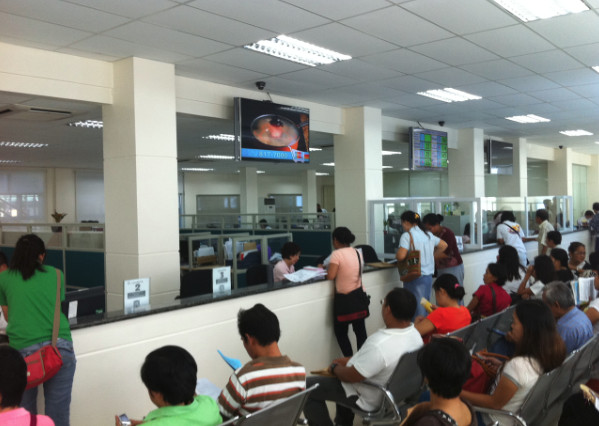
The good news: once you understand BIR Form 1901, 1902, and 1903, the process becomes much clearer. This guide will walk you through which form to use, how to register, and what to expect after registration — in simple, practical language.
Choosing the right form
The form you use depends entirely on your legal structure and employment status. Using the wrong form can delay your Certificate of Registration (COR) and cause problems later when you apply for permits or bank loans.
| Form | Who Uses It | Typical Scenario |
|---|---|---|
| BIR Form 1901 | Sole proprietors, freelancers, and professionals | DTI-registered sari-sari store, online seller, or self-employed VA |
| BIR Form 1902 | Employees earning purely compensation income | New hire in a company with no previous TIN |
| BIR Form 1903 | Corporations and partnerships (including OPC) | SEC-registered corporation, partnership, or One Person Corporation |
BIR Form 1901: for sole proprietors and professionals
Who uses it: Individual business owners (DTI-registered), freelancers, and licensed professionals such as doctors, lawyers, engineers, and consultants.
Key feature: This form is used to register as a self-employed individual. If you already have a TIN from a previous job, you do not get a new TIN — you use Form 1901 to update your status from “employee only” to “employee and self-employed” or “self-employed only.”
Example: A former OFW who comes home and starts a home-based digital marketing service under a DTI business name will use Form 1901 to register with the BIR as a self-employed taxpayer.
BIR Form 1902: for employees
Who uses it: Individuals earning purely compensation income (regular employees) with no business or professional income.
Key feature: This form is usually handled by your employer’s HR or accounting department. You only fill this out yourself if you are a new employee getting a TIN for the first time.
Important: If you later start a side business or freelancing gig, you do not get a second TIN. You will update your registration using Form 1901 to add “self-employed” to your existing TIN record.
BIR Form 1903: for corporations and partnerships
Who uses it: Any entity registered with the Securities and Exchange Commission (SEC), including stock corporations, partnerships, and One Person Corporations (OPC).
Key feature: This form registers the business as a separate juridical person with its own TIN. This is crucial for limited liability and proper corporate taxation.
Example: A group of three siblings forming a corporation to operate a mini-grocery, or a single owner forming an OPC for a growing carinderia, will use Form 1903 after SEC registration.
The step-by-step registration process
Whether you are using Form 1901 or 1903, the overall flow is similar. Here’s a practical step-by-step guide.
Determine your RDO
You must register at the Revenue District Office (RDO) that has jurisdiction over your place of business.
- If you have a physical shop (carinderia, salon, small office), use the RDO covering that address.
- If you are an online seller or freelancer working from home, use the RDO covering your residential address.
You can find your RDO code on old BIR documents or by checking with the BIR Contact Center or your previous employer’s HR.
Prepare and submit documentary requirements
For individuals using Form 1901 (sole proprietors and professionals):
- DTI Certificate of Business Name Registration (for sole proprietors)
- Professional license (for regulated professions, if applicable)
- Mayor’s Permit or proof of application (some RDOs accept pending permits)
- Valid government ID (e.g., Passport, Driver’s License, UMID)
- Lease contract (if renting a space) or proof of ownership (if home-based)
For entities using Form 1903 (corporations and partnerships):
- SEC Certificate of Incorporation or Registration
- Articles of Incorporation / Partnership
- By-laws (for corporations, if applicable)
- Valid ID of the authorized representative
- Board Resolution or Secretary’s Certificate authorizing the representative
- Lease contract or proof of ownership of business address
Bring photocopies and originals for verification. Some RDOs now accept online or hybrid submissions, so it’s wise to check your RDO’s latest advisory on the BIR website.
Pay the registration-related fees
Under the Ease of Paying Taxes Act (RA 11976), the BIR has stopped collecting the ₱500 Annual Registration Fee starting January 22, 2024. Business taxpayers are no longer required to file BIR Form 0605 for this fee. This change is confirmed by BIR Revenue Memorandum Circular No. 14-2024 and various tax advisories.[1]
You may still need to pay:
- Documentary Stamp Tax (DST) on lease contracts or shares (for corporations)
- Loose DST on certain documents, depending on your setup
Ask the RDO cashier or officer-of-the-day to confirm any applicable payments for your specific case.
Attend the taxpayer’s initial briefing
After processing your registration, many RDOs will require you to attend a Taxpayer’s Initial Briefing. This may be:
- A short in-person seminar
- A recorded video orientation
- An online briefing, depending on the RDO
The briefing explains your registered tax types (e.g., Percentage Tax vs VAT, Income Tax, Withholding Tax) and your filing deadlines. This is where you can ask practical questions like:
- “How do I opt for the 8% income tax rate?”
- “What forms do I file if I have zero sales?”
Receive your COR and “Ask for Receipt” sign
Once approved, you will receive your Certificate of Registration (BIR Form 2303). This document lists:
- Your TIN and registered name
- Your business address
- Your registered tax types
- Your filing and payment obligations
You will also be issued (or instructed to display) the “Ask for Receipt” notice. This must be visible at your place of business.
Many entrepreneurs frame their COR and place it near the cashier — it signals legitimacy and builds trust with customers.
Authorizing your receipts
After registration, you are not yet allowed to issue official receipts or sales invoices from a bookstore. You must first secure an Authority to Print (ATP) or enroll in an electronic invoicing system.
Authority to Print (ATP)
- Apply for ATP through your RDO (often done together with or right after registration).
- Choose a BIR-accredited printer to print your Official Receipts (OR) or Sales Invoices (SI).
- Your receipts must show your registered business name, TIN, address, and other required details.
Issuing unregistered receipts can lead to penalties and disallowance of expenses for your clients.
Digital invoicing and EIS
The BIR is gradually rolling out and encouraging Electronic Invoicing/Receipting Systems (EIS), especially for VAT-registered and larger taxpayers, to reduce paper use and improve monitoring. While not yet mandatory for all micro-businesses, it is a trend to watch and prepare for as systems become more accessible.
Common challenges and solutions
Late registration penalties
Problem: You’ve been operating for months with a DTI business name, accepting GCash payments, but never registered with the BIR.
Risk: The BIR can impose compromise penalties for late registration, often starting at around ₱1,000 and increasing depending on the circumstances.
Solution: Register as soon as possible. Be honest about your start date if asked, and focus on becoming compliant moving forward. The cost of delay is usually smaller than the risk of being caught during an audit or when you apply for a loan or Mayor’s Permit renewal.
Missing filing deadlines
Problem: You think, “Wala naman akong benta this month, so no need to file.”
Reality: Even if you have zero income for a period, you are still required to file a “no transaction” return. Failure to file creates an “open case” in the BIR system, which can block you from getting tax clearances or renewing your Mayor’s Permit.
Solution: Mark your filing deadlines on a calendar or use a simple spreadsheet. Consider hiring a part-time bookkeeper or tax consultant once your business grows.
Choosing the 8% tax option
For sole proprietors and professionals with gross sales or receipts not exceeding ₱3 million, the 8% flat income tax rate can be a simpler option compared to the regular graduated tax plus percentage tax.
Tip: During registration (Form 1901), clearly inform the BIR officer that you intend to avail of the 8% option, and confirm how and when to formally signify this choice (usually via your first quarterly return). This can reduce your compliance burden because you may no longer need to file Percentage Tax (Form 2551Q) if you qualify and properly opt in.
Practical examples for small business owners
Example 1: Sari-sari store owner
A sari-sari store owner with a DTI business name registers with the BIR using Form 1901, gets a COR, applies for ATP, and starts issuing official receipts for wholesale customers. Even if most buyers are neighbors paying in cash, being registered allows her to supply to small offices and earn more.
Example 2: Freelancer / VA
A virtual assistant working for foreign clients from home uses Form 1901 to register as a professional. She files income tax returns and, if eligible, chooses the 8% option. This allows her to show proof of income when applying for a housing loan later.
Example 3: Small corporation
Three friends form a corporation to run a small café. After SEC registration, they file Form 1903, get a COR, register as a Percentage Tax or VAT taxpayer (depending on projected sales), and apply for ATP. Being a corporation helps protect their personal assets if something goes wrong.
Conclusion and action plan
Registering with the BIR is not just about avoiding penalties — it’s about protecting your business and unlocking opportunities. Banks, big clients, and government agencies all look for proper tax registration.
Remember:
- Form 1901 is for you as a self-employed individual (sole proprietor or professional).
- Form 1902 is for employees earning purely compensation income.
- Form 1903 is for your company (corporation or partnership).
Your Certificate of Registration (Form 2303) is your most important tax document. Keep it safe, visible, and updated.
Final call to action: If you already have a DTI or SEC registration but haven’t visited the BIR yet, don’t wait. Download Form 1901 or 1903 from the official BIR website, prepare your documents, and schedule your visit to your RDO. The earlier you become compliant, the more confidently you can grow your business.
[1] See BIR Revenue Memorandum Circular No. 14-2024 and related advisories summarizing the removal of the ₱500 Annual Registration Fee pursuant to RA 11976 (Ease of Paying Taxes Act), as reported by various tax and business news outlets such as Grant Thornton Philippines and major Philippine news sites.