- Unli rice is a marketing expense, not just a food cost.
- Profit usually comes from the ulam, not from the rice.
- Portion control and wastage management decide if “unli” is sustainable.
- Without proper costing, unli rice can quietly erase your margins.
For many Filipinos, a carinderia that offers unli rice feels like a jackpot. For the owner, however, it can be a silent profit killer if not managed properly. Rice prices, LPG costs, and customer eating habits all affect whether your “unli” promo is a smart marketing move or a slow financial leak.
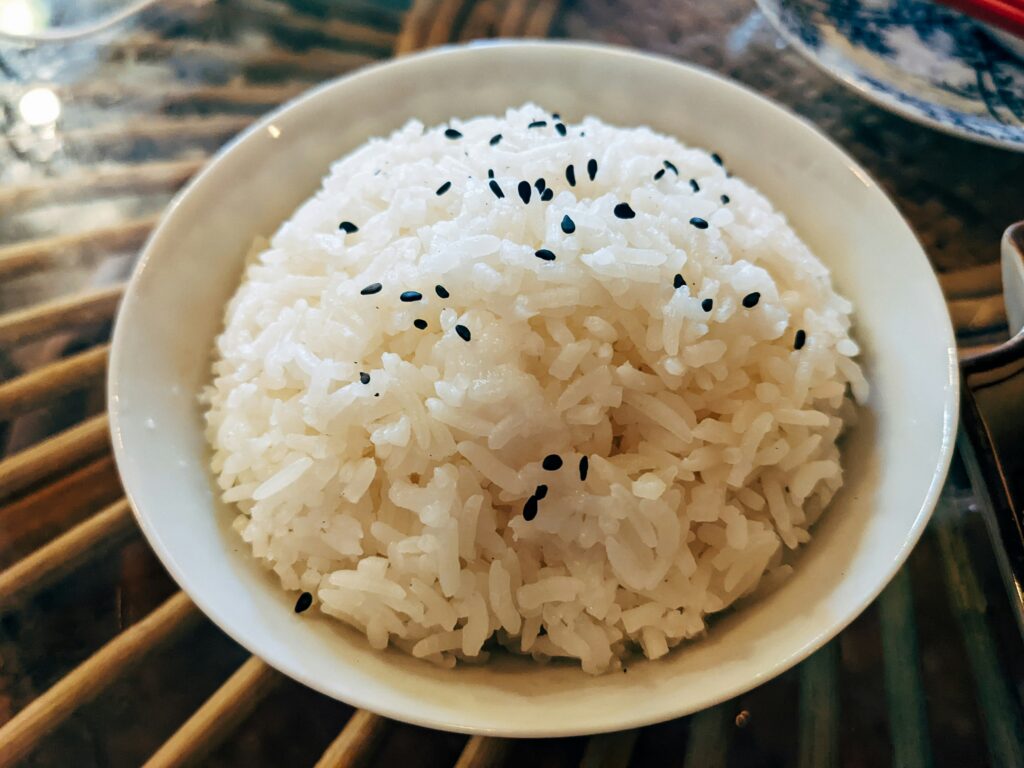
In recent years, rice prices in the Philippines have been volatile, but retail averages often hover in the ₱60 to ₱70 per kilo range for regular and well-milled rice in supermarkets, while wholesale prices for regular milled rice can go down to the mid-₱30s per kilo when stocks are ample. Online price trackers also show average retail prices in the mid-₱60s per kilo in 2025. For a small carinderia, these numbers matter.
The “unli” economics: cost per cup and serving size
To understand the real cost of unli rice, you need to break it down to the level of one cup.
The first cup threshold
A standard serving in many carinderias is about 200 grams of cooked rice (roughly one “cup” as served on a plate). One kilo of raw rice typically yields around 2.2–2.5 kg of cooked rice, depending on variety and cooking method. That means:
- 1 kg raw rice → ~2.3 kg cooked rice (average)
- 2,300 g cooked ÷ 200 g per cup ≈ 11–12 cups per kilo
If you buy rice at ₱40 per kilo wholesale (direct from mill or bigasan), your rice cost per cooked cup is approximately:
- ₱40 ÷ 11 cups ≈ ₱3.60 per cup
Now add a small allowance for water, LPG, and labor — say another ₱1 per cup. Your realistic cost per cup is now around ₱4.50–₱5.00.
The break-even point
In most carinderias, the profit is in the ulam, not in the rice. For example:
- Ulam price: ₱65 (e.g., pork menudo, chicken adobo)
- Food cost of ulam: ~₱30–₱35
- Gross profit from ulam alone: ~₱30
If your rice costs ₱5 per cup and you offer unli rice, here’s what happens:
- 1st cup: Still profitable; ulam margin covers it.
- 2nd cup: You’re eating into your ulam profit but may still be okay.
- 3rd cup and beyond: You are likely losing margin on that customer.
In other words, the third cup is where your “unli” promise starts to hurt your bottom line, especially for low-priced meals.
Shrinkage and expansion
Rice expands when cooked, but your yield depends heavily on how big your “cup” really is. If your
staff uses a large bowl instead of a standard scoop, your 1 kg of raw rice might only yield 9–10 “cups” instead of 11–12. That means:
- ₱40 ÷ 9 cups ≈ ₱4.45 per cup (before utilities)
That small difference in portion size, multiplied by 50–100 customers per day, can quietly erase your profit.

Portioning systems that prevent abuse
Unli rice can still work — but only if you control portions consistently. This is where systems matter more than slogans.
The standard scoop protocol
Instead of “tantya-tantya” scooping, use a fixed-size scoop (like a #12 or #16 disher or a standard rice cup). Train your staff to:
- Use the same scoop for every customer
- Level the scoop instead of piling it high
- Serve refills in smaller, controlled amounts
This keeps your cost per serving predictable and makes your costing more accurate.
Self-service vs server-led
Allowing customers to scoop their own rice feels generous, but it usually leads to more waste. In buffet and cafeteria studies, self-service setups often result in 20–30% more food waste compared to staff-served portions, especially for staple items like rice.
In a carinderia, that means:
- Customers pile more rice than they can finish
- Leftover rice on plates cannot be reused
- Your daily rice consumption goes up without increasing revenue
A server-led system — where staff plates the rice — gives you control over both cost and waste.
The half-cup refill rule
One practical strategy is to offer refills in half-cup portions. This still honors the “unli rice” promise but reduces the chance that customers leave a full cup unfinished.
Sample script for staff:
“Sir, refill po? Half cup muna tayo para hindi sayang. Pwede po ulit magpa-refill kung bitin.”
This small adjustment can significantly reduce plate waste while keeping customers satisfied.

Wastage control strategies
Even with good portioning, rice wastage can still eat into your margins. Here are practical controls you can apply.
Cook-to-demand cycles
Instead of cooking one huge kaldero of rice at 10:00 AM and hoping it lasts the whole day, shift to smaller, more frequent batches:
- Big batch before lunch rush (11:00 AM–1:00 PM)
- Smaller batches as demand tapers off (1:00 PM onwards)
This reduces the amount of bahaw (leftover rice) at the end of the day and ensures fresher rice for customers.
The “no leftover” policy
Some eateries implement a small leftover fee (e.g., ₱10–₱20) for customers who leave excessive rice on their plates. The goal is not to punish, but to encourage mindful consumption.
If you choose to do this, make sure:
- The policy is clearly posted
- Staff explains it politely
- You apply it consistently and fairly
Repurposing bahaw
Clean, untouched leftover rice (from the kaldero, not from plates) can be safely repurposed into garlic fried rice (sinangag) for breakfast the next day. This is a common practice in many Filipino households and eateries.
By turning bahaw into a new product, you:
- Recover part of your rice cost
- Create a higher-margin breakfast item (silog meals)
- Reduce food waste
Supplier options for cheaper rice
Your unli rice model becomes more sustainable if your rice cost per kilo is as low as possible without sacrificing quality.
Direct-from-mill sourcing
Instead of buying from supermarkets, consider sourcing from:
- Local rice mills
- Regional wholesalers
- Trusted bigasan suppliers
Wholesale prices for regular milled rice can be significantly lower than retail, especially when stocks are ample and imports are strong.
The blend technique
Many carinderias use a blend of rice varieties to balance cost and quality. For example:
- 70% cheaper, high-volume variety (e.g., R-64)
- 30% premium or aromatic variety (e.g., Jasmine)
This gives you acceptable aroma and texture at a lower average cost per kilo.
NFA and government-linked programs
From time to time, government agencies and programs offer subsidized rice or price controls, especially for low-income consumers and small retailers. Maximum suggested retail price (SRP) policies have, in some periods, helped bring down the cost of imported rice by as much as ₱15 per kilo without heavily disrupting the grains industry.[Philstar]
If you are a registered micro or small business, it’s worth checking with your local DTI or DA offices if there are programs you can tap into.
When unli rice becomes unprofitable
Unli rice is not always a good idea. There are clear warning signs that the model is hurting your business.
The solo diner warning
Imagine this scenario:
- Customer orders a ₱50 ulam
- Eats 5 cups of rice
If each cup costs you ₱5, that’s ₱25 in rice alone — half of the total bill — not counting LPG, labor, and overhead. For heavy eaters, your unli rice offer can turn into a net loss.
Rising utility costs
If LPG prices spike by more than 10–15%, the cost of cooking constant batches of rice increases. Since rice is a low-margin item, higher energy costs can quickly make your unli offer unsustainable unless you adjust prices or portion sizes.
Market saturation
If every carinderia on your street offers unli rice at the same price, you are in a race to the bottom. Instead of competing purely on rice quantity, consider shifting your value proposition to:
- Unli sabaw (free soup refills)
- Free gulay side dish
- Better ulam quality or bigger meat portions
These alternatives can be cheaper to provide while still making your carinderia attractive.
Sample costing for 20–50 customers per day (2026 estimates)
Let’s look at two simple scenarios to see how rice consumption affects your daily cost.
Rice costing assumptions
- Wholesale rice price: ₱40 per kilo
- Yield: 11 cups per kilo (cooked)
- Cost per cup (rice only): ~₱3.60
- Cost per cup (with LPG, water, labor): ~₱5.00
- Average consumption: 2.5 cups per person
Scenario comparison table
| Scenario | Customers | Raw rice needed | Est rice cost |
|---|---|---|---|
| Low volume | 20 | ~4.5 kg | ₱250–₱300 |
| High volume | 50 | ~11 kg | ₱600–₱750 |
The margin impact
In the high-volume scenario (50 customers):
- Rice cost: ~₱600–₱750 per day
- If your average ulam price is ₱65, total sales from ulam alone: ₱3,250
To maintain around a 35% gross profit margin after rice and utilities, your pricing and portioning must be tight. Any uncontrolled wastage or oversized servings will quickly reduce that margin.
Conclusion and action plan
Unli rice is not just a food cost — it is a marketing expense. It attracts customers, but it must be balanced by:
- High-margin items (drinks, desserts, add-on sides)
- Strict portion control
- Smart sourcing and wastage management
If you treat unli rice as a “loss leader,” you must know exactly how much you are willing to lose per plate — and where you will recover that margin.
Action step for this week: Review your rice consumption.
- If you are serving around 30 customers per day but consuming more than one 50 kg sack every 3 days, your portions are likely too big or your wastage is too high.
- Start measuring rice per scoop, track cups per customer, and adjust your system.
Unli rice can still work in 2026 and beyond — but only for carinderia owners who know their numbers, control their portions, and treat every cup of rice as part of a bigger business strategy.
FAQ: Unli Rice Costing & Profitability for Carinderias
1. How much does one cup of cooked rice really cost for a carinderia?
A typical cup of cooked rice costs ₱4.50–₱5.00, including LPG, water, and labor. This assumes buying rice at around ₱40 per kilo wholesale, with a yield of 11–12 cups per kilo. Controlling scoop size is essential because oversized servings can raise your cost per cup and reduce margins.
2. At what point does unli rice become unprofitable?
Unli rice usually becomes unprofitable when a customer eats 3 cups or more. The first cup is covered by the ulam margin, the second cup reduces your profit, and the third cup often wipes out your remaining margin—especially for meals priced at ₱50–₱70. Heavy eaters can turn unli rice into a net loss if portions aren’t controlled.
3. What portion control methods help keep unli rice sustainable?
Effective methods include using a standard scoop (#12 or #16 disher), serving half‑cup refills instead of full cups, avoiding self‑service setups, and training staff to level scoops consistently. These reduce waste and keep your cost per serving predictable.
4. How can carinderias reduce rice wastage when offering unli rice?
Key strategies include cooking in small, frequent batches, implementing a “no leftover” policy, and repurposing clean leftover rice into garlic fried rice for breakfast. These practices lower daily rice consumption and improve overall profitability.
5. What type of rice sourcing helps lower unli rice costs?
Carinderias can reduce costs by buying direct from mills or trusted bigasan suppliers, using a rice blend (such as 70% cheaper variety and 30% premium), and monitoring government programs or SRP periods that temporarily lower rice prices. These sourcing strategies help keep cost per cup low without sacrificing quality.
6. How do rising LPG and utility costs affect unli rice profitability?
If LPG prices rise by 10–15%, the cost of cooking multiple rice batches increases significantly. Since rice is a low‑margin item, higher utility costs can quickly make unli rice unsustainable unless portion sizes or menu prices are adjusted.
7. How much rice does a carinderia typically consume per day when offering unli rice?
A small carinderia serving 20–50 customers per day may consume 4.5–11 kg of raw rice daily, costing ₱250–₱750 depending on volume and wastage. If consumption exceeds these benchmarks, portion sizes or wastage may be too high.