- Sari‑sari stores remain the backbone of neighborhood retail, but customer behavior has changed—digital payments and convenience now drive buying decisions.
- Filipinos are among the most price‑sensitive consumers in Southeast Asia, with Google research showing that most shoppers research and compare prices online before buying offline.
- Small stores that adopt digital tools and modern “diskarte” consistently outperform traditional window‑type setups.
The sari‑sari store has always been part of Filipino life—our first stop for snacks, load, soft drinks, and last‑minute household needs. But competition has changed. Convenience stores, online delivery apps, and even neighborhood Facebook sellers are now competing for the same customers. To stay profitable, sari‑sari store owners must evolve with the times.
Here are seven updated, practical, and Filipino‑friendly strategies to increase your sari‑sari store sales.
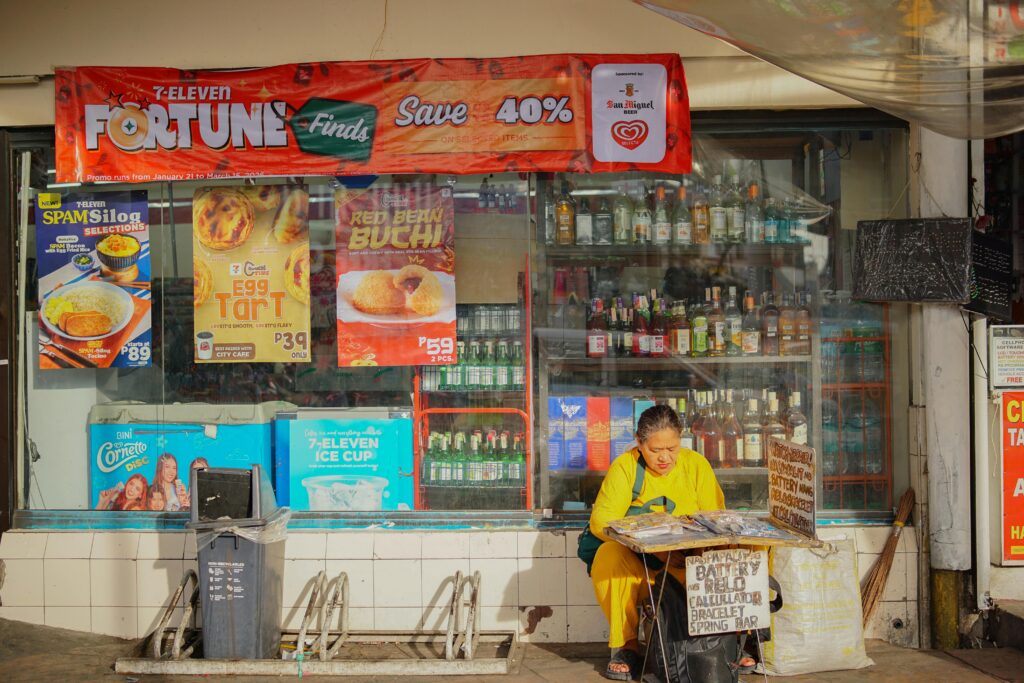
Unleash the digital diskarte through e‑wallet services
Digital payments are no longer optional. With millions of Filipinos using GCash and Maya daily, sari‑sari stores that offer e‑wallet services attract more foot traffic.
The action
Become a Cash‑In/Cash‑Out (CICO) hub for GCash and Maya. Offer:
- Cash‑in
- Cash‑out
- Load and bills payment
- QR Ph payments
The sales boost
When a customer cashes in ₱500, they often spend a portion of it on snacks, drinks, or load. You also earn a small service fee per transaction—extra income with zero inventory cost.
Real-life example: A store in Cavite increased daily sales by 22% after adding GCash cash‑in services because more customers dropped by.
Implement AI‑lite inventory management
Modern sari‑sari stores use simple apps to track sales and identify fast‑moving items. This prevents overstocking and frees up capital.
The action
Use free store‑management apps like Packworks, GrowSari, or Unilever Kabisig. These apps show:
- Your best‑selling items
- Slow‑moving products
- Suggested restocking levels
The sales boost
Stores using AI‑based insights report up to 17% higher sales because they stock what customers actually buy—like ready‑to‑drink chocolate, liquid detergent, and hair styling products.
Tip: Remove dusty items that haven’t sold in weeks. They are “frozen capital.”
Master the tingi bundle strategy
Filipinos love tingi, but they also love value. Bundling increases your average sales per customer.
The action
Create affordable bundles such as:
- “Breakfast Combo”: Coffee sachet + 2 biscuits
- “Pang‑ulam Pack”: Sardines + instant noodles
- “Pang‑ligo Set”: Shampoo sachet + conditioner sachet
The sales boost
A customer who planned to spend ₱10 on coffee may spend ₱18 on a bundle. Multiply that by dozens of customers daily and your income grows significantly.
Tip: Use small baskets or trays to display bundles near the counter.
Become the king of convenience with extended services
Today’s sari‑sari store is more than a pantry—it’s a micro‑convenience hub.
The action
Add services such as:
- Photocopying or printing (for students)
- Phone charging station
- Free Wi‑Fi for every ₱50 purchase
- Water refilling pickup point
The sales boost
Services increase foot traffic. A student printing a report will likely buy snacks. A neighbor charging their phone may buy soft drinks.
Real-life example: A store in Laguna added printing services and saw a 30% increase in afternoon sales from students.
Optimize for shelf visibility
Customers buy what they see. A clean, organized, and well‑lit store increases impulse purchases.
The action
Follow the “Eye‑Level is Buy‑Level” rule:
- Place high‑margin items at adult eye level.
- Place kids’ treats at lower levels where children can easily spot them.
- Use clear containers for candies and small items.
- Keep the counter clutter‑free.
The sales boost
Visibility drives impulse buying. Customers are more likely to grab snacks, chocolates, and drinks when they are neatly displayed.
Tip: Replace faded price tags. Clear pricing builds trust.
Go hyperlocal with your marketing
You don’t need a big marketing budget—just visibility in your neighborhood’s digital spaces.
The action
Join your barangay or subdivision’s:
- Facebook Group
- Messenger Community
- Viber Group
Post updates like:
- “Fresh ice candy available!”
- “New stock of hot pandesal!”
- “Free delivery for orders ₱200 and up within the street.”
The sales boost
Digital reminders keep your store top‑of‑mind. Hyperlocal delivery also beats competition from faraway convenience stores.
Tip: Offer “Pabili Service” for elderly neighbors.
Capitalize on seasonal diskarte
Weather affects buying behavior in the Philippines. Smart stores adjust inventory based on the season.
The action
Use a “hybrid menu” that changes with the weather:
- Hot season: Ice candy, halo‑halo ingredients, cold drinks, ice
- Rainy season: Champorado, coffee, instant noodles, umbrellas
- Holiday season: Gift packs, chocolates, pasta bundles
The sales boost
Seasonal alignment prevents spoilage and ensures you always have what the community needs.
Real-life example: A store in Bicol doubled its rainy‑day sales by promoting champorado packs and instant coffee during storms.
2026 profit comparison table
| Strategy | Difficulty | Expected Sales Impact |
|---|---|---|
| Digital Cash‑In/Out | Easy | High (Drives daily foot traffic) |
| Product Bundling | Easy | Medium (Increases ticket size) |
| Inventory App (AI) | Medium | High (Reduces wasted capital) |
| Extended Services | Hard | Medium (Builds community loyalty) |
Conclusion
The sari‑sari store will always be part of Filipino life—but the way customers buy has changed. To stay competitive, store owners must embrace digital tools, improve product visibility, offer convenience‑based services, and adapt to seasonal demand.
These seven strategies are simple, practical, and proven to increase sales. Start with one or two, build momentum, and watch your sari‑sari store grow into a modern neighborhood convenience hub.
With the right diskarte, your store can thrive—no matter how the retail landscape evolves.