Mushrooms grow fast—typically within about 30–45 days from inoculation to first harvest, depending on species and environmental conditions—and you can harvest several flushes (cycles) per year. Demand is strong from restaurants, supermarkets, hotels, and health‑conscious consumers, making mushrooms a high‑value, low‑land crop for both rural and urban growers.
- Mushroom farming requires very little space and no soil—perfect for urban and backyard setups.
- Startup capital is low, and harvest cycles are fast (30–45 days).
- High demand from restaurants, supermarkets, and health food stores ensures steady buyers.
- Government programs support mushroom production under the High Value Crops Development Program (HVCDP).
Mushroom farming is one of the most beginner‑friendly agribusinesses in the Philippines. It requires minimal land (general small‑lot/urban farming context), grows well in controlled indoor environments, and produces high‑value crops with strong market demand.
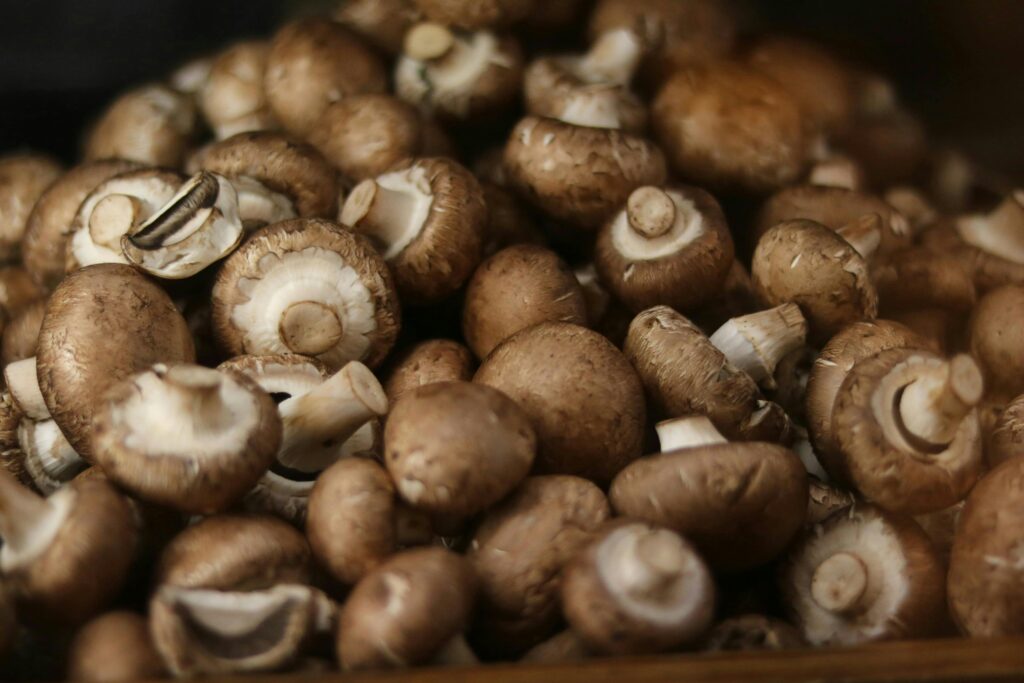
Unlike many vegetables or livestock, mushrooms are largely unaffected by typhoons, droughts, and conventional soil problems because they are grown indoors on substrate‑based media. This makes them ideal for OFWs, retirees, freelancers, and small entrepreneurs looking for a relatively low‑risk, high‑turnover business.
The Department of Agriculture actively supports mushroom production under the broader High Value Crops Development Program (HVCDP), recognizing its potential for income generation, food security, and opportunities for value‑added processing.
Why mushrooms are perfect for small businesses
Mushrooms offer a rare combination of low cost, fast turnover, and high profitability. A small 20–30 sqm room can produce hundreds of kilos per year, making it ideal for urban farming.
Key advantages:
- High profit margins – Retail prices often range from ₱200–₱400 per kilo, while production costs are around ₱80–₱120 per kilo.
- Year‑round production – Mushrooms grow indoors, unaffected by weather.
- Strong market demand – Hotels, restaurants, supermarkets, and health food stores buy regularly.
- Growing health trend – Mushrooms are rich in protein, fiber, and antioxidants.
- Export potential – Japan, Korea, and the US import specialty mushrooms.
Most profitable mushroom varieties for beginners
These varieties grow well in Philippine conditions and have strong market demand:
- Oyster mushrooms (puting kabute) — Fastest and easiest to grow; ideal for beginners.
- Straw mushrooms (uwak) — Popular in Filipino dishes; thrives in warm climates.
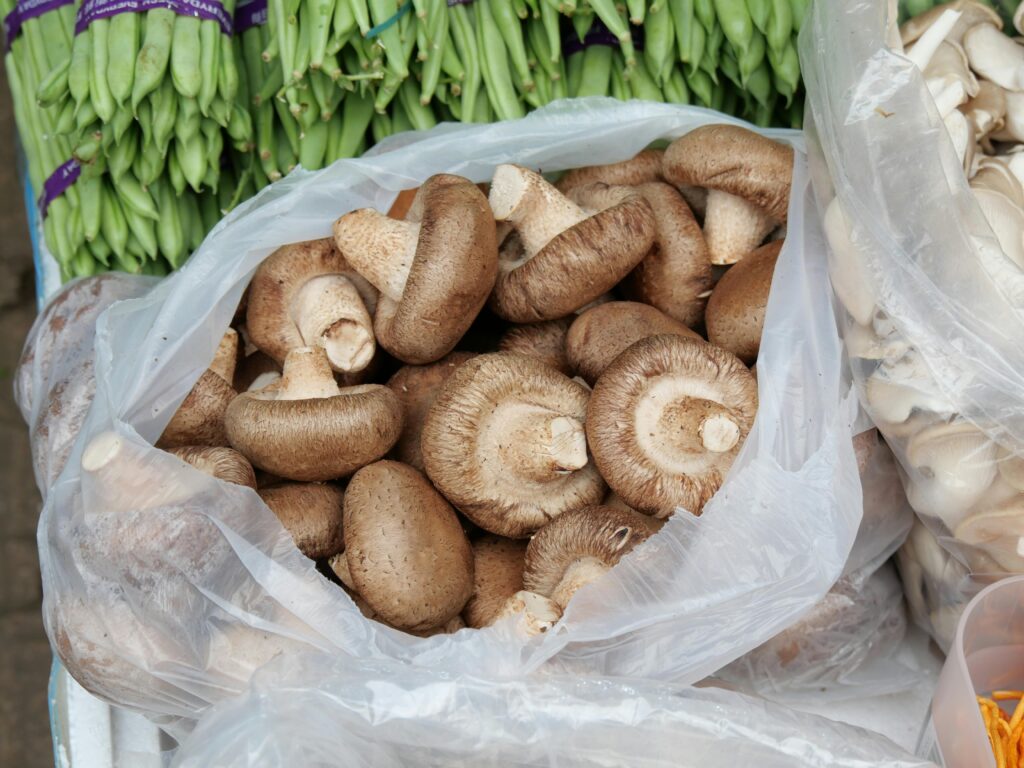
- Shiitake — Premium mushroom with high retail price (₱400–₱600/kg).
- Button mushrooms — Supermarket favorite; requires cooler conditions.
- Wood ear (tengang daga) — High demand from Chinese restaurants.
Space and facility requirements
You can start mushroom farming almost anywhere as long as you can control temperature, humidity, and cleanliness.
Ideal conditions:
- Temperature: 24–28°C
- Humidity: 85–95%
- Low light (dim room)
- Good ventilation
Best locations for small setups:
- Shaded backyard with black netting
- Garage with exhaust fan
- Spare bedroom with aircon or humidifier
- Under-house area with concrete flooring
Startup cost breakdown for a 100‑tray mushroom setup
| Item | Estimated Cost | Details |
|---|---|---|
| Spawn (mushroom seeds) | ₱4,000 | 100 bags |
| Substrate materials | ₱5,000 | Sawdust, rice bran, lime |
| Plastic bags/trays | ₱2,000 | For substrate packing |
| Sterilization equipment | ₱3,000 | Drum or barrel |
| Humidity/temperature tools | ₱1,500 | Thermometer, hygrometer |
| Racks/shelves | ₱2,500 | Wood or metal |
| Initial utilities | ₱1,000 | Water, electricity |
Total estimated startup cost: ₱18,000–₱28,000
Step-by-step mushroom production process
Mushroom farming follows a simple three‑phase cycle.
Substrate preparation
This is the foundation of mushroom farming. The substrate is the “soil” where mushrooms grow.
- Mix 75% sawdust, 20% rice bran, and 5% lime or gypsum.
- Soak overnight until moisture reaches about 60%.
- Pack into heat‑resistant plastic bags.
- Sterilize in a drum for 12–16 hours using firewood.
- Cool down before spawning.
Spawning
Spawning is the process of mixing mushroom seeds (spawn) into the substrate.
- Mix 2–5% spawn into each bag.
- Seal with cotton plugs.
- Incubate in a dark room at 28°C for 15–20 days.
- Wait until the substrate turns fully white (mycelium growth).
Fruiting
This is when mushrooms start to grow.
- Transfer bags to a fruiting room at 24–26°C.
- Maintain 90% humidity by misting 3–4 times daily.
- Harvest when caps flatten (day 30–45).
Sourcing mushroom spawn and materials
Reliable mushroom spawn is essential for high yields. Trusted suppliers and support hubs include:
- UPLB Mushroom Center (Los Baños) – Provides research‑based spawn and technical guidance for small‑scale growers.
- DA Regional Offices (Luzon and other regions) – Offer training, demonstrations, and link farmers to local spawn producers and in‑house mushroom‑propagation projects.
- UV–Lacson College (Iloilo) – Supports mushroom‑production initiatives in the Visayas, including practical training and resource linkages.
- USM Iligan Mushroom Lab (Mindanao) – A key laboratory and demonstration site for mushroom spawn and technology in Northern Mindanao.
Advanced growers can produce their own spawn using grain culture, but beginners should buy ready‑made spawn.
Daily farm management routine
Mushroom farming requires only 30 minutes per day.
- Morning: Check temperature and humidity; mist lightly.
- Afternoon: Ventilate room; remove dead mushrooms.
- Evening: Final misting before lights out.
Weekly tasks include cleaning the fruiting room, weighing harvests, and preparing new substrate batches.
Expected yields and profitability
A 100‑tray setup can generate strong income with proper management.
| Production Scale | Yield | Gross Income | Net Profit |
|---|---|---|---|
| 100 trays | 150–200 kg per cycle | ₱37,500–₱50,000 | ₱22,500–₱35,000 |
Annual profit can reach ₱270,000–₱420,000 with continuous cycles.
Harvesting and packaging techniques
Proper harvesting ensures freshness and longer shelf life.
- Oyster mushrooms: Harvest when caps flatten.
- Shiitake: Harvest when edges curl upward.
- Button mushrooms: Harvest when the veil breaks.
Packaging options:
- 250g or 500g styrofoam trays
- Vacuum‑sealed bags for premium markets
- Bulk 5kg boxes for restaurants
Market channels and pricing strategy
Mushrooms sell well across multiple markets.
- Hotels and restaurants (bulk orders)
- Supermarkets (packaged mushrooms)
- Wet markets (daily fresh sales)
- Health food stores and salad bars
- Online platforms like Facebook Marketplace
Typical retail prices:
- Oyster: ₱200–₱350/kg
- Shiitake: ₱400–₱600/kg
- Button: ₱300–₱450/kg
- Straw: ₱180–₱250/kg
Common challenges and solutions
- Low yields — Improve sterilization and use high‑quality spawn.
- Green mold contamination — Clean facility and sterilize substrate properly.
- Slow fruiting — Adjust temperature and increase humidity.
- Market saturation — Offer specialty varieties or value‑added products.
Government and NGO support
Several agencies support mushroom growers:
- DA HVCDP — Free training, spawn assistance, market linkage.
- LGU Agriculture Offices — Training and common service facilities.
- TESDA — Mushroom production and processing courses.
Scaling your mushroom business
Once you master the basics, you can expand quickly.
- Phase 1: 100 trays → ₱25,000/month profit
- Phase 2: 500 trays + spawn production → ₱100,000/month
- Phase 3: Contract growing + processing → ₱300,000+/month
Value‑added products include dried mushrooms, mushroom powder, pickled mushrooms, and spawn sales.
Conclusion: Low‑risk, high‑reward agribusiness
Mushroom farming offers a rare combination of low startup cost, fast returns, and strong market demand. Even a 20 sqm space can generate full‑time income for a Filipino family. With proper sterilization, humidity control, and consistent production cycles, mushrooms can become a reliable and scalable agribusiness.
Start with oyster mushrooms, learn the process, and expand into premium varieties. With health trends rising and government support growing, now is the perfect time to enter the mushroom industry.