High‑value crops can earn several times more per square meter than rice or corn on small plots, sometimes reaching three to ten times the income with intensive, market‑oriented varieties. They are perfect for backyards, rooftops, and vacant lots under 500 square meters, where space‑efficient methods like containers, vertical sets, and small‑bed systems can be used
By focusing on vegetables, herbs, and niche fruits that love the Philippine climate, small growers can turn idle land into real income. With support from the Department of Agriculture’s High Value Crops Development Program (HVCDP) and strong urban demand, high-value cropping is a practical side business for Filipino families.
- High-value crops generate much higher income per square meter than traditional rice or corn on small plots.
- They fit well in backyards, rooftops, and vacant lots under 500 sqm using vertical and container systems.
- Government programs like the DA’s High Value Crops Development Program support small growers with seeds and training.
- Urban demand from restaurants, supermarkets, and home gardeners creates steady markets for high-value produce.
Many Filipino families still think that farming only makes sense if you have hectares of land planted with rice or corn. But for small plots—100 to 500 square meters—traditional crops often give low returns.
In contrast, high-value crops like vegetables, herbs, and specialty greens can generate much higher income per square meter, especially when sold directly to urban markets.
The Department of Agriculture defines high-value crops as those that provide competitive returns on investment compared to other options and are supported under the High Value Crops Development Program (HVCDP).
This program promotes production, processing, and marketing of vegetables, fruits, and other high-value commodities, and provides seeds, planting materials, and technical support to farmers.1,2,4
For OFWs, teachers, sari-sari store owners, and small entrepreneurs with idle land, high-value crops can turn a small backyard into a serious income source—without leaving your main job.
Why high-value crops beat traditional farming on small plots
Rice and corn are important for food security, but they are land‑hungry and low‑margin when grown on tiny areas. A 100‑square‑meter rice plot might only bring in around ₱12,000 per six‑month cycle, or roughly ₱24,000 per year, depending on yield and market price. In contrast, intensive vegetable or microgreen production on the same area can generate several times that income, especially when sold to local markets, restaurants, or health‑conscious buyers.
Urbanization has also changed the game. Restaurants, supermarkets, and home gardeners now demand fresh, high-quality vegetables, herbs, and specialty crops. High-value crops fit this demand perfectly, especially when grown near cities where logistics are easier and fresher produce commands a premium.
The DA’s HVCDP specifically aims to promote high-value crops and improve farmers’ access to markets and technology, recognizing that these crops can significantly increase farm incomes compared to rice alone.1,2,4,5
Income comparison for small plots
| Crop / System | Area & Time | Estimated Gross Income | Notes |
|---|---|---|---|
| Rice (traditional) | 100 sqm, 6 months | ~₱12,000 per cycle (~₱24,000/year) | Low margin, weather-dependent |
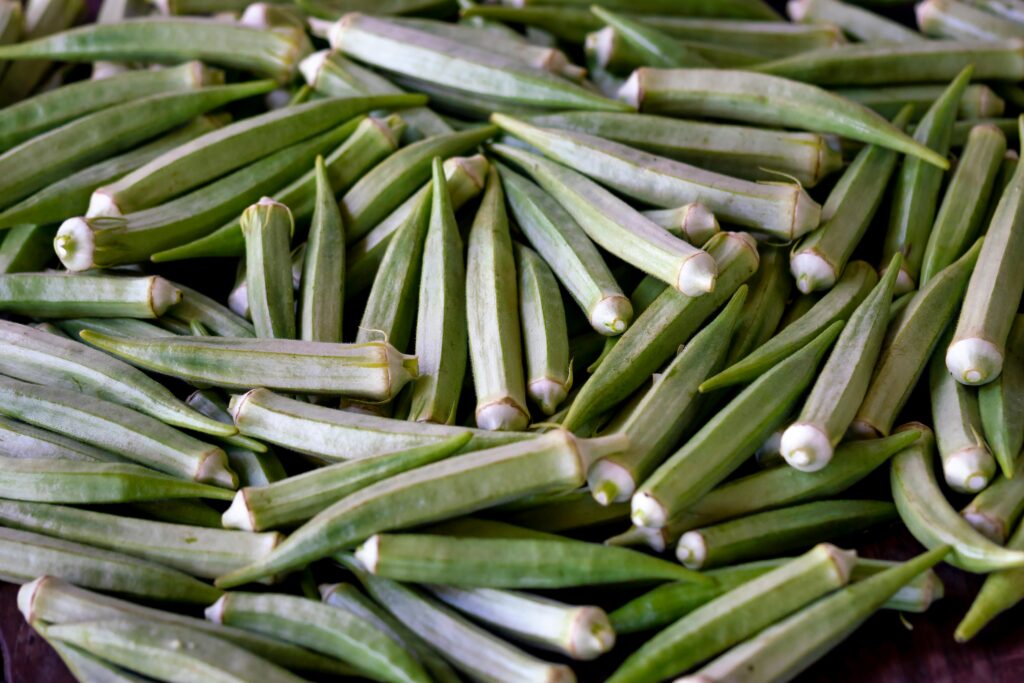
| Okra (intensive) | 100 sqm, 3 months x 4 cycles | ~₱45,000 per cycle (~₱180,000/year) | Continuous picking, strong carinderia demand |
| Microgreens (tray system) | 100 sqm equivalent, 20 cycles/year | ~₱80,000 per cycle (~₱1,600,000/year) | High-end niche, requires strong market |
These figures are estimates and depend on yield, price, and management, but they show how high-value crops can dramatically outperform rice on small plots.
Top high-value crops for small plots
Below are some of the best high-value crops for small spaces in the Philippines. They are chosen for profitability, short cycles, and suitability to our climate.
Vegetables with quick cycles and high turnover
Okra (Ladies Finger)
- Harvest in about 45–60 days after planting, with continuous picking for up to three months.
- Market price often ranges around ₱80–₱150 per kilo, especially in urban markets and supermarkets.
- Okra is a favorite of carinderias and restaurants for dishes like pinakbet and sinigang.
- Plants can be spaced closely and trellised vertically to save space.
Ampalaya (Bitter Gourd)
- Harvest starts around 60–75 days after planting.
- Prices commonly range around ₱60–₱120 per kilo, with export demand to markets like Japan and Korea.
- Strong vines are perfect for overhead trellising, maximizing vertical space.
- High demand year-round from households and food businesses.
Kangkong (Water Spinach)
- Harvest in as fast as 25–30 days, then cut-and-come-again for multiple harvests.
- Prices often range around ₱40–₱80 per kilo, depending on location and season.
- Thrives in flooded beds, trays, or simple hydroponic systems.
- One of the fastest cash-flow crops for small growers.
Pechay / Bok Choy
- Harvest in about 25–35 days, allowing multiple plantings per year.
- Prices typically range around ₱50–₱100 per kilo, with consistent supermarket and wet market demand.
- Perfect for intensive row planting and container systems.
- Ideal for beginners due to simple care and quick turnover.
Fruit vegetables with higher margins
- Dwarf varieties can be grown in containers or small plots.
- Fruit production starts around 18 months and can continue year-round.
- Prices often range around ₱100–₱200 per kilo, with strong demand for juice, sawsawan, and sari-sari store sales.
- Ten productive trees can generate ₱30,000 or more annually with good management.
Siling Labuyo (Bird’s Eye Chili)
- Perennial plant; harvest can start around three months after planting and continue for two years or more.
- Prices can reach ₱300–₱600 per kilo, especially during supply shortages.
- Popular for sawsawan, bagoong, and spicy dishes.
- Container-friendly and space-efficient, ideal for rooftops and small backyards.
Herbs and specialty greens
Malunggay (Moringa)
- Perennial tree; leaves can be harvested every 15 days once established (around six months).
- Fresh leaves can sell around ₱100–₱200 per kilo, with strong demand as a health food.
- Also used in processed products and has export potential as a medicinal and nutritional crop.
- Can be planted along boundaries or in small corners of a lot.
Oregano
- Perennial herb; harvest every 30 days or so.
- Dried oregano can fetch around ₱200–₱400 per kilo, especially when sold to restaurants or health-conscious consumers.
- Excellent for container gardening and balcony setups.
- Also used as a home remedy, increasing local demand.
High-end niche crops
Microgreens (Radish, Sunflower, Pea Shoots, etc.)
- Harvest in 7–14 days, allowing more than 20 cycles per year.
- Prices can range around ₱500–₱1,500 per kilo, especially when sold to hotels, cafes, and fine-dining restaurants.
- Trays fit easily on balconies, rooftops, or shelves.
- Requires careful hygiene and consistent marketing but offers very high returns per square meter.
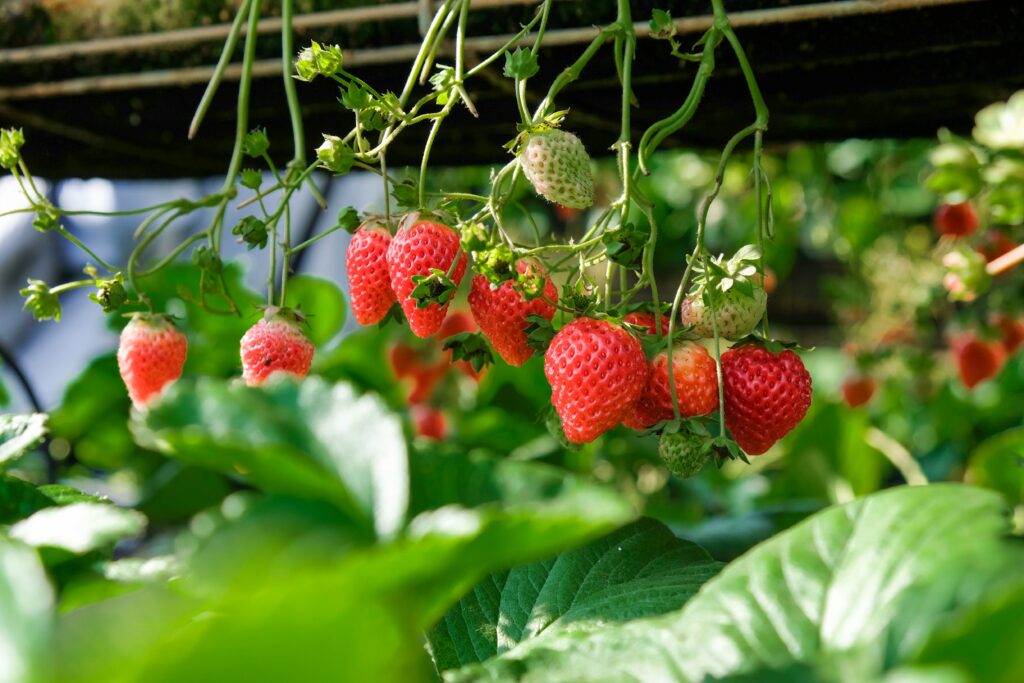
Strawberries
- Can be grown in hanging baskets or vertical systems, especially in cooler areas or with partial shading.
- Harvest can start around 90 days after planting.
- Prices often range around ₱300–₱600 per kilo in tourist and urban markets.
- La Trinidad, Benguet varieties are popular and can be adapted to other highland or cooler microclimates.
Space-saving growing techniques for small plots
To maximize income from small areas, you need to think vertically and intensively.
- Vertical gardening – Use trellises for ampalaya, string beans, and cucumber to grow upwards instead of sideways.
- Container farming – Grow calamansi, herbs, and peppers in recycled paint buckets, pails, or drums.
- Hydroponics or aquaponics – Use PVC pipes or trays for lettuce, kangkong, and pechay, especially in urban rooftops.
- Intercropping – Combine crops like tomatoes with basil, or calamansi with herbs underneath to maximize space and repel pests.
- Succession planting – Stagger planting dates so you have continuous harvests instead of one big glut.
Startup costs for small plot high-value farming
You can start a small high-value crop project on 100–500 square meters with around ₱10,000–₱25,000, depending on your chosen system and materials.
| Item | Estimated Cost Range | Details |
|---|---|---|
| Seeds or saplings | ₱3,000–₱5,000 | High-value vegetables, herbs, and fruit seedlings |
| Trellis materials | ₱2,000–₱4,000 | Bamboo, wood, or PVC for vertical systems |
| Soil amendments and compost | ~₱2,000 | Organic matter, vermicast, or commercial compost |
| Drip irrigation kit (optional) | ~₱3,000 | Improves water efficiency and reduces labor |
| Mulch and shade net | ~₱1,500 | Controls weeds and protects plants from heat |
| Tools and packaging | ~₱1,000 | Hand tools, crates, and basic packaging materials |
Many small growers reduce costs by using recycled containers, homemade compost, and locally sourced bamboo for trellises.
Best markets for small plot growers
High-value crops are only profitable if you connect to the right buyers. Some of the best markets include:
- Wet markets – Daily cash flow from okra, kangkong, pechay, and other common vegetables.
- Supermarkets – Packaged herbs, salad greens, and specialty vegetables; may require consistent volume and quality.
- Restaurants and carinderias – Fresh vegetables, calamansi, malunggay, and herbs for daily menus.
- Online channels – Facebook Marketplace, group chats, and food delivery apps for veggie bundles and microgreens.
- Community Supported Agriculture (CSA) – Weekly vegetable boxes for regular subscribers in your barangay or city.
A freelancer in Quezon City, for example, might grow microgreens and herbs on a rooftop and deliver weekly to nearby cafes, while a tricycle driver in Laguna might supply okra and ampalaya to the local palengke and carinderias.
Government support programs for high-value crops
The Philippine government actively promotes high-value crops through several programs:
- DA High Value Crops Development Program (HVCDP) – Provides seeds, planting materials, training, and market linkages for vegetables, fruits, and other high-value crops.1,2,4
- Rice Competitiveness Enhancement Fund (RCEF) – Encourages diversification for rice farmers, including shifting some areas to high-value crops.
- Bureau of Agricultural Research (BAR) – Supports research and technology demonstrations for high-value crops and improved production systems.1,3
- LGU agriculture offices – Often distribute seedlings, conduct training, and help connect small growers to local markets.
Visiting your municipal or city agriculture office is a good first step to learn about available programs, free training, and possible starter inputs.
Climate and season guide for high-value crops
Choosing the right crop for the right season reduces risk and increases yield.
| Season | Recommended High-Value Crops | Notes |
|---|---|---|
| Dry season (Dec–May) | Okra, string beans, ampalaya, calamansi, tomatoes | Ideal for sun-loving crops; ensure irrigation |
| Wet season (Jun–Nov) | Kangkong, pechay, lettuce, many herbs | Use raised beds and good drainage to avoid waterlogging |
| Year-round | Malunggay, siling labuyo, microgreens | Can be grown almost anytime with basic protection |
Common beginner mistakes to avoid
New growers often lose money not because the crops are unprofitable, but because of avoidable mistakes.
- Planting everything at once – This leads to one big harvest and then no income. Use succession planting.
- Poor trellising – Wasting vertical space reduces yield. Invest in sturdy trellises for climbing crops.
- Overwatering – Especially in containers, this causes root rot. Check soil moisture before watering.
- Ignoring pests early – Small infestations become big problems. Use organic controls like neem oil and regular monitoring.
- Focusing only on retail – Retail is good, but securing small wholesale or restaurant contracts stabilizes income.
Scaling strategies for high-value crop growers
Once you master production on a small plot, you can scale in stages:
- Phase one: Backyard (around 100 sqm) – Focus on a few crops like okra, pechay, and herbs; target ₱20,000–₱50,000 per month with good turnover and direct sales.
- Phase two: Add hydroponics or vertical systems – Introduce lettuce, microgreens, and more intensive crops; potential to reach ₱80,000–₱150,000 per month with strong markets.
- Phase three: Farm gate plus delivery – Combine field crops, protected cultivation, and delivery routes; possible to exceed ₱200,000 per month with contracts and CSA-style subscriptions.
Value-added products like dried herbs, calamansi concentrate, and ready-to-harvest microgreen trays can further boost income and reduce waste.
Realistic success examples
Across the Philippines, small growers are already proving that high-value crops can transform small spaces:
- Tagaytay lettuce grower – Around 200 square meters of hydroponic lettuce supplying restaurants and cafes, earning roughly six-figure monthly income during peak seasons.
- Quezon City rooftop calamansi grower – About 50 container-grown trees on a rooftop, supplying calamansi to nearby eateries and sari-sari stores, generating steady monthly cash flow.
- Benguet microgreens producer – Balcony trays of microgreens sold to hotels and high-end restaurants, turning a small space into a surprisingly strong income source.
These examples show that you do not need a large farm—just creativity, consistency, and good market connections.
Conclusion: Small space, big profits
High-value crops allow Filipinos to turn limited land into profitable assets. Instead of relying only on rice or corn, small plots can be planted with vegetables, herbs, fruits, and specialty greens that bring in three to ten times more income per square meter.
The formula is simple: choose two or three crops that match your climate and market, invest in basic trellising and containers, and build relationships with buyers. From there, you can diversify into more crops, add hydroponics, or offer value-added products.
Whether you are an OFW planning a balikbayan project, a teacher with a vacant lot, or a sari-sari store owner with a backyard, high-value crops can help you grow a serious side income—and eventually, a full-time livelihood—from just a small piece of land.
Start small, learn fast, and let your high-value crops prove that even 100 square meters can compete with a regular salary.