- The 11:30 AM to 1:00 PM window determines whether your carinderia hits its daily sales target.
- Customers will always choose the fastest line — not necessarily the best food.
- Small operational tweaks can cut serving time by 30–50% during peak hours.
Every carinderia owner knows the truth: the lunch rush is war. Office workers have 30 minutes. Construction workers have 15. Jeepney drivers have even less. If your line moves slowly, they will walk to the next stall without hesitation.
The most successful carinderias no longer “cook as they go.” They operate like mini assembly lines — fast, predictable, and efficient. Here are proven speed hacks to help you survive the Golden Hour and maximize your daily profit.
The two-ladles serving rule
The biggest bottleneck in any carinderia is the act of serving. One server doing everything — scooping rice, plating ulam, bagging take-out — slows the entire line.
The hack: assign two dedicated servers during peak hours.
- Server 1: Rice only
- Server 2: Viands (ulam)
The logic: rice is constant. A dedicated rice server saves 10–15 seconds per customer. Over 60 customers, that’s 10–15 minutes of saved time — enough to serve an additional 20–30 people.
Pre-portioned take-out bundles
Grab-and-go is king in current times. Many customers buy for their office mates or bring food back to their job site.
The hack: pre-pack your top three best-sellers before 11:30 AM.
- Combo A: Adobo + Rice
- Combo B: Menudo + Rice
- Combo C: Fried Chicken + Rice
The logic: a 2-minute transaction becomes a 10-second handover. This dramatically reduces congestion at the counter.
The exact change lane
Cash handling is a silent killer of speed. Searching for coins, counting change, and waiting for customers to dig into their wallets slows the entire line.
The hack: create a “Digital / Exact Change Lane.”
Display your GCash and Maya QR codes prominently. Customers who pay digitally or with exact change move faster, freeing the main line.
Bonus: digital payments reduce the risk of cash shortages and counterfeit bills.
Strategic menu mirroring
Your food layout should guide the customer’s decision-making.
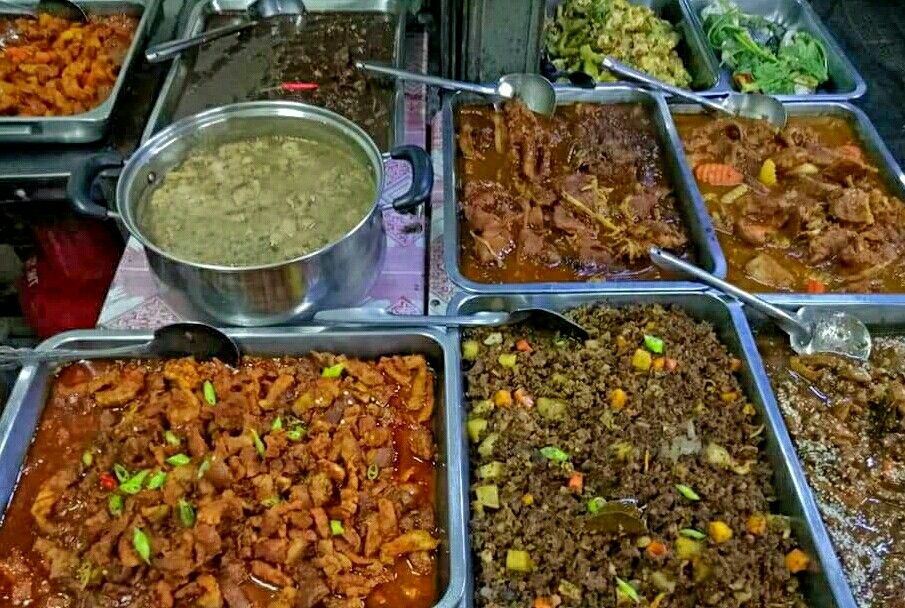
The hack: place your most popular, easy-to-scoop dishes at the start of the display.
- Stews (e.g., adobo, afritada, menudo)
- Vegetable dishes
Place fried or grilled items — which may require cutting — at the end.
The logic: customers decide faster when they see familiar dishes first. By the time they reach the fried items, they’ve already committed to their order.
Speed-optimized station layout
| Station | Hack | Goal |
|---|---|---|
| Rice Bin | Keep a “Rice Tower” of pre-scooped cups | 5-second serving |
| Ulam Display | Group dishes by price point | Faster mental math for cashier |
| Condiment Bar | Move calamansi, patis, chili away from counter | Prevents crowding |
| Cutlery | Pre-wrap spoon & fork in napkins | Grab-and-go efficiency |
The mise en place refill system
Running out of ulam mid-rush is a disaster. Customers will leave immediately.
The hack: use half-size pans in your display.
The logic: when a pan is 20% full, the kitchen should already have a replacement ready. Swapping pans takes 3 seconds. Cooking a new batch takes 10 minutes — long enough to lose your entire line.
Digital ordering for suki
Your regular customers are your fastest customers — if you let them be.
The hack: create a Viber or WhatsApp group for office workers and nearby shops.
Let them pre-order by 10:30 AM. Prepare their bags with their names. They walk in, scan the QR code, and walk out without joining the line.
This is how modern carinderias serve 150–200 meals in under 90 minutes.
Sample computation: how much time you actually save
Speed hacks only matter if they translate into real profit. Here’s a simple breakdown of how much time you save — and how many extra customers you can serve — by applying just two techniques.
Scenario: 60 customers during lunch rush
Average serving time per customer (traditional setup): 45 seconds
60 customers × 45 seconds = 2,700 seconds
2,700 seconds ÷ 60 = 45 minutes
Now apply two hacks:
- Two-ladles rule saves 10 seconds per customer
- Pre-portioned take-out saves 20 seconds for 20% of customers
New serving time
Rice/Ulam speed-up:
60 customers × 10 seconds saved = 600 seconds saved

Pre-portioned bundles:
12 customers × 20 seconds saved = 240 seconds saved

Total time saved = 840 seconds
840 seconds ÷ 60 = 14 minutes saved
New total serving time:
45 minutes – 14 minutes = 31 minutesThat 14-minute gain allows you to serve an additional 15–25 customers — which could mean:
- ₱900–₱1,500 extra revenue per day
- ₱27,000–₱45,000 extra revenue per month
Speed is not just convenience — it is profit.
Conclusion
The lunch rush is the most important 90 minutes of your day. If your line moves fast, customers stay. If your line stalls, they disappear. By applying these speed hacks — from two-ladles serving to digital pre-orders — you transform your carinderia from a slow, stressful operation into a smooth, high-volume machine.
Small improvements compound. A few seconds saved per customer becomes thousands of pesos earned per month. In a business where margins are tight and competition is everywhere, speed is your strongest competitive advantage.