- ECC is mandatory for any project that can significantly affect land, air, water, or communities.
- Most of the process is now online through the DENR–EMB portal, reducing face-to-face steps.
- Small businesses may qualify for a Certificate of Non-Coverage (CNC), which is cheaper and faster.
- Non-compliance can lead to closure and heavy fines, even if your business is already operating.
In 2026, environmental compliance is no longer just a concern for big mining firms or large resorts. Even a mid-sized inland resort, a fuel station along the highway, or a small manufacturing plant in a provincial town can be required to secure an Environmental Compliance Certificate (ECC) before starting operations.
The ECC is issued by the Environmental Management Bureau (EMB) of the Department of Environment and Natural Resources (DENR) and is grounded in the Environmental Impact Statement (EIS) System under Presidential Decree No. 1586.
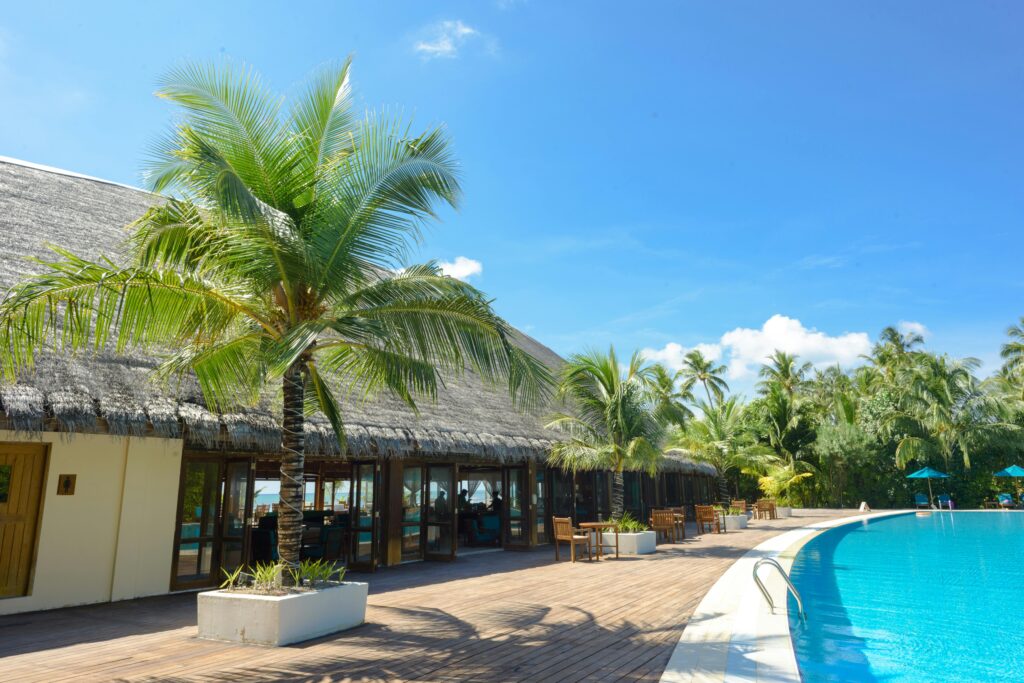
For Filipino entrepreneurs, OFWs coming home to invest, and small manufacturers, understanding how to apply for an ECC—or when a Certificate of Non-Coverage (CNC) is enough—can spell the difference between a smooth opening and a sudden cease-and-desist order.
Understanding what an ECC really is
An Environmental Compliance Certificate is an official document stating that your proposed project has been reviewed and found to be compliant with Philippine environmental laws and standards.
It does not guarantee that your project will never harm the environment, but it confirms that you have identified the risks and committed to mitigation measures.
Under the EIS System, no environmentally critical project or project in an environmentally critical area may proceed without an ECC. This includes many common business plans of Filipinos: beach resorts, inland spring resorts, fuel stations, poultry farms, and even some warehouses or fabrication shops located near rivers or residential zones.
When your business needs an ECC versus a CNC
Not every sari-sari store or small carinderia needs an ECC. The EMB uses project type, size, and location to decide whether you need an ECC or a simpler Certificate of Non-Coverage (CNC). Many MSMEs fall under CNC, but you must still apply and get the document as proof.
| Type | Typical Projects | Approx. Cost & Processing | Best For |
|---|---|---|---|
| Environmental Compliance Certificate (ECC) | Resorts with multiple rooms or pools, gas stations, subdivisions, large poultry or piggeries, manufacturing plants, big warehouses near rivers | Around ₱5,000+ in fees; typical processing 15–20 working days depending on region and completeness of documents | Medium to large projects with clear environmental footprint |
| Certificate of Non-Coverage (CNC) | Small retail shops, offices in existing buildings, small carinderias, small hardware stores, clinics in commercial buildings | Lower fees (around ₱1,000+); processing often within 5–10 working days if documents are complete | Micro and small projects with minimal environmental impact |
For example, a small OFW-funded carinderia inside an existing commercial building will usually qualify for a CNC, while a new 20-room inland resort with multiple pools and a restaurant will almost always require an ECC.
What you need to prepare before applying
Before you even open the EMB portal, it helps to gather your basic documents. This reduces back-and-forth and speeds up approval.
Core project information
- Clear project description – What exactly are you building or operating? (e.g., “15-room inland resort with two pools and a small restaurant”)
- Location details – Barangay, municipality/city, province, and GPS coordinates if available.
- Project scale – Lot area, floor area, number of rooms, daily capacity, or production volume.
Land and authority documents
- Proof of ownership or right to use – Transfer Certificate of Title (TCT), lease contract, or deed of sale.
- LGU zoning certificate – A document from the city or municipal planning office confirming that your project is allowed in that zone.
Technical and environmental documents
- Site development plan signed by a licensed architect or engineer.
- Basic wastewater and solid waste plan – How you will handle septic tanks, grease traps, and garbage.
- Geotagged photos of the site from different angles, taken within the last 30 days.
Many entrepreneurs underestimate the importance of zoning and site plans. A tricycle driver who invests in a small gas station, for example, may already have the capital and location, but if the zoning certificate shows the area is purely residential, the ECC application will likely be denied.
Step-by-step online ECC application process
The EMB has steadily shifted to online processing, in line with government efforts to streamline environmental permitting. Here is the typical flow for 2026.
Account registration on the EMB portal
Go to the EMB ECC Online System and create an account using a valid email address. Fill in your basic details as the project proponent (individual or corporation). Keep your login credentials safe; you will use this account to track your application and respond to queries.
Project screening and classification
Once logged in, choose “New Application.” The system will ask questions about your project type, size, and location. Based on your answers, the system will classify your project as ECC-covered or CNC-eligible.
Example: A 12-pump gas station along a national highway will be flagged as ECC-covered, while a small office inside an existing mall will likely be directed to CNC.
Filling out the IEE checklist or CNC form
If your project needs an ECC, you will be asked to complete an Initial Environmental Examination (IEE) checklist. This form covers:
- Water use and wastewater disposal
- Solid waste management
- Air emissions (if any)
- Noise, traffic, and community impacts
For CNC, the form is simpler but still asks you to describe the project and confirm that it falls outside the list of environmentally critical projects or areas.
Payment of application fees
After completing the forms, the system generates an Order of Payment. As of mid‑2020s, ECC application fees for many projects are in the ₱5,000+ range, while CNC fees are lower. Payment is usually made through LandBank branches, online banking, or other authorized channels. Keep your proof of payment; you will upload it to the portal.
Notarization of key documents
Download your accomplished IEE checklist and Accountability Statement. Print, sign, and have them notarized. This step confirms that the information you submitted is true and that you accept responsibility for environmental impacts.
Uploading documentary requirements
Scan your notarized documents and supporting files (zoning certificate, site plan, geotagged photos, proof of land rights, technical diagrams) into PDF format. The portal usually sets a maximum file size per upload, so compress files if needed.
Evaluation, additional information, and approval
An EMB case handler will review your application. You may receive “AI” (Additional Information) requests asking for clarifications, extra photos, or revised plans. Respond promptly to avoid delays.
Once approved, your ECC or CNC will be available for download in your account. Print several copies and keep one posted at your project site; LGU inspectors and banks often ask for it when processing other permits or loans.
Key documentary checklist and practical tips
| Requirement | Description | Practical Tip |
|---|---|---|
| Geotagged site photos | Photos of the project site from different directions with GPS data | Use a phone app like GPS Map Camera and take photos on a clear day to show surroundings. |
| LGU zoning certificate | Confirms your project is allowed in that land use zone | Secure this early; many ECC delays come from zoning conflicts. |
| Site development plan | Drawing showing buildings, parking, drainage, and open spaces | Hire a licensed architect or engineer; banks and LGUs also use this plan. |
| Wastewater and septic design | Basic diagram of septic tanks, grease traps, and discharge points | For resorts and restaurants, invest in proper grease traps to avoid future DENR violations. |
| Proof of land rights | TCT, lease contract, or other legal proof | If you are leasing, ensure the contract clearly states you may build or operate your project. |
For a small resort owner in Laguna, for example, having a clear site plan and septic design not only speeds up ECC approval but also prevents future complaints from neighbors about foul smells or dirty discharge into creeks.
Common challenges and how Filipino entrepreneurs can handle them
Incomplete or inconsistent information
Many applications are delayed because the project description in the IEE does not match the site plan or zoning certificate. If your IEE says “10-room resort” but your plan shows 20 rooms, expect an AI request or even denial.
Solution: Align all documents before uploading. If you change your project size mid-way (for example, from 10 to 15 rooms), update all forms and plans consistently.
Underestimating environmental impact
Some owners downplay their project to avoid ECC coverage, then later expand. A small poultry farm that quietly grows from 500 to 5,000 heads without updating its ECC can face complaints from neighbors about odor and flies, triggering DENR investigations.
Solution: Be honest about your long-term plan. It is better to secure the correct ECC category early than to be shut down later.
Technical language and forms
The IEE checklist can feel intimidating, especially for first-time entrepreneurs. Terms like “air emissions,” “effluent,” or “mitigation measures” may sound too technical.
Solution: Translate it into your daily operations. For example, “air emissions” for a small fabrication shop simply means smoke from welding or painting; “mitigation” could be installing exhaust fans and using low-VOC paint.
Tips for small and OFW-funded businesses
Work with local professionals
Hire a local engineer, architect, or environmental consultant familiar with your region’s EMB office. Many OFWs fund projects from abroad and rely on relatives who may not be familiar with technical requirements. A small professional fee can save months of delay.
Coordinate ECC with other permits
Banks, LGUs, and even some utility companies may ask for your ECC or CNC when processing building permits, business permits, or loans. Plan your timeline so that ECC application runs in parallel with building permit and barangay clearances.
Keep digital and printed copies
Store your ECC/CNC, IEE, and site plans in cloud storage and in a physical folder at the site. When inspectors from DENR, LGU, or even BFP visit, being able to show complete documents immediately creates a strong impression of compliance.
Consequences of operating without ECC when required
DENR and EMB have the authority to issue Notices of Violation and Cease and Desist Orders against projects operating without the required ECC. Fines can reach tens of thousands of pesos per violation, and in serious cases, operations can be halted until compliance is achieved.
Imagine a family-run inland resort that has already invested millions in pools and cottages. If a complaint reaches EMB and the resort has no ECC, the resort can be ordered to stop operations immediately, losing peak-season income and damaging its reputation in the community.
Conclusion
Applying for an Environmental Compliance Certificate—or securing a Certificate of Non-Coverage—is now a normal part of doing business in the Philippines, especially for projects that touch land, water, and communities. The process is more digital and structured than before, but it still demands honesty, preparation, and patience.
Whether you are an OFW building a small resort in your hometown, a tricycle driver upgrading to a fuel station, or a sari-sari store owner expanding into a mini-warehouse, treating environmental compliance as a core part of your business plan protects not only your investment but also your neighbors and the next generation.
Start early, prepare your documents well, and see the ECC not as a hurdle, but as proof that your business is built to last—and to coexist responsibly with the environment around it.