- The mobile phone repair industry is booming due to the nationwide shift to 4G and 5G devices as NTC phases out 2G and 3G.
- Repair shops are now more regulated—DTI accreditation, TESDA certification, and NTC permits are mandatory.
- Customers prefer certified, ESD‑safe, data‑secure repair centers over sidewalk technicians.
- A professional setup can start at ₱70,000–₱150,000 depending on your tools and specialization.
With over 98 million smartphone users in the Philippines and the NTC’s 2026 shutdown of 2G and 3G networks, the demand for mobile phone repair services has surged. More Filipinos are upgrading to 4G/5G devices, and many prefer repairing rather than replacing expensive units. This makes the mobile phone repair business one of the most profitable technical ventures today—if you operate legally and professionally.
Gone are the days when you could simply set up a table on the sidewalk. The industry is now regulated to protect consumers, ensure data privacy, and maintain repair quality. Here’s your complete guide to starting a compliant, profitable, and future‑ready repair shop.
Legal requirements and accreditation
To operate a legitimate repair shop, you must comply with several government requirements. These protect both your business and your customers.
DTI Business Name Registration
Register your business name through the DTI BNRS portal. This is your first step toward becoming a recognized service provider.
DTI Service & Repair Enterprise (SRE) Accreditation
This accreditation is mandatory under the Consumer Act of the Philippines (RA 7394). Without it, you are operating illegally.
- Apply through the DTI‑FTEB (Fair Trade Enforcement Bureau).
- At least one technician must hold a TESDA NC II certification.
- You must provide a 90‑day warranty on workmanship.
NTC Mobile Phone Service Center Permit (MPSCP)
Since you handle telecommunications equipment, you must secure an NTC permit.
- Proof of minimum paid‑up capitalization (around ₱100,000).
- Shop layout and equipment list.
- Technician certifications.
Tip: Many LGUs now require NTC permits before issuing a Mayor’s Permit for repair shops.
Technical certification through TESDA
To qualify for DTI accreditation, you or your head technician must be TESDA‑certified.
Electronic Products Assembly and Servicing (EPAS) NC II
This is the standard certification for mobile phone repair technicians.
- 200+ hours of training
- Includes soldering, diagnostics, and electronics fundamentals
- Must include the “Maintain and Repair Cellular Phones” module
2026 update: TESDA now offers Mobile Training Labs that visit barangays, plus blended learning via the TESDA Online Program (TOP).
Startup investment and tools
A professional repair shop requires both basic and advanced tools. Here’s an updated cost breakdown considering inflation and rising equipment prices.
| Category | Essential Tools | Estimated Cost (₱) |
|---|---|---|
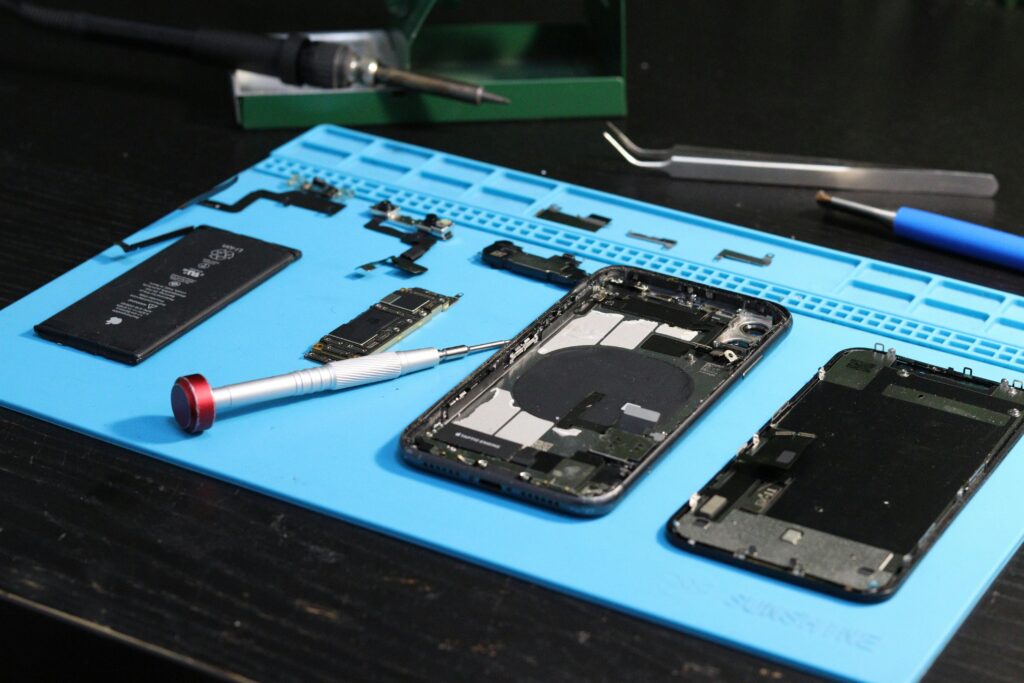
| Basic Kit | Precision screwdrivers, spudgers, suction cups, electrostatic discharge (ESD) mat | 3,000 – 7,000 |
| Diagnostic Gear | Digital multimeter, regulated DC power supply | 8,000 – 15,000 |
| Soldering Station | Hot air rework station, micro‑soldering iron, microscope | 25,000 – 50,000 |
| Initial Inventory | Screens, batteries, adhesives, flex cables | 30,000 – 50,000 |
Total startup cost: ₱70,000 – ₱150,000 for a basic to mid‑range professional shop.
Real‑life example: A technician in Cebu started with ₱85,000 and now earns ₱1,500–₱4,000 daily from screen replacements and battery swaps.
Strategic diskarte for 2026
Competition is high, but customers now prefer certified, data‑secure, and ESD‑safe repair shops. Here’s how to stand out.
Use anti‑static marketing
Show customers that your shop is ESD‑safe. Display anti‑static mats, wrist straps, and proper tools. This builds trust and positions you as a professional service center.
Specialize in high‑value services
- Screen refurbishment: A vacuum laminator lets you replace cracked glass without replacing the entire LCD/OLED.
- Data recovery: Customers value their photos and files more than the device itself.
- Water damage repair: High‑margin service with strong demand.
Source parts smartly
Don’t rely solely on Greenhills or Quiapo. In 2026, many suppliers offer:
- B2B warranties
- Bulk discounts
- Direct‑from‑factory parts
Use Shopee/Lazada B2B sellers with high ratings and return policies.
Use digital intake systems
Use tools like RepairDesk, Notion, or Google Forms to track repairs. Send SMS updates when repairs are done.
Why it matters: Customers trust shops with organized systems.
Common challenges and solutions
Back‑jobs and warranty claims
Solution: Perform a full function test before and after repair. Document everything on the receipt.
Parts pricing volatility
Solution: Never give fixed quotes over the phone. Say: “Price starts at ₱X depending on part availability.”
Handling stolen phones
Solution: Record IMEI numbers and require valid IDs. Check NTC’s blocked list. Never repair suspicious units.
Tips for success
- Offer free diagnostics to attract walk‑ins.
- Keep your shop clean and well‑lit—presentation matters.
- Build relationships with suppliers for better pricing.
- Join technician groups on Facebook for updates and troubleshooting tips.
- Upskill regularly—new phone models require new techniques.
Conclusion
The mobile phone repair business in the Philippines is more profitable than ever—but only for those who operate legally, invest in proper tools, and build customer trust. With the NTC’s 2026 network upgrades and the rising cost of new smartphones, more Filipinos prefer repair over replacement.
If you combine TESDA certification, DTI/NTC accreditation, and professional‑level tools, you can build a repair shop that earns consistently and grows steadily. Start small, stay compliant, and focus on quality—your customers will reward you with loyalty and referrals.