- You can run a profitable laundry business without buying a single washing machine through the “aggregator” or “broker” model.
- Your real assets are logistics, customer service, and digital booking—not equipment.
- Partnering with existing laundromats lets you scale faster with lower risk and lower capital.
- This model is ideal for OFWs, beginners, and small entrepreneurs who want a flexible, low‑maintenance business.
The laundry industry in the Philippines has shifted toward convenience. Customers—especially condo residents, young professionals, and busy families—prefer services that pick up and deliver their laundry rather than walking to a laundromat. This shift opened the door for a powerful business model: the asset-light laundry aggregator.
Instead of investing ₱400,000+ in machines, plumbing, and rent, plus the burden of equipment maintenance, you become the logistics and customer service layer. You pick up laundry, outsource the washing to a partner shop, and deliver the finished items back to the customer. Your profit comes from the markup and delivery fee.
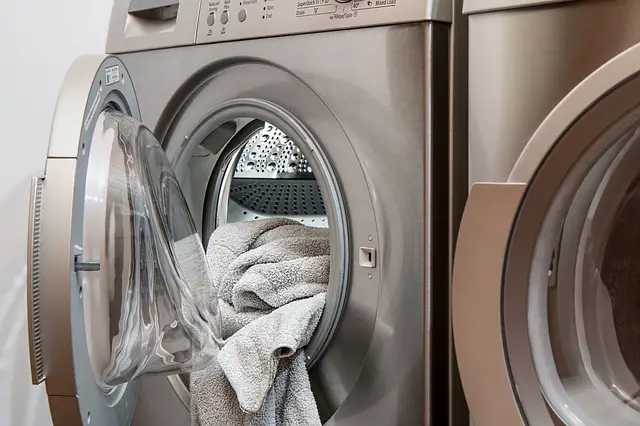
Here’s how to build a sustainable, modern laundry business without owning any machines.
The business model: the aggregator approach
The aggregator model focuses on convenience and logistics. You operate like a “Grab for Laundry”—connecting customers to existing laundromats while managing the entire customer experience.
How the workflow looks
- Customer books via Viber/WhatsApp or any reliable messaging application.
- You pick up the laundry from customer’s home or condo lobby.
- You drop it off at your partner laundry shop at a discounted B2B rate.
- You pick it up once done.
- You deliver it back to the customer, folded and fresh.
How you earn
Your profit comes from:
- Markup – The difference between your retail price (e.g., ₱45/kg) and the shop’s B2B rate (e.g., ₱30/kg).
- Delivery fee – Usually ₱30–₱60 per trip depending on distance.
- Premium services – Comforters, curtains, dry cleaning, stain removal.
Example: A freelancer in Quezon City earns ₱18,000–₱25,000 monthly by servicing three condo clusters, even without owning a single machine.
Finding the right backend partner
Your business is only as good as the laundry shop doing the washing. Choose wisely.
Negotiate B2B rates
Approach nearby laundromats and offer them guaranteed volume. If you bring them 50–100 kg per day, they should give you a 20–30% discount from their walk‑in rate.
- Walk‑in rate: ₱40/kg
- B2B rate: ₱28–₱32/kg
- Your retail price: ₱45–₱50/kg
This margin becomes your core income.
Check their quality and capacity
- Do they use commercial‑grade machines?
- Can they commit to 24‑hour turnaround?
- Do they separate whites, delicates, and colored items?
- Do they have a clean, organized facility?
Tip: In 2026, many shops like AbsolutePH and other regional chains offer “Laundry Station Partnerships” specifically for aggregators.
Logistics: your real machine
Since you don’t own washers or dryers, your logistics system becomes your engine.
Your fleet
- Motorcycle with waterproof top box – Best for Philippine traffic.
- Insulated bags – Protects clean laundry from dust and rain.
- Extra nylon bags – For sorting and branding.
Your branding
Your delivery bags are your moving billboard. Use reusable nylon bags with your logo. Customers love eco‑friendly packaging, and it builds brand recall.
Your digital storefront
In 2026, customers prefer messaging apps over phone calls.
- Set up Viber Business or WhatsApp Business.
- Create a service catalog with prices and turnaround times.
- Enable location pinning for easy pickup booking.
- Use Quick Replies for FAQs.
Tip: Condo residents often book via group chats. Ask admins if you can post your weekly promo.
Legal and regulatory requirements
Even without machines, you are still a service provider. To attract corporate clients (spas, gyms, Airbnbs), you must be legally registered.
DTI/SEC and Mayor’s Permit
Register as:
- “Laundry Services”
- or “Logistics Services”
Proof of office or garage
LGUs require a designated space where you sort and store laundry before delivery. This can be a small room in your home.
Liability agreement with your partner shop
Agree on who pays for lost or damaged items. Usually:
- You compensate the customer.
- You claim reimbursement from the partner shop.
Put this in writing to avoid disputes.
Estimated startup costs (aggregator model)
| Item | Estimated Cost (2026) | Notes |
|---|---|---|
| Business Registration | ₱8,000 – ₱15,000 | DTI, Mayor’s Permit, BIR |
| Marketing & Branding | ₱10,000 – ₱20,000 | Logo, ads, uniforms, bags |
| Motorcycle (2nd hand) | ₱45,000 – ₱65,000 | Top box + rain gear |
| Operating Supplies | ₱5,000 | Scale, tags, bags |
Total Initial Capital: ₱68,000 – ₱105,000
Compare this to ₱500,000+ for a full laundromat setup.
Common challenges and diskarte hacks
Loss of quality control
Challenge: You don’t see the washing process.
Solution: Do a “quality audit” at the shop before bagging items. If a stain is missed, ask them to redo it before delivery.
Thin margins
Challenge: Regular wash‑dry‑fold has tight profit margins.
Solution: Offer niche services with higher markups:
- Comforters
- Curtains
- Dry cleaning
- Hotel/airbnb linens
Partner with specialist brands like Suds or Metropole for premium services.
Delivery delays
Challenge: Traffic and scattered bookings.
Solution: Cluster your pickups:
- Area A: Monday/Wednesday
- Area B: Tuesday/Thursday
This saves fuel and ensures predictable delivery times.
Tips for success
- Be active in condo group chats—this is where most bookings come from.
- Offer “first‑time customer” promos to build your base.
- Use branded bags to build recognition.
- Respond fast—speed is your competitive advantage.
- Track all orders using a simple Google Sheet or booking app.
Conclusion
Managing a laundry business without owning washing machines is one of the smartest, lowest‑risk business models in the Philippines today. With the right backend partner, strong logistics, and excellent customer service, you can build a profitable laundry brand from your home—no plumbing, no machines, no massive capital.
For OFWs, beginners, and small entrepreneurs, the aggregator model offers flexibility, scalability, and recurring income. Start small, stay consistent, and focus on convenience—the one thing customers value most in 2026.