In a carinderia, water is often the invisible expense that quietly eats into your profit. Between washing mountains of dishes, prepping vegetables, cleaning floors, and thawing ingredients, the water meter never stops spinning. Since commercial water rates are higher than residential ones, every liter saved becomes a direct boost to your daily take-home pay.
Here are five practical, high-impact water-saving techniques that any carinderia can implement immediately.
The three-basin washing method (the banyera system)
Many carinderia staff leave the tap running while scrubbing plates, which is the fastest way to drain your profit and waste precious water. A continuous flow wastes hundreds of liters per shift. Use the banyera system to save on water resource.
Technique:
- Basin 1: warm water with detergent for heavy scrubbing
- Basin 2: clean water for the first rinse
- Basin 3: water with a capful of sanitizer or a drop of bleach for the final rinse
The saving: this method uses roughly 50 to 70 percent less water than a continuously running faucet. It also keeps your washing station organized and predictable during peak hours.
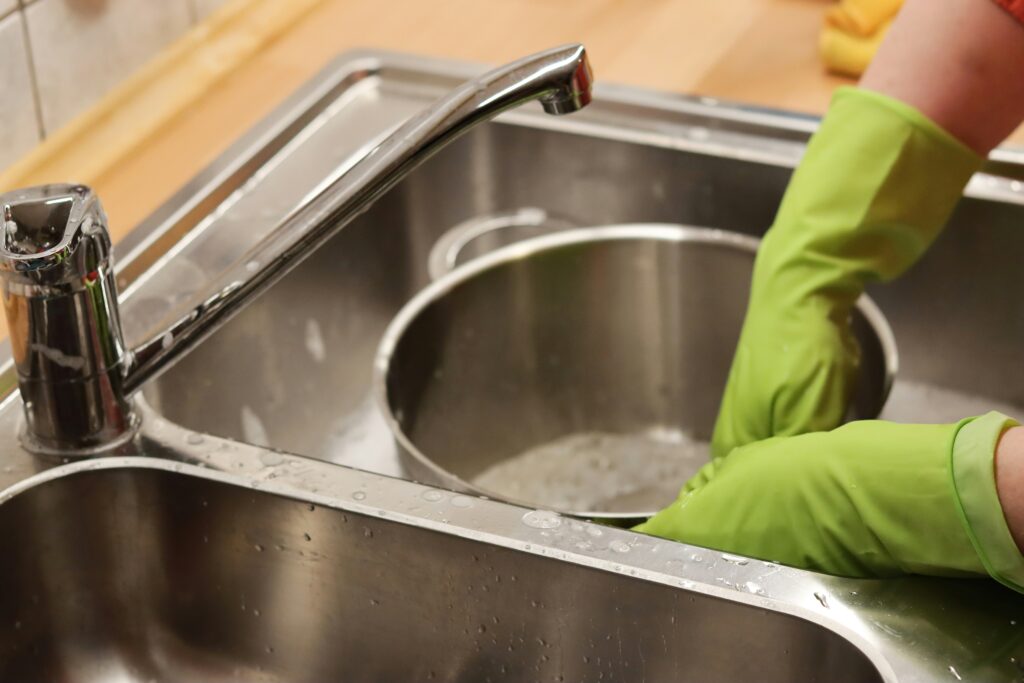
The pre-scrape station
Using high-pressure water to blast food residue off plates can waste a significant amount of water, so pre-scraping and controlled washing are better for both cost and hygiene.
- Technique: place a rubber spatula and a dedicated waste bucket at the clearing station. Staff must scrape every bit of leftover food into the bin before the plate touches the water.
- The saving: your wash water stays cleaner for longer, meaning you won’t need to replace the basins as often. This reduces both water usage and detergent costs.
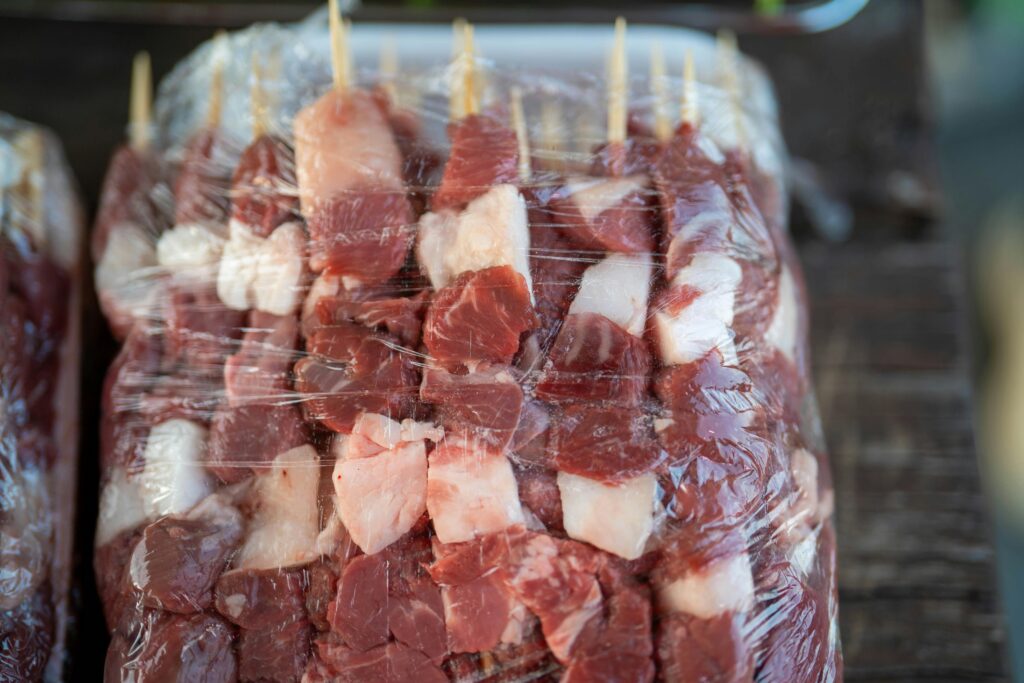
Thaw without the flow
A common mistake in busy kitchens is water-thawing—placing frozen meat under a running faucet to speed up defrosting. This wastes enormous amounts of water.
- Technique: practice advance thawing. Move frozen meats from the freezer to the chiller 24 hours before cooking.
- The saving: running a faucet for just 30 minutes can waste more than 300 liters of water. Planning ahead costs nothing and saves significantly.
Strategic veggie washing (greywater recycling)
Most carinderias wash vegetables under a running tap, letting clean water go straight down the drain. This is a missed opportunity for reuse.
- Technique: wash vegetables in a large bowl or basin instead of under a stream. Save the first-wash water in a separate bucket.
- The saving: this captured greywater can be used for mopping floors at closing time or flushing the customer toilet. It is clean enough for cleaning tasks but would otherwise be wasted.
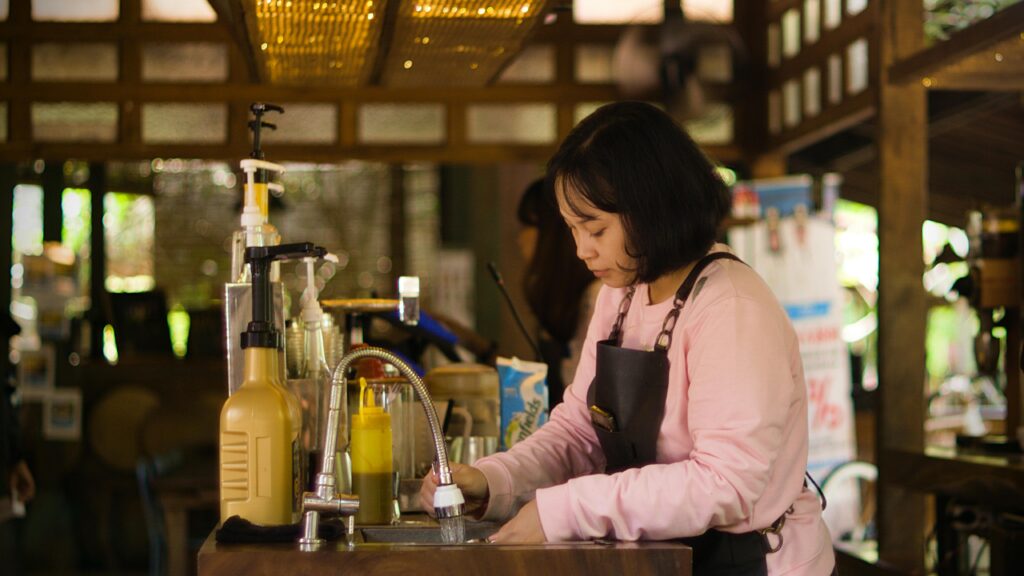
Low-cost aerator upgrades
If your faucet feels like a fire hose, you are splashing money away. High-pressure taps use far more water than necessary.
- Technique: install a faucet aerator, which costs less than ₱100 in most hardware stores. It mixes air into the water stream, maintaining pressure while reducing volume.
- The saving: an aerator can reduce water flow by up to 40 percent without affecting rinsing efficiency.
Specific advice based on carinderia type
| Business type | Focus area | Pro-tip |
|---|---|---|
| Market / high-traffic | Customer handwashing | Replace manual knobs with press-type faucets or foot pedals. Customers often leave taps running while looking for tissue or wiping their hands. |
| Small / home-based | Laundry | If you wash your own aprons and rags, run the washing machine only with full loads or hand-wash using leftover final-rinse water from dishwashing. |
| Catering / bulk cook | Large pot cleaning | Soak, don’t spray. Fill large kawalis with water immediately after cooking to loosen burnt bits while still warm, instead of scrubbing under a running tap later. |
How much water waste really costs a carinderia?
Carinderias often do not notice daily water waste because the bill arrives monthly, but the cost adds up quickly once you convert it into daily use.” In the Philippines, billed households commonly pay around ₱320 to ₱500 per month depending on location, and some local water districts charge commercial users more than residential users, so business water savings can matter even on small bills.
Scenario: a carinderia using a running faucet for dishwashing
A fully open faucet uses around 10–12 liters per minute. Most carinderias wash dishes continuously for 1 to 2 hours per day.
| Activity | Water Usage Estimate |
|---|---|
| Running faucet for 60 minutes | 10 liters × 60 = 600 liters |
| Running faucet for 90 minutes | 10 liters × 90 = 900 liters |
| Running faucet for 120 minutes | 10 liters × 120 = 1,200 liters |
Now compare this with the three-basin method
The banyera system typically uses only 150–250 liters per day.
| Method | Daily Water Use | Monthly Total |
|---|---|---|
| Running faucet | 600 liters | 18,000 liters |
| Three-basin method | 200 liters | 6,000 liters |
Monthly savings
18,000 L – 6,000 L = 12,000 liters saved per month
12,000 L ÷ 1,000 = 12 cubic meters
12 cu. m × ₱45 (average water rate) = ₱540 saved per month
Annual impact
₱540 × 12 months = ₱6,480 saved per year₱6,480 is equivalent to:
- Two sacks of rice
- A month’s worth of LPG
- A new set of stainless trays or cooking tools
And this is only from dishwashing. Add savings from thawing, veggie washing, and aerators, and your total savings can easily double.
The math of savings
If you save just 100 liters of water a day—a very achievable target using the basin method—that’s 3,000 liters a month. Depending on your local water district, those savings could pay for a sack of rice every few months.
Small changes add up. A few buckets saved today become thousands of pesos saved over the year.
FAQ: Water-Saving Techniques for Carinderias
1. Why is water conservation important for carinderias?
Water is one of the biggest recurring expenses in a carinderia. Conserving water helps reduce monthly bills, improves kitchen efficiency, and supports sustainable operations—especially in areas with limited supply.
2. What are the easiest water-saving techniques to implement?
Simple techniques include soaking dishes before washing, using basins instead of running water, fixing leaks immediately, and reusing rinse water for pre-washing utensils or cleaning floors.
3. How can I reduce water usage when washing dishes?
Use a two-basin system: one for soapy water and one for rinsing. Scrape food waste before washing, soak greasy pans, and avoid washing under continuously running water.
4. Can I reuse water safely in a carinderia?
Yes, as long as reused water is not for cooking or food preparation. Rinse water can be reused for pre-washing dishes, cleaning floors, or washing non-food-contact surfaces.
5. How do I prevent water waste in the kitchen?
Regularly check faucets for leaks, install low-flow nozzles, avoid overfilling pots, and train staff to follow water-saving procedures. Small habits add up to significant savings.
6. Does using a water filter help reduce water consumption?
Yes, filtered water reduces the need for repeated rinsing and helps prevent mineral buildup in kettles and cookware, which can reduce cleaning time and water usage.
7. How much can a carinderia save by applying water-saving techniques?
Carinderias can reduce water consumption by 20–40% depending on current usage habits. This can translate to hundreds or even thousands of pesos saved monthly.