A Taxpayer Identification Number (TIN) is a permanent, lifetime number issued by the Bureau of Internal Revenue (BIR) to identify individuals and businesses for tax purposes. Even if you are working abroad or earning purely foreign‑sourced income, having a TIN is still important for many Philippine transactions.
Under Section 23 of the Philippine Tax Code, Overseas Filipino Workers (OFWs) and Filipinos earning exclusively from foreign sources are exempt from filing Income Tax Returns. However, they still need a TIN for identification, government records, and certain tax‑related exemptions.
More importantly, OFWs must be registered with the Department of Migrant Workers (formerly POEA) and hold a valid Overseas Employment Certificate (OEC) to enjoy exemptions such as:
- Travel tax exemption
- Airport terminal fee exemption
- Documentary stamp tax exemption on remittances
Even if you are based abroad, you may still need a TIN for Philippine transactions such as:
- Running a business in the Philippines
- Buying or selling real estate
- Investing in the Philippine stock market
- Opening a bank account or applying for a loan
- Receiving inheritance or transferring property
For these reasons, many overseas Filipinos still need to apply for a TIN even if they are tax‑exempt.
Who should apply for a TIN?
You should apply for a TIN if you are:
- An OFW or seafarer earning purely foreign‑sourced income
- A Filipino immigrant or permanent resident abroad
- A Filipino freelancer working for foreign clients
- A Filipino investor with Philippine‑based assets
- A Filipino planning to open a business in the Philippines
Even if you are not required to pay income tax, the TIN serves as your official government ID for tax‑related transactions.
Requirements for OFWs and overseas-based Filipinos
Prepare any of the following documents:
- Birth certificate or any valid government ID showing your full name, address, and birth date
- Philippine passport with visa or work permit
- Employment contract or proof of overseas employment
- Completed BIR Form 1902 — Application for Registration for Individuals Earning Purely Compensation Income and Non‑Resident Citizens/OFWs/Seafarers
(Download BIR Form 1902 here)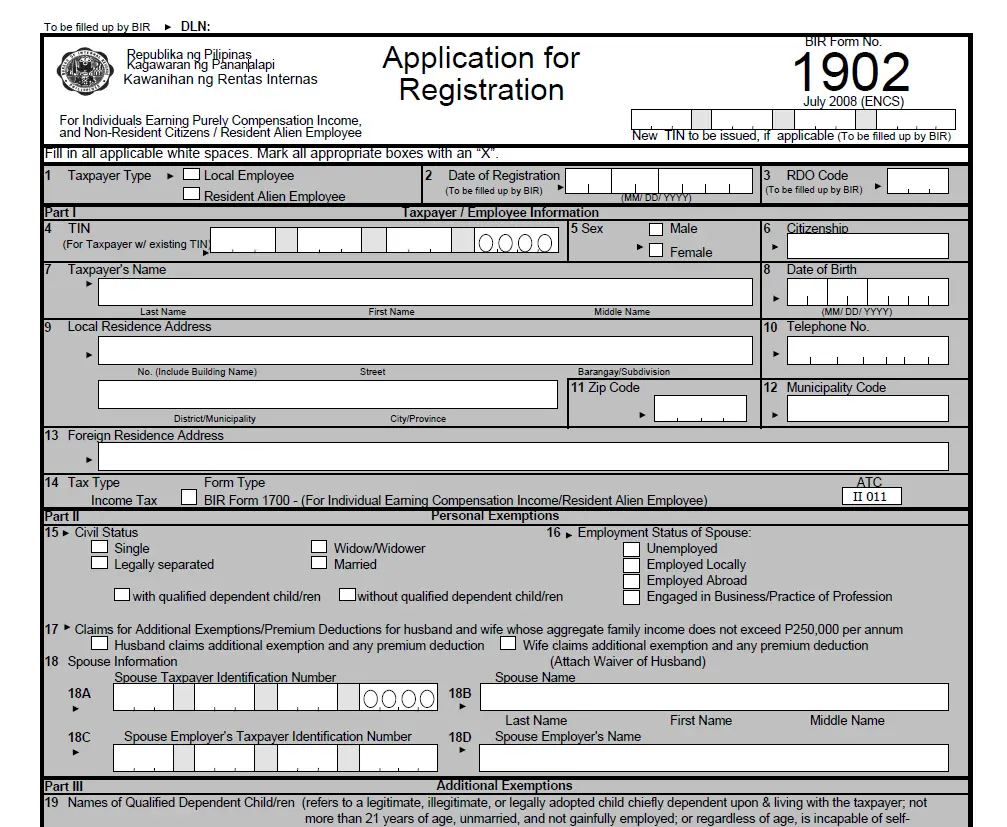
Important: OFWs should not use BIR Form 1901 (for business owners) unless they are registering a business. For personal TIN application, Form 1902 is the correct form.
Where to apply for a TIN
You must submit your application to the BIR Revenue District Office (RDO) that has jurisdiction over your Philippine address. This can be:
- Your permanent home address
- Your parents’ or guardian’s address (if you live abroad)
- Your registered business address (if applicable)
Find your RDO here:
BIR RDO Directory
Step-by-step procedure for TIN application
Fill out BIR Form 1902
Download the form from the BIR website and fill it out completely. Make sure your Philippine address is correct, as this determines your RDO assignment.
Prepare your supporting documents
Attach photocopies or scanned copies of your passport, birth certificate, or employment contract. If you are abroad, you may authorize a representative to file on your behalf.
Submit your documents to the correct RDO
You or your authorized representative must submit the documents to the RDO that covers your Philippine address. Some RDOs now accept email submissions, but many still require physical filing.
To check your RDO’s contact details:
List of BIR Regional District Offices
Wait for your TIN issuance
Once processed, the BIR will issue your TIN. This number is permanent and will be used for all future tax‑related transactions.
If you are abroad, your representative can receive the TIN on your behalf.
Can OFWs apply for a TIN online?
As of 2026, the BIR does not yet offer a full online TIN application system for OFWs. However, some RDOs allow:
- Email submission of documents
- Processing through authorized representatives
- Coordination via BIR Contact Center
Always check with your assigned RDO for their latest process.
Why OFWs still need a TIN even if they are tax-exempt
Many overseas Filipinos mistakenly believe they do not need a TIN because they are exempt from income tax. However, a TIN is required for:
- Buying or selling property in the Philippines
- Opening a bank account or time deposit
- Investing in stocks, mutual funds, or bonds
- Registering a business
- Claiming tax exemptions (travel tax, terminal fees)
- Receiving inheritance or transferring assets
Without a TIN, many transactions will be delayed or rejected.
Frequently asked questions
Is the TIN free?
Yes. The BIR does not charge any fee for issuing a TIN.
Can an OFW have more than one TIN?
No. It is illegal to have multiple TINs. If you accidentally obtained more than one, you must request a consolidation at your RDO.
Can a family member apply on my behalf?
Yes. They must bring an authorization letter and copies of your IDs.
Final reminders
Applying for a TIN is a simple but important step for OFWs and overseas Filipinos. Even if you are exempt from income tax, your TIN is required for many legal, financial, and investment transactions in the Philippines.
Make sure to keep your TIN secure and avoid applying for multiple numbers. Once issued, your TIN is valid for life.
If you want to expand this into a full OFW tax guide or add a section on BIR registration for freelancers abroad, I can help you build that next.